Last updated: October 5, 2026
In a custom home, "finishes" are everything you see and touch once the structure is up: flooring, cabinetry, countertops, tile, paint, fixtures, windows, doors, and the exterior skin of the house. Some of these come standard inside your base price, and some are upgrades that add cost, so the smartest thing an Arizona buyer can do is learn the line between the two before signing, not after.
The short version
- Finishes split into two buckets: what the builder includes in the base price (often at a set "allowance") and what you pay extra for as an upgrade when you choose something above that allowance.
- Standard usually means builder-grade staples: a defined flooring selection, stock or semi-custom cabinets, laminate or entry-level stone counters, standard-height doors, and a basic plumbing and lighting package.
- Upgrades are where personality and cost live: large-format or natural-stone tile, quartz or quartzite counters, custom cabinetry, premium flooring, designer fixtures, and specialty windows.
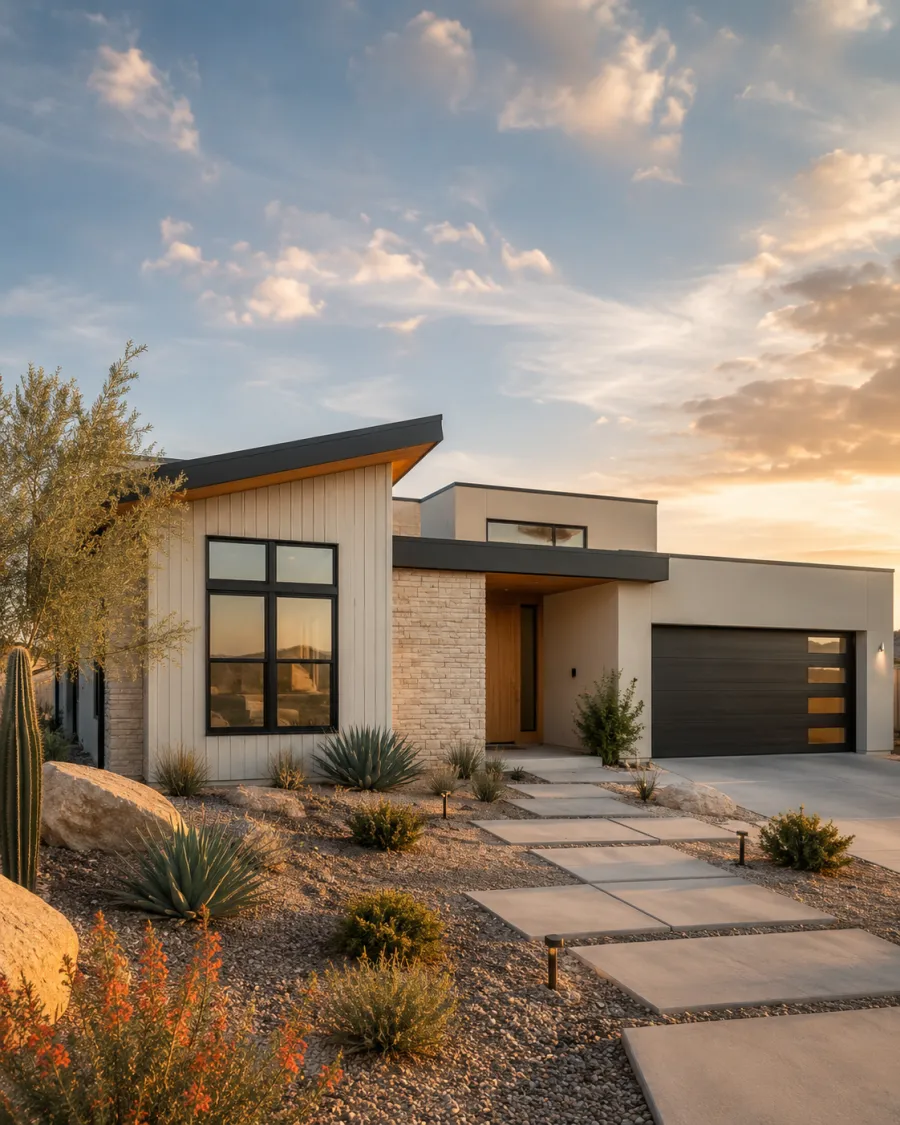
- In the Arizona desert the exterior finishes that earn their keep are the heat- and monsoon-tough ones: three-coat stucco or masonry, concrete or clay tile roofing, low-E dual-pane glazing, and elastomeric coatings, not materials borrowed from milder climates.
- Finish selections drive both budget and schedule. Going over allowance raises the price, and long-lead or specialty items can push your timeline, especially if selections land late or run into monsoon season.
What counts as a finish in a custom home?
It helps to picture the build in layers. The structure (foundation, framing, roof structure) and the systems (electrical, plumbing, HVAC rough-in) come first and mostly disappear behind the walls. Finishes are the visible layer that goes on top: the surfaces, cabinetry, hardware, fixtures, and exterior cladding that make the house feel like your home.
Most Arizona custom builders group finishes into categories with a dollar allowance attached to each one. An allowance is the amount the builder has budgeted for, say, flooring or cabinetry. Pick within the allowance and there is no change to your price. Pick above it and the difference becomes an upgrade cost on your selection sheet. Understanding allowances is the single most useful thing a buyer can do, because it turns a vague "what's included?" into a specific, comparable number.
What finishes are standard vs. an upgrade in an Arizona custom home?
There is no universal standard, so the honest answer is that it depends on the builder and the base price, which is exactly why you ask for the included-finish schedule in writing. That said, here is the pattern most buyers in the Phoenix and Scottsdale market will recognize.
Commonly included (standard / builder-grade):
- A defined flooring package, often porcelain tile or luxury vinyl plank in main areas with carpet in bedrooms
- Stock or semi-custom cabinetry in a set door style and a short color range
- Entry-level countertops (laminate, cultured, or a base-level granite or quartz)
- A standard interior door, baseboard, and trim profile
- A base plumbing fixture package (faucets, sinks, toilets) and a base lighting and electrical allowance
- Builder-standard dual-pane windows and a standard exterior stucco and paint package
Commonly an upgrade (above allowance):
- Large-format tile, natural stone, or wide-plank engineered wood flooring
- Quartz, quartzite, or high-end granite counters, and features like waterfall edges or full-height backsplashes
- Fully custom cabinetry, soft-close everything, built-ins, and specialty finishes
- Designer plumbing and lighting, extra recessed cans, and a smart-home package
- Taller doors (8-foot), solid-core doors, upgraded trim, and millwork details
- Specialty windows (larger spans, black frames, multi-slide or pocketing glass doors)
- Upgraded exterior finishes: stone or brick accents, decorative masonry, and premium roofing
The practical move is to walk the builder's selection sheet line by line and mark three things next to each item: what is included, what you want instead, and the upgrade cost to get there. Our guide to types of custom home upgrades breaks these categories down further, and because many "finish" decisions overlap with the home's shell, the companion piece on how to choose exterior materials for a custom home is worth reading alongside it.
Which exterior finishes hold up best in Arizona heat and monsoon?
Arizona is hard on building materials. Intense UV, summer heat well over 110 degrees, blowing dust, and violent monsoon storms from roughly June through September all test the outside of the house in ways a milder climate never would. The exterior finishes that perform here are chosen for that reality.
- Walls: three-coat stucco or masonry. Traditional three-coat stucco over a proper weather barrier, and concrete masonry (block) construction, both handle desert UV and heat far better than materials prone to warping or fading. Vinyl siding is rare on Arizona custom homes for exactly that reason.
- Roofing: concrete or clay tile, or standing-seam metal. Concrete and clay tile shrug off UV and radiant heat and routinely outlast asphalt shingles, which degrade faster under relentless sun. Standing-seam metal is another durable, reflective option. Whatever the material, the underlayment and flashing details are what keep monsoon rain out.
- Glazing: low-E, dual-pane windows. Low-emissivity, dual-pane glass with an appropriate solar heat gain coefficient cuts the heat that pours in through west- and south-facing glass and is effectively the baseline for code-compliant new homes here.
- Coatings: elastomeric paint and sealants. Elastomeric coatings flex with the small movements stucco makes in heat cycles and resist monsoon-driven moisture, which is why they are a common upgrade over standard flat exterior paint.
- Hardscape: concrete, pavers, and desert-appropriate detailing. Patios, drives, and shade structures take the same beating the house does, so durable hardscape and proper drainage away from the foundation matter as much as the pretty parts.
Because roofing, exterior, and structural work are inspected, these are also the finishes most likely to involve a permit. The Arizona Registrar of Contractors requires licensed contractor work to meet a workmanlike standard, and exterior and roofing scopes in Scottsdale and across Maricopa County are generally pulled and inspected through the local building department (scottsdaleaz.gov). Purely cosmetic interior finishes, by contrast, usually do not need their own permit.
How do finish selections affect your budget and timeline?
This is the part buyers underestimate. Finishes are where a custom home's price can move the most, and where the schedule quietly slips if selections are not made on time.
On budget, three things drive the number:
- Allowance vs. actual. Every category you take above its allowance adds to the price. A handful of upgrades across flooring, counters, cabinetry, and fixtures is where many buyers find most of their overage, so prioritize the rooms and surfaces you touch daily.
- Breadth of the upgrade. Upgrading one bathroom reads differently than upgrading tile throughout 3,500 square feet. Square footage multiplies finish decisions fast.
- Labor, not just material. Large-format tile, intricate patterns, and custom millwork cost more to install, not only to buy. The installed price is what matters. For a fuller picture of how all of this rolls up, see what a custom home really costs to build in Arizona.
On timeline, watch for these:
- Selection deadlines. Builders need finishes locked by set dates so trades can be scheduled and materials ordered. Late selections stall the critical path.
- Long-lead items. Custom cabinetry, specialty tile and stone, certain window and door packages, and designer fixtures can carry lead times of weeks to months. Choosing these early protects the schedule.
- Monsoon timing. Exterior stucco, roofing, and paint are weather-sensitive. Summer storm season can delay those scopes, which is one more reason the shell and exterior finishes are sequenced carefully in an Arizona build.
A good builder gives you a selection calendar up front so you know exactly when each decision is due. Treat those dates as seriously as the budget.
Which finishes are worth upgrading, and which are not?
A simple rule keeps spending honest: upgrade what you touch, see, and cannot easily change later; hold the line on what is cosmetic and swappable.
- Often worth it: kitchen counters and cabinetry, primary-bath tile and fixtures, flooring in main living areas, and anything structural-adjacent that is costly to redo later (window packages, exterior finishes).
- Easier to defer: decorative light fixtures, hardware, mirrors, and paint colors, which you can refresh down the road without opening walls.
- Climate-driven, not optional: in the desert, do not treat heat- and monsoon-rated exterior finishes as a luxury upgrade to skip. Durable roofing, glazing, and wall finishes pay for themselves in lower maintenance and energy use.
How finishes work with a steel-panel home
Better Quality Builders builds with steel structural insulated panels rather than conventional wood framing. For finishes, that structural choice has a few real benefits. The panels create a dimensionally stable, straight, and tightly sealed shell, which gives interior finishes like tile, cabinetry, and trim a true, square surface to sit against and helps reduce the small movement cracks that plague some framed homes in extreme heat cycles. The tight, well-insulated envelope also pairs naturally with the low-E glazing and reflective roofing that make the most sense in Arizona. You can read more about the building system on our AirLight panels page, and browse layouts on our floor plans page to see how finish levels show up in real homes.
What to expect from Better Quality Builders
We are a family-built custom home builder rooted in Maricopa County, licensed and bonded with the Arizona Registrar of Contractors (ROC #366787). We walk every client through the finish schedule in plain language before any contract is signed: what is included at each allowance, where the common upgrades are, and what each one adds to your price, so there are no selection-sheet surprises later.
[[OWNER-CONFIRM]] We have intentionally not published BQB's specific included-finish list or allowance amounts here, because those should match your current standard spec. Confirm and we will add: (a) the standard flooring, cabinetry, countertop, window, and fixture packages included in the base price, and (b) any published allowance figures you want buyers to see.
If you are planning a custom home in Phoenix, Scottsdale, or anywhere in Maricopa County, we are glad to walk you through exactly what is included and what it costs to upgrade before you commit to anything. Call us at (877) 849-5044 to start the conversation.
Frequently asked questions
What finishes are included in a custom home in Arizona?
It varies by builder and base price, which is why you ask for the included-finish schedule in writing. A typical included (builder-grade) package covers a defined flooring selection, stock or semi-custom cabinetry, entry-level countertops, a standard door and trim profile, a base plumbing and lighting allowance, and builder-standard dual-pane windows with a standard stucco and paint exterior.
What is a finish allowance?
An allowance is the dollar amount a builder has budgeted for a finish category, such as flooring or cabinetry. If you choose selections within the allowance, your price does not change. If you choose above it, the difference is an upgrade cost added to your selection sheet. Comparing allowances builder to builder is the clearest way to compare what is actually included.
Which exterior finishes last longest in the Arizona desert?
Three-coat stucco and masonry walls, concrete or clay tile or standing-seam metal roofing, low-E dual-pane glazing, and elastomeric coatings all perform well against UV, extreme heat, and monsoon moisture. These outlast materials designed for milder climates, which is why they are the Arizona standard rather than premium extras.
How much do finish upgrades add to the cost of a custom home?
There is no single number, because it depends on how many categories you upgrade and over how much square footage. The biggest swings usually come from flooring, countertops, cabinetry, and window and door packages, and from labor-intensive installs like large-format tile and custom millwork. Prioritizing the surfaces you use daily keeps spending focused.
Do finish selections affect how long my home takes to build?
Yes. Builders need finishes locked by set dates so trades and materials can be scheduled. Late selections stall the schedule, and long-lead items such as custom cabinetry, specialty tile, and certain windows can add weeks. Exterior finishes like stucco, roofing, and paint are also weather-sensitive, so monsoon season can affect their timing.
Can I upgrade finishes after I move in?
Cosmetic, swappable items like light fixtures, hardware, mirrors, and paint are easy to change later. Finishes that are costly or disruptive to redo, such as flooring, counters, cabinetry, windows, and exterior materials, are far cheaper to get right during the build than to replace afterward, so those are the ones worth deciding carefully up front.
Sources
- Arizona Registrar of Contractors: licensing and the workmanlike-manner standard for contractor work (roc.az.gov)
- City of Scottsdale: building permit and inspection requirements for roofing, exterior, and structural work (scottsdaleaz.gov)
- Better Quality Builders: steel structural insulated panel (AirLight) building system (airlight-panels)
This article is general information for Arizona homebuyers, not a quote or a guarantee of any specific builder's included finishes. Confirm current included-finish schedules and allowances with your builder in writing.