
Neither option is universally better. HOAs suit buyers who want predictable exterior upkeep, shared amenities, and consistent neighborhood standards. No-HOA communities suit buyers who want full control over their property and lower recurring costs. About 75 million Americans live in HOA communities, roughly one in four households, with the national average monthly fee sitting around $300 but ranging from under $100 to over $1,000 depending on region and amenities.
HOA communities typically fit:
- Lock-and-leave buyers who want exterior maintenance handled without lifting a finger
- Buyers seeking resort-style amenities (pools, fitness centers, gated security) included in one monthly payment.
- Buyers who want neighborhood appearance standards enforced consistently
No-HOA communities typically fit:
- DIYers, tradespeople, and buyers who want to run a home business, park an RV, or build an ADU without committee approval
- Strict budgeters who prefer to pay for maintenance only when it arises rather than every month
- Investors and buyers who want maximum flexibility over rentals, additions, and exterior changes
Key Takeaways
Choosing between an HOA and a no-HOA community comes down to one core trade-off: predictable costs and shared upkeep versus full control and variable expenses.
| Point | Details |
|---|---|
| Match lifestyle to governance | HOAs suit buyers wanting maintained amenities and consistent standards; no-HOA suits buyers wanting full property control. |
| Budget for the real cost | National average HOA fees run around $300/month, but special assessments can add thousands with little warning. |
| Always pull the documents | Request CC&Rs, reserve study, budget, and meeting minutes during escrow to catch financial red flags before closing. |
| No-HOA still means rules | Deed restrictions recorded on title can bind a property even without a formal HOA; always check the title report. |
| Custom builds need early ARC review | In Arizona HOA communities, ARC approval runs parallel to city permitting and can add months to a build timeline. |
Table of Contents
- How HOA vs non-HOA communities compare at a glance
- What an HOA is and how ownership works
- The real pros and cons of living in an HOA
- What living without an HOA actually looks like
- Decision checklist: questions to ask before you buy
- How to inspect HOA documents and finances
- A builder’s perspective on choosing with your eyes open
- Building a custom home in Arizona? Here is how Better Quality Builders can help
- Sources
How HOA vs non-HOA communities compare at a glance
| Dimension | HOA Community | No-HOA Community |
|---|---|---|
| Typical cost | $100–$1,000+/month in dues; possible special assessments | No dues; owner pays all maintenance and repairs directly |
| Maintenance responsibility | Association handles common areas, often exteriors (condos/townhomes) | Homeowner handles everything, including private roads |
| Rules and restrictions | CC&Rs govern paint colors, landscaping, parking, rentals, pets, ADUs | No association rules; local zoning and any recorded deed restrictions apply |
| Amenities included | Pool, clubhouse, landscaping, security, trash (varies by community) | None shared; owner arranges and pays individually |
| Governance and enforcement | Elected board, fines, liens, and in extreme cases foreclosure | No formal governance; neighbor disputes resolved privately or through courts |
| Resale and buyer suitability | Appeals to buyers wanting turnkey upkeep; studies show premiums of roughly 2%–17% in well-managed communities | Appeals to buyers wanting control; resale depends heavily on individual property condition |
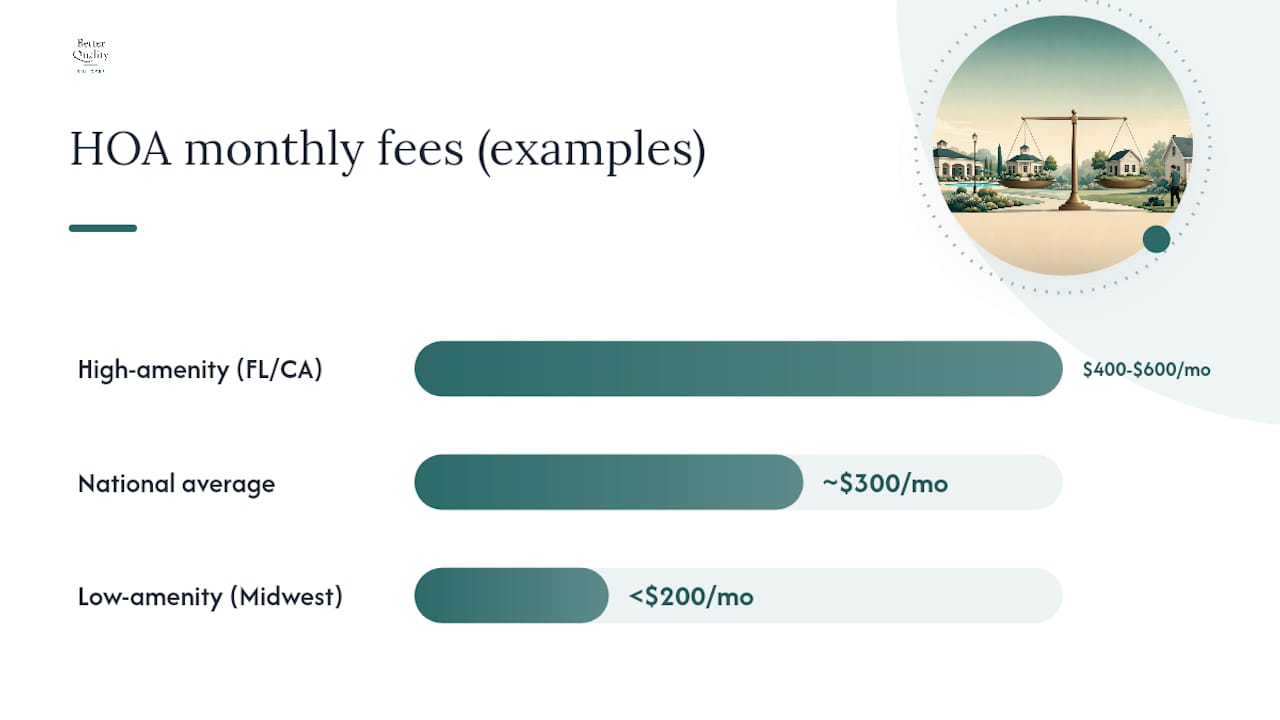
The national average HOA fee of around $300/month is a useful starting point, but expect wide variance. Florida and California communities with pools and gates often run $400–$600/month, while Midwest communities with minimal amenities can sit well below $200. Match your priorities to the columns above before you fall in love with a listing.
What an HOA is and how ownership works
An HOA is a private organization that governs a residential community through a set of recorded rules. When you purchase a home inside an HOA community, membership is automatic and mandatory. You cannot opt out by declining to sign anything. The obligation runs with the land.
Here is what the core documents and structures actually mean:
- CC&Rs (Covenants, Conditions, and Restrictions): The master rulebook recorded against every property in the community. They cover everything from paint colors to fence heights to rental caps.
- Bylaws: The operating rules for the association itself, covering board elections, meeting procedures, and voting rights.
- Board of Directors: Elected homeowners who make day-to-day decisions, hire vendors, set budgets, and enforce rules.
- Reserve study: A professional assessment of the community’s major assets (roofs, pools, roads) and the funding needed to replace them over time.
- Dues vs. special assessments: Monthly dues fund routine operations and reserves. A special assessment is a one-time charge levied when reserves fall short of a major repair.
- Fines and liens: Boards can fine rule violations and, if unpaid, place a lien on the property. In serious cases, some states allow HOA foreclosure for unpaid dues.
HOA authority is not unlimited. State statutes like California’s Davis-Stirling Act set procedural protections for homeowners, including hearing requirements before fines and open-meeting rules. Arizona has its own HOA statutes under A.R.S. Title 33. Always check the rules governing HOAs in your state before assuming what a board can or cannot do.
One more thing worth knowing: deed restrictions can bind a property even without a formal HOA. A no-HOA listing does not automatically mean no rules. Pull the title report and check for recorded covenants before assuming full freedom.
The real pros and cons of living in an HOA
The biggest benefit of an HOA is predictable exterior upkeep. The biggest drawback is that you pay for it every month whether you use the amenities or not.
Pros:
- Exterior maintenance (landscaping, common areas, sometimes roofs and paint) is handled collectively, which matters most for condos and townhomes
- Shared amenities like pools, fitness centers, and clubhouses at a fraction of what private ownership would cost
- Consistent curb appeal standards that protect the look of the neighborhood
- Collective contracting power for trash, landscaping, and insurance often lowers per-unit costs
- Well-managed HOAs can support a price premium of roughly 2%–17% at resale, though this varies by market and association health
Cons:
- Monthly dues add a fixed cost that does not build equity and can increase year over year
- Special assessments can arrive with little warning, sometimes running into thousands of dollars per unit
- Architectural restrictions limit what you can do with your own property, from paint colors to deck materials
- Board politics and inconsistent enforcement create conflict in some communities
- Liens and, in extreme cases, foreclosure are real enforcement tools for unpaid dues
A practical example: a buyer who wants a pool but cannot afford a private one gets real value from a $350/month HOA that maintains a resort-quality pool and fitness center. A buyer who wants to add a workshop, park a trailer, and paint their house a bold color will find that same $350/month buys them nothing but restrictions.
What living without an HOA actually looks like
The single biggest upside of a no-HOA home is complete control over your property. The single biggest risk is that all maintenance costs land entirely on you, and neighbors face no enforceable standards.
Pros:
- No monthly dues; you pay for maintenance only when you need it
- Full freedom to run a home business, build an ADU, park an RV, or modify your exterior without committee approval
- Easier short-term rental flexibility, subject to local zoning
- No board politics, no fines, no architectural review timelines
Cons:
- All exterior maintenance, private road repairs, and shared infrastructure costs fall on you or a small group of neighbors
- Private road repaving can be a significant multi-thousand-dollar event when neighbors must split costs voluntarily
- No mechanism to enforce standards on neighbors, so property conditions can vary widely on the same street
- Disputes with neighbors over noise, fencing, or drainage have no HOA mediation layer and may require legal action
Buyers who typically prefer no-HOA neighborhoods:
- Handy homeowners who enjoy maintaining their property and want to choose their own contractors
- Investors who need maximum flexibility for rentals, ADUs, or future development
- Buyers on tight budgets who want to control when and how much they spend on upkeep
For buyers considering an ADU or short-term rental, it is worth checking local municipal rules as well. ADU and short-term rental regulations can layer on top of HOA restrictions or apply independently in no-HOA areas.
Decision checklist: questions to ask before you buy
The single most actionable step before committing to an HOA community is pulling the CC&Rs and the last two years of meeting minutes and budget documents. Those three items alone will reveal more about a community’s health than any sales pitch.
Documents to request during escrow:
- CC&Rs, bylaws, and any recorded amendments
- Current operating budget and the most recent annual financial statement
- Reserve study (ask for the most recent one, ideally within the last three years)
- Meeting minutes from the last 24 months
- Insurance certificates for common areas
- Resale or transfer disclosure package from the association
- Any pending litigation disclosures
Questions to ask the seller, agent, or HOA directly:
- What is the current reserve funding level, and when was the last reserve study completed?
- Have there been any special assessments in the last five years? Are any planned?
- Is the association involved in any active litigation or pending judgments?
- Are there rental caps or short-term rental restrictions in the CC&Rs?
- What is the ARC approval timeline for exterior changes or new builds?
Red flags that should prompt a deeper review or pause:
- Reserve fund below 70% of the recommended level
- Repeated special assessments in recent years
- Active lawsuits against the association or pending judgments
- Meeting minutes showing consistent rule violations with no enforcement
- High owner delinquency rates on dues
For non-HOA properties, check the title report for recorded deed restrictions, confirm road ownership and maintenance responsibility, and consult a real estate agent or attorney if anything in the documents raises questions.
How to inspect HOA documents and finances
The reserve study is the most important financial document you will review. It tells you whether the association has enough money set aside to cover major repairs without levying a special assessment on every owner.
Full document checklist:
- CC&Rs and bylaws: Confirm rules that affect your intended use (rentals, pets, ADUs, parking)
- Operating budget: Check whether dues cover actual expenses or whether the association is running a deficit
- Reserve study: Look at the percent funded figure; below 70% is a warning sign
- Meeting minutes (last 24 months): Reveal disputes, deferred maintenance, and enforcement patterns
- Insurance certificates: Confirm coverage for common areas and understand what you must insure separately
- Recent audit or financial review: Confirms the budget numbers are accurate
- Resale/transfer disclosure: Summarizes pending assessments, violations, and litigation for the specific unit
Financial red flags:
- Reserve levels well below the reserve study’s recommended funding target
- Multiple special assessments in recent years, especially for the same asset
- High delinquency rates among owners, which shrinks the association’s operating cash
- Recent large capital projects funded entirely by special assessments rather than reserves
- Litigation disclosures involving the association as a defendant
To find these records, request them directly from the HOA management company or board during escrow. The Community Associations Institute (CAI) publishes guidance on reserve funding standards that can help you interpret what you receive.
Pro Tip: *Compare the reserve-to-replacement ratio against the community’s age and amenity complexity. An older community with a pool, elevators, and a clubhouse needs a higher reserve percentage than a newer community with only landscaping.
The cost of that review is small compared to a surprise $8,000 special assessment after closing.
A builder’s perspective on choosing with your eyes open
From a builder’s standpoint, the HOA vs no-HOA decision is not just about lifestyle. It directly affects your build timeline and budget.
ARC approval in HOA communities often requires written pre-approval before any land disturbance begins, and if your municipal permit requires a design change, the ARC may require a full resubmission. That creates a parallel approval track running alongside city permitting, which can add weeks or months to a project schedule. Buyers who underestimate this often find themselves paying carrying costs on a lot while waiting for committee sign-off.
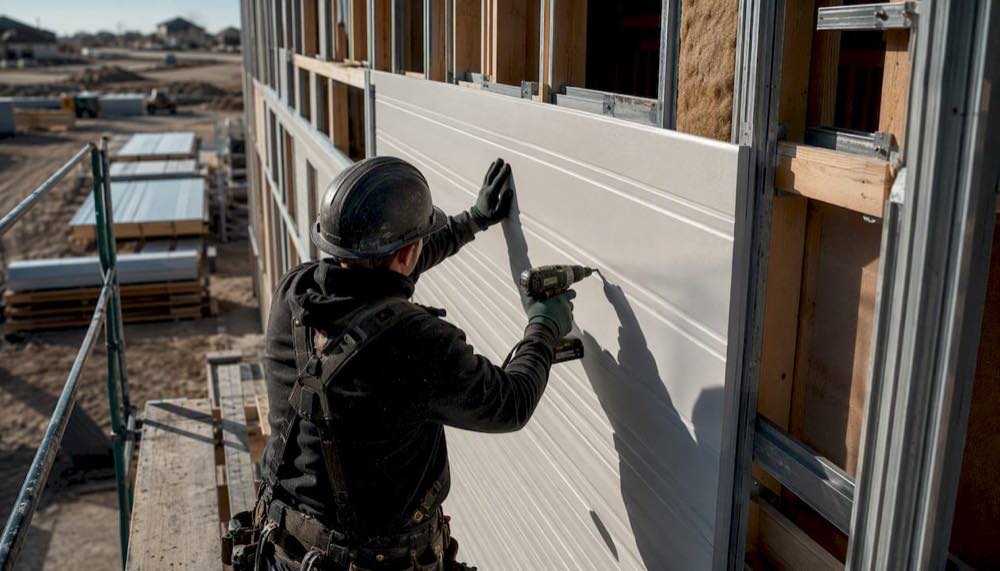
In Arizona’s master-planned communities, HOA design review committees frequently specify approved exterior materials, color palettes, and roof types. Better Quality Builders’ AirLight steel-insulated panels meet and often exceed the durability standards these committees look for, but the approval still needs to be documented and submitted correctly. Working with an architect experienced in Arizona HOA communities from day one can prevent costly redesigns late in the process.
The practical recommendation: if you are buying a lot inside an HOA community to build a custom home, get your builder and architect involved before you close on the land. Review the ARC guidelines together, confirm your intended materials and floor plan are approvable, and build the ARC timeline into your construction schedule. Discovering a material restriction after you have purchased the lot is an expensive lesson.
Building a custom home in Arizona? Here is how Better Quality Builders can help
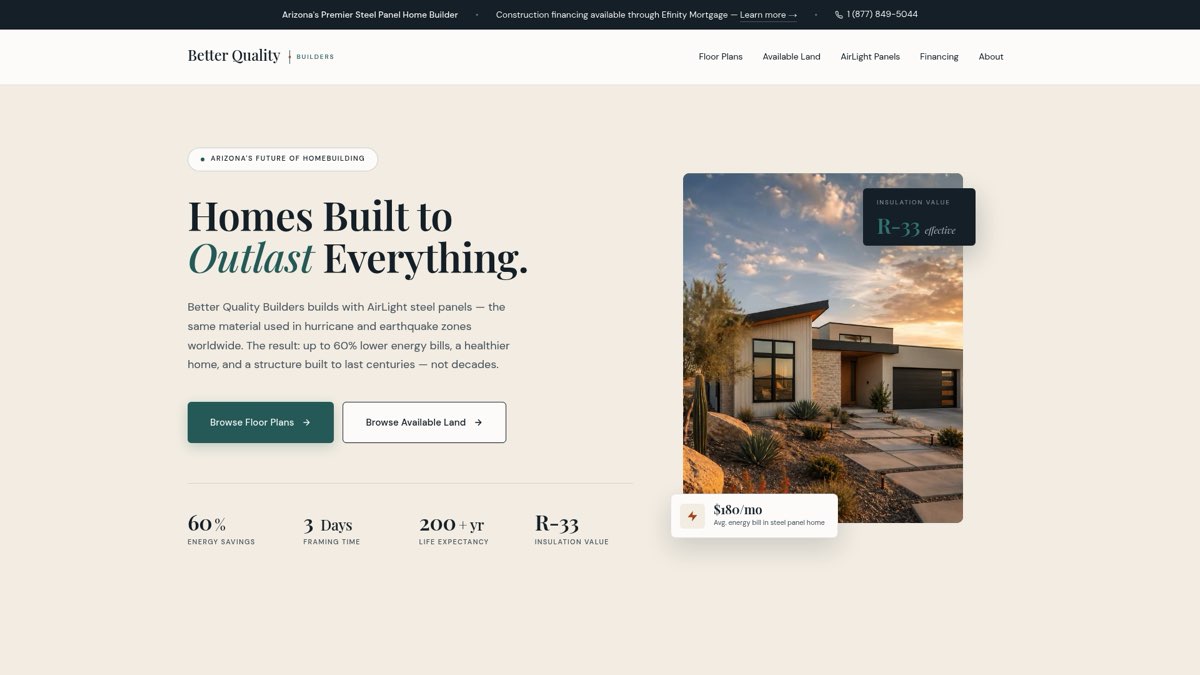
If you are weighing a lot inside an HOA community in Arizona, Better Quality Builders builds custom homes designed to meet and exceed the durability standards most ARCs require.
Whether your lot is inside an HOA or not, the process is built to be clear and straightforward from the first conversation.
Explore AirLight panel homes in Arizona or view custom home plans and designs to see what is possible on your lot.
Sources
- HOA vs No HOA: Pros and Cons in 2026 (Honest Buyer’s Guide)
- Is No HOA a Good Thing? Benefits and Drawbacks - LegalClarity
- HOA vs. Non-HOA Homes in Southern California: What Buyers Should Expect?
- HOA vs No HOA: What Buyers Need to Know | Emily Dieckmann Real Estate
Documents to request from any HOA before closing:
This article is general information, not a substitute for advice from a qualified lawyer. Consult a qualified legal professional about your own circumstances before acting on anything here.