When you build a custom home, the warranty is one of the clearest signals of whether a builder is worth hiring. A good one is specific, in writing, and backed by someone who will still be around in ten years. This guide explains what a home builder warranty should cover, how the industry-standard structure works, and the extra protections Arizona law gives you on top of any private contract.
The short version
- Most new-home warranties follow the industry-standard 1-2-10 structure: 1 year on workmanship and materials, 2 years on major systems (electrical, plumbing, HVAC), and 10 years on major structural defects.
- In Arizona you also get protections the paper warranty cannot take away: the Registrar of Contractors workmanship standard, the Residential Contractors Recovery Fund, and a court-recognized implied warranty of workmanship and habitability.
- Arizona has an eight-year statute of repose (A.R.S. 12-552) for most construction-defect claims, measured from substantial completion, with a possible one-year extension if a hidden defect first appears in year eight.
- Always ask for the written warranty before you sign, and confirm the builder is licensed and bonded.
What a home builder warranty actually is
"The warranty" is really three layers of protection working together. Knowing the difference tells you what to expect if something goes wrong after you move in.
- The express (written) warranty. This is the document your builder gives you. It spells out exactly what is covered, for how long, and how to make a claim. Terms vary by builder, so this is the piece you actually read closely and negotiate.
- The implied warranty. Arizona law reads a baseline promise into every new home whether or not it is written down: that the home was built in a workmanlike manner and is fit to live in.
- Statutory and licensing protections. Because your builder is licensed by the Arizona Registrar of Contractors (ROC), you have complaint and recovery rights that exist independently of any private contract.
A trustworthy builder welcomes all three. If a builder resists putting warranty terms in writing, treat that as a warning sign.
The 1-2-10 warranty: the industry standard
For more than three decades, the 1-2-10 framework has been the most common way new-home warranties are structured in the U.S., and it is the format most Arizona buyers will see. Here is what each number means.
- Year 1, workmanship and materials. The fit and finish of the home: drywall, paint, flooring and tile, cabinetry, trim, and fixtures.
- Years 1 to 2, systems. The distribution parts of major systems: the wiring, piping, and ductwork in the electrical, plumbing, heating, cooling, and ventilation systems.
- Years 1 to 10, structural. Major structural defects that affect load-bearing performance: foundation, framing, load-bearing walls, and roof structure.
Two things are worth knowing. First, the periods overlap. Structural coverage runs for the full ten years, not "years three through ten." Second, systems coverage is usually for the delivery portion of a system (the pipes and ducts), not the appliances. Your furnace, water heater, and dishwasher are typically covered by the manufacturer warranty, which your builder should hand over at closing.
Pro tip: ask your builder for a single binder, digital is fine, that collects the written builder warranty, every manufacturer warranty, and the maintenance guidelines. In Arizona heat and monsoon cycles, some manufacturer warranties (roofing, sealants, HVAC) are only valid if you keep up with documented maintenance.
What a good builder warranty covers, and what it does not
A clear warranty is specific about both sides of the line. Here is the general shape of it; your written document controls the details.
Usually covered:
- Defects in the builder workmanship and the materials the builder supplied
- Systems installed by the builder trades that fail due to faulty installation
- Major structural components that fail to perform as intended
Usually not covered:
- Normal wear and tear, and normal settling or minor cosmetic cracking within stated tolerances
- Damage from deferred or missed maintenance, a real factor in the desert where UV, dust, and monsoon moisture are relentless
- Homeowner or third-party changes made after move-in
- Acts of nature and damage that is the job of your homeowner insurance, not the builder
- Appliances and equipment covered by their own manufacturer warranties
Reputable builders evaluate borderline claims against a published standard, commonly the NAHB Residential Construction Performance Guidelines, which set measurable tolerances (for example, how wide a concrete crack has to be before it counts as a defect rather than normal curing). Ask which standard your builder uses so that "is this covered?" has an objective answer instead of a judgment call.
Your legal protections in Arizona (beyond the paper warranty)
This is where Arizona buyers have more protection than they often realize. These rights apply on top of, and sometimes despite, whatever a written warranty says.
The Registrar of Contractors workmanship standard
Arizona rules require that all licensed contractor work be done in a workmanlike manner and meet minimum construction standards. If it does not, a homeowner can file a complaint with the Arizona Registrar of Contractors. The agency generally has jurisdiction for two years from the date of occupancy or the date the last work was performed.
The Residential Contractors Recovery Fund
Arizona requires licensed residential contractors to be bonded and to participate in financial-protection programs. If a licensed contractor does defective or incomplete work and cannot or will not make it right, an eligible homeowner may apply to the ROC Residential Contractors Recovery Fund for up to $30,000 toward correcting the work. It is a backstop that exists because your builder is licensed, one more reason never to hire an unlicensed handyman for a custom build.
The implied warranty of workmanship and habitability
In the landmark case Richards v. Powercraft Homes (1984), the Arizona Supreme Court confirmed that every new home carries an implied warranty that it was built in a workmanlike manner and is habitable. It also held that this protection can extend to a later buyer of the home who had no contract with the original builder, for latent (hidden) defects that a reasonable inspection would not have caught. Builders cannot casually waive this away.
The eight-year statute of repose
Under A.R.S. 12-552, most contract-based construction-defect claims must be brought within eight years of substantial completion, with a possible one-year extension (to nine years total) if a hidden defect is first discovered during that eighth year. "Substantial completion" is generally the earliest of first occupancy, availability for use, or final government inspection. This is an absolute outer limit, which is another reason to keep your closing documents and warranty binder for the life of your ownership.
Before you sue, you notify. Arizona construction-defect law generally requires a homeowner to give the builder written notice and a genuine opportunity to inspect and repair before filing a lawsuit. In practice this is a good thing: most legitimate issues get resolved faster and cheaper through the builder warranty process than through a courtroom. This is general information, not legal advice. Talk to an Arizona construction attorney about your specific situation.
Builder-backed vs. third-party structural warranties
You will see two ways builders provide that ten-year structural coverage.
- Builder-backed. The builder stands behind the warranty directly. This works well when the builder is established, financially stable, and plans to be around, because the company that built your home is the company that fixes it.
- Insured or third-party. The builder buys a warranty from a specialized provider (2-10 Home Buyers Warranty and StrucSure are two common ones) so a claim is backed by an insurer even if the builder business changes hands. This adds a layer of security for the longest-tail structural claims.
Neither is automatically better. What matters is that the coverage is real, in writing, and backed by someone who will still be reachable in year eight. Ask your builder which model they use and why.
Questions to ask a builder before you sign
- Can I see your written warranty before I sign the construction contract?
- Is the structural coverage builder-backed or insured through a third party?
- What performance standard do you use to judge a claim (for example, the NAHB guidelines)?
- What is the exact process and response time for a warranty request after I move in?
- What maintenance am I responsible for to keep coverage valid in this climate?
- What is your ROC license number, and are you bonded? (You can verify any license free at the Arizona Registrar of Contractors.)
If you are still comparing builders, our guides on how construction bids work and what a custom home really costs to build in Arizona pair naturally with this one.
What to expect from Better Quality Builders
We are a family-built custom home builder rooted in Maricopa County, and we are licensed and bonded with the Arizona Registrar of Contractors (ROC #366787). That means every statutory protection described above (the workmanship standard, the Recovery Fund backstop, the implied warranty, and the eight-year window) applies to a home we build for you, automatically.
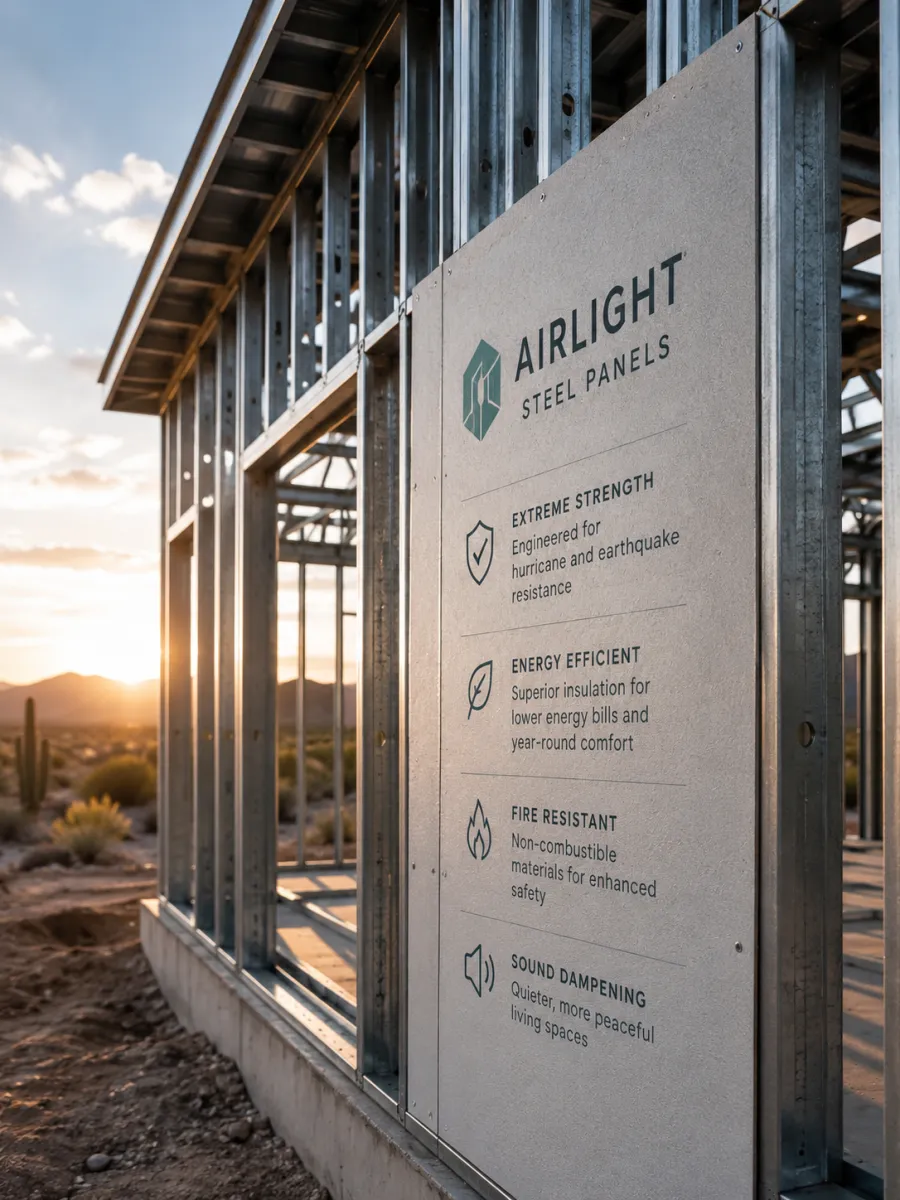
We also build differently. Our homes use steel structural insulated panels rather than conventional wood framing, engineered for the realities of the desert: dimensional stability in extreme heat, resistance to termites and moisture, and a tight, well-sealed envelope. Building for durability from day one is the best warranty there is, because the goal is a home that simply does not generate claims. You can read more about that approach in steel frame home benefits explained and how long a house really lasts.
We walk every client through our written warranty in plain language during the consultation, what is covered, for how long, and exactly how to reach us if you ever need us, before any contract is signed. No surprises and no fine-print games. If you are planning a custom home in Phoenix, Scottsdale, or anywhere in Maricopa County, we are glad to walk you through exactly how we protect your investment before you commit to anything.
Frequently asked questions
What warranty should I expect from a home builder?
At minimum, expect a written warranty following the industry-standard 1-2-10 structure: one year on workmanship and materials, two years on the electrical, plumbing, and HVAC distribution systems, and ten years on major structural defects. In Arizona you are also protected by the Registrar of Contractors workmanship standard, the implied warranty of workmanship and habitability, and an eight-year statute of repose, even beyond whatever the written document says.
How long is a new home builder warranty in Arizona?
Written warranties commonly run one, two, and ten years depending on the component. Separately, Arizona statute of repose (A.R.S. 12-552) allows most construction-defect claims for up to eight years after substantial completion, nine if a hidden defect surfaces in the eighth year, and the ROC generally accepts complaints for two years from occupancy.
What does a builder warranty usually not cover?
Normal wear and tear, minor cosmetic settling within stated tolerances, damage from missed maintenance, changes you or a third party make after move-in, acts of nature (that is homeowner insurance), and appliances covered by their own manufacturer warranties.
Is a builder warranty the same as home insurance?
No. A builder warranty covers defects in how the home was built. Homeowner insurance covers sudden damage from events like fire, storms, or theft. You need both, and they cover different things.
What can I do if my Arizona builder will not honor the warranty?
Start with the builder written warranty claim process, in writing. If that fails, you can file a complaint with the Arizona Registrar of Contractors (generally within two years of occupancy) and, if eligible, apply to the Residential Contractors Recovery Fund for up to $30,000. For larger or latent-defect disputes, consult an Arizona construction attorney about your rights under the implied warranty and A.R.S. 12-552.
Does a builder warranty transfer to the next owner?
Many written structural warranties are transferable, so check your document. Separately, Arizona implied warranty of workmanship and habitability can protect a later buyer against certain hidden defects even without a contract with the original builder, under Richards v. Powercraft Homes.
Sources
- Arizona Registrar of Contractors: workmanship standards, complaint process, and Residential Contractors Recovery Fund (roc.az.gov)
- A.R.S. 12-552: Arizona statute of repose for construction defects (eight-year limit)
- Richards v. Powercraft Homes, Inc., 139 Ariz. 242 (1984): implied warranty of workmanship and habitability
- NAHB and 2-10 Home Buyers Warranty: the 1-2-10 warranty framework and Residential Construction Performance Guidelines (2-10.com)
This article is general information for Arizona homeowners and buyers, not legal advice. Statutes and agency rules change; confirm current requirements with the Arizona Registrar of Contractors or a licensed Arizona attorney for your specific situation.