The four common home building material quality tiers used in U.S. construction are Economy (builder grade), Standard (contractor/quality grade), Premium (designer/custom grade), and Luxury (ultra-custom grade). Most custom-home buyers building for the long term should target Standard or Premium. More importantly, specify materials by technical standards — ASTM steel grades, APA PS1/PS2 plywood grades, NFRC window ratings, and explicit R-values — rather than relying on vague tier labels that mean different things to different builders. As LegalClarity notes, “builder grade” is an industry shorthand, not a code term and it describes cost-focused materials that meet minimum code but often carry shorter service lives.
Key Takeaways
Specifying materials by technical standard (ASTM, APA, NFRC, R-value with test method) is the single most effective way to hold a builder accountable and get the tier you paid for.
| Point | Details |
|---|---|
| Specify by standard, not tier name | Ask for ASTM, APA, and NFRC designations on every structural and envelope item. |
| Match tier to ownership horizon | Standard suits 5–7 year holds; Premium or Luxury pays back over 30+ years. |
| Prioritize envelope and windows | Insulation R-values and NFRC-certified window ratings drive energy costs for decades. |
| Request QA documentation | Ask for lab test reports, mill certifications, and AASHTO/AAP accreditation evidence. |
| Better Quality Builders | Builds with AirLight steel panels in Arizona, delivering verified performance and up to 60% lower energy bills. |
Table of Contents
- What each home building material quality tier actually includes
- How to compare materials across tiers on a real spec sheet
- Standards and grades that reliably signal material quality in the U.S.
- What each tier typically costs and how long materials last
- How to choose the right tier for your project
- How quality is assured during construction
- Vetting advanced and sustainable materials before you specify them
- A builder’s perspective on what actually matters in a spec
- Better Quality Builders can help you specify and build at the right tier
- Sources
What each home building material quality tier actually includes
Understanding what sits inside each tier helps you read a spec sheet without being misled by marketing language.
Economy (Builder Grade): These are the lowest-cost materials that satisfy code minimums. Think particleboard cabinet boxes, basic vinyl windows with no Low-E coating, fiberglass batt insulation at the minimum code R-value, laminate countertops, and three-tab asphalt shingles. They work — but their service lives are shorter, and replacement costs accumulate faster than buyers expect.
Standard (Contractor/Quality Grade): A meaningful step up. Sheathing moves to APA Rated OSB or plywood meeting PS1/PS2, framing lumber grades to No. 2 or No. 1 Southern Pine per Southern Pine grading rules, and windows carry NFRC ratings with Low-E glass. Insulation exceeds code minimums, cabinetry uses plywood boxes, and roofing upgrades to architectural shingles. This tier suits buyers who want durability without a luxury budget.
Premium (Designer/Custom Grade): Engineered lumber products (LVLs, I-joists), APA Performance Rated Panels, solid-wood or plywood-box cabinetry, quartz or granite counters, double- or triple-pane windows with certified NFRC U-factors and SHGC values, high-density spray foam or rigid insulation at above-code R-values, and metal or Class A architectural roofing. Interior doors at this tier shift from hollow-core to solid-core; understanding interior door price vs. quality tradeoffs helps you decide where to spend.
Luxury (Ultra-Custom Grade): Materials specified to high ASTM or manufacturer performance standards, rare stone or terrazzo, custom millwork, highly engineered cladding systems (including steel panel assemblies), and top-tier glazing. Every component is selected for a specific performance or aesthetic outcome, not a price point.
Quick reference by category:
- Lumber: Economy = No. 3 or utility; Standard = No. 2; Premium = No. 1 or Select Structural; Luxury = MSR/MEL or custom species
- Sheathing: Economy = basic OSB; Standard = APA Rated Sheathing (Exposure 1); Premium = APA Performance Panel or structural plywood; Luxury = engineered panel to project spec
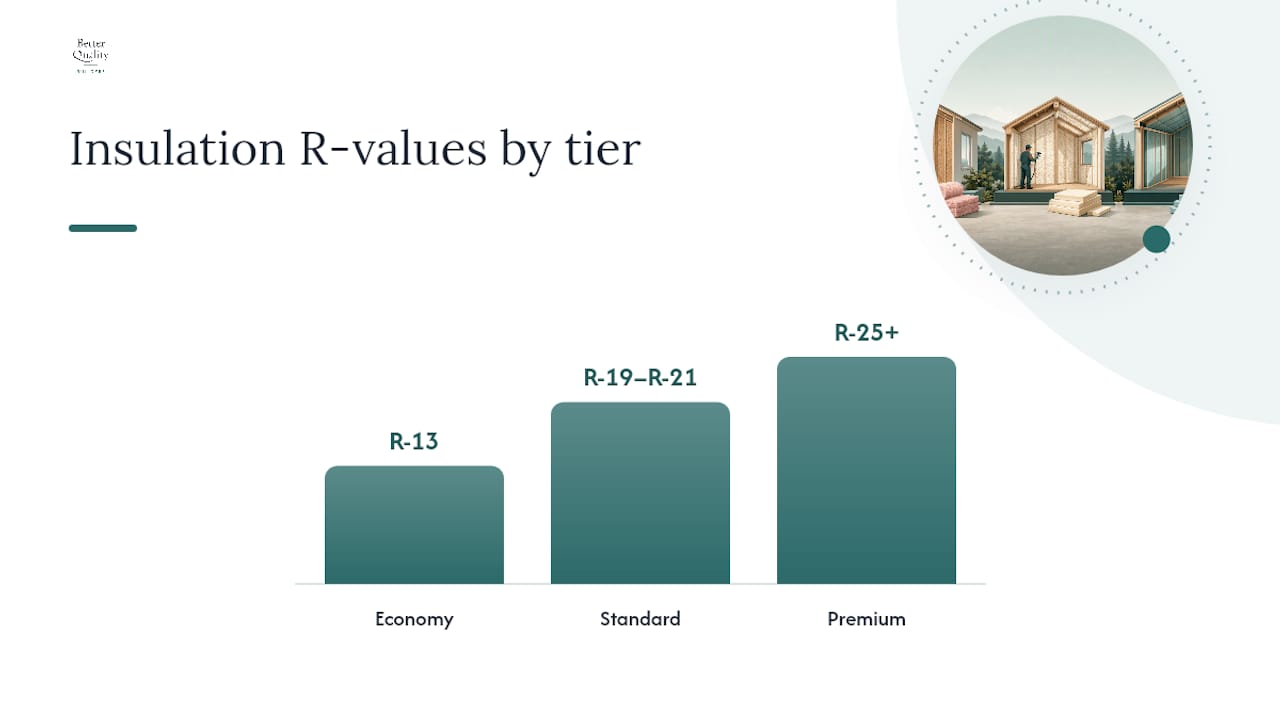
- Insulation: Economy = R-13 batt; Standard = R-19–R-21 batt or blown; Premium = R-25+ spray foam or rigid; Luxury = continuous insulation system to thermal modeling spec
- Windows: Economy = single-pane vinyl; Standard = double-pane Low-E, NFRC rated; Premium = triple-pane, certified U-factor ≤ 0.22; Luxury = custom-framed, thermally broken, project-specified
- Roofing: Economy = 3-tab shingle; Standard = architectural shingle; Premium = metal or Class A tile; Luxury = standing seam metal or custom cladding
- Interior finishes: Economy = laminate; Standard = solid surface or entry quartz; Premium = full quartz/granite; Luxury = custom stone, terrazzo, or bespoke millwork
How to compare materials across tiers on a real spec sheet
Specify by standard, not by tier name. A builder who quotes “premium windows” without an NFRC label has given you nothing verifiable. A builder who quotes a U-factor of 0.28 and an SHGC of 0.25, certified by NFRC, has given you something you can hold them to.
The core criteria to evaluate are performance (structural strength, R-value, fire rating), compatibility with the assembly and climate zone, maintainability over a 20–30 year horizon, warranty language (read the exclusions, not just the headline years), and lifecycle cost.
Reading a spec sheet means looking for ASTM or ANSI designations, APA panel marks, NFRC window label data, R-values tied to a specific test method (ASTM C518 or C177), and manufacturer warranty documents. NIST’s data evaluation framework reinforces why reproducibility and agreed test methods matter: a property value is only credible when the test method is named and the data has been normalized across labs.
Pro Tip: Ask your builder for the actual lab test report or mill certification for any structural product — not just the product data sheet. For concrete mixes or critical structural panels, request evidence of AASHTO Accreditation Program (AAP) lab accreditation. This is standard practice on public infrastructure projects and is equally valid for a custom home.
Standards and grades that reliably signal material quality in the U.S.
Knowing which label to look for on a submittal removes guesswork from upgrade conversations.
- APA PS1/PS2: The product standards governing structural plywood and performance panels. An APA grade stamp (A-A through D-D for appearance; APA Rated Sheathing for structural) tells you face/back veneer grade, bond classification (Exterior or Exposure 1), and span rating. No stamp, no verified compliance.
- Lumber grading: Southern Pine and other species agencies publish grade rules. No. 2 is the standard framing grade; No. 1 and Select Structural carry higher design values for load-bearing applications.
- ASTM steel and aluminum grades: For metal roofing, panels, and structural elements, ASTM A653 and A792 for steel, and alloys like 5052 aluminum matter for corrosion resistance, especially in coastal or high-humidity climates. Alloy choice is not cosmetic.
- NFRC ratings: The National Fenestration Rating Council certifies U-factor, Solar Heat Gain Coefficient (SHGC), and air leakage for windows and doors. In Arizona’s climate, SHGC is often more important than U-factor for cooling load.
- R-value test methods: Insulation R-values must reference ASTM C518 or C177. An R-value claim without a test method is unverifiable.
Be skeptical of vague claims like “contractor grade” or “energy efficient” with no supporting number. These phrases carry no standardized meaning and no accountability.
What each tier typically costs and how long materials last
Upfront cost differences between tiers are real, but the lifecycle picture often reverses the math. Durable materials reduce repair costs over time in ways that don’t show up on the initial bid.
| Tier | Typical upfront cost vs. Economy | Expected component lifespan | Maintenance intensity |
|---|---|---|---|
| Economy | Baseline | a typical lifespan for most components | High — frequent replacement cycles |
| Standard | 10–20% above Economy | a typical lifespan for most components | Moderate |
| Premium | 25% above Economy | a typical lifespan for most components | Low to moderate |
| Luxury | 50%+ above Economy | a longer lifespan expected for engineered systems | Low with proper detailing |
Laminate counters and basic vinyl windows commonly have shorter lifespans than quartz counters and higher-grade windows, which last notably longer with lower maintenance demands. Roofing follows a similar pattern: a 3-tab shingle may need replacement sooner than standing seam metal roofing, which can last multiple decades.
Energy performance note: Higher-performance windows and above-code insulation can meaningfully reduce heating and cooling loads. Better Quality Builders’ AirLight steel panel system is designed to deliver up to 60% lower energy bills compared to conventional construction, reflecting the compounding value of a well-specified thermal envelope.
Regional labor costs and climate conditions affect both upfront pricing and lifespan. A vinyl window rated for a mild Pacific Northwest climate may degrade faster in Arizona’s UV and heat exposure. Always factor your specific climate zone into lifespan estimates.
How to choose the right tier for your project
Choose the tier that matches your ownership horizon, maintenance tolerance, and resale goals — then verify every line item with a standard reference number.
- Define your ownership horizon. Staying 5–7 years? Standard grade protects resale without over-specifying. Building your forever home? Premium or Luxury pays back over 30+ years.
- Assess your climate and resilience needs. Arizona’s heat, UV load, and occasional high-wind events favor higher-performance envelopes and exterior materials chosen for regional durability.
- Set energy performance targets. Identify your target HERS score or energy cost goal, then work backward to the insulation R-values and window U-factors required to hit it.
- Estimate your maintenance budget. Economy materials cost less today and more every decade. If you prefer a low-maintenance custom home, specify accordingly from the start.
- Clarify resale expectations. Premium kitchens and high-performance windows are among the most visible upgrade signals to future buyers in competitive markets.
- Review warranty terms. Structural components should carry warranties of 10 years or more. A one-year warranty on framing or sheathing is a red flag.
Questions to ask your builder or supplier:
- “What ASTM, APA, or NFRC designation applies to this item?”
- “Can you provide the mill certification or lab test report?”
- “What bond classification and span rating does this panel carry?”
- “Is the testing lab AASHTO/AAP accredited?”
Red flags: vague specs with no standard reference, no test reports available, one-year warranties on structural components, and submittals that change between bid and contract.
How quality is assured during construction
QA during a custom build combines sampling and testing, lab accreditation, and signed acceptance records. Without documentation, a verbal assurance that materials meet spec is unverifiable.
The process typically runs: submittals and shop drawings reviewed before installation → independent sampling of critical materials (concrete, structural panels, framing) → correlation testing between field samples and lab results → materials certification and exception reports filed at project close. The ADOT Quality Assurance Program Manual describes this sequence in detail for public infrastructure, and the same principles apply to custom residential construction: acceptance sampling, independent assurance sampling, and AASHTO-accredited lab testing provide the highest confidence in material conformity.
Documents to request from your builder:
- Material submittals and shop drawings for structural components
- Mill certifications or lab test reports for lumber, panels, and concrete
- Evidence of AASHTO/AAP lab accreditation for the testing firm
- Materials Certification or Exception Report at project completion
- Sampling checklists showing what was tested and when
For critical systems — foundation concrete, structural steel, or engineered panel assemblies — consider hiring an independent materials testing consultant to review submittals and witness sampling. The cost is small relative to the risk of discovering a non-conforming material after walls are closed.
Vetting advanced and sustainable materials before you specify them
Novel or advanced materials can offer real advantages, but they require extra screening before you commit them to a build. The AMEA staged screening framework recommends evaluating new materials across ideation, business case, and lab phases, prioritizing tests with discriminating power and lifecycle exposure data — because novel materials can fall into regulatory or safety gaps that conventional products have already navigated.
Practical steps to vet an unfamiliar product:
- Require representative use-phase release testing (off-gassing, leaching) before specifying for occupied spaces
- Compare performance data to a conventional material benchmark, not just to the manufacturer’s marketing claims
- Ask for an Environmental Product Declaration (EPD) to verify embodied carbon and recycled content claims
- Check whether the product falls under any EPA or state VOC regulations for indoor use
- Confirm the manufacturer’s warranty covers the specific application you intend
Sustainability tradeoffs are real. A material with lower embodied carbon may off-gas more in the first year; a highly durable synthetic may be difficult to recycle at end of life. Specifying low-VOC finishes and materials and requesting EPDs for major assemblies are the two most practical steps most custom-home buyers can take. For a broader view of healthier home building practices, material selection is the starting point, not an afterthought.
A builder’s perspective on what actually matters in a spec
The conventional wisdom in custom home building is that tier upgrades are primarily about aesthetics. That framing gets it backwards. The most consequential upgrades are invisible: the thermal envelope, the structural sheathing, the window performance ratings, and the quality of the air barrier. A quartz countertop is easy to see on a tour; a continuous rigid insulation layer is not. Yet the insulation decision affects every energy bill for the next 50 years, and the countertop decision affects the next remodel.
Specifying by standard rather than by tier name is not pedantry. It is the only way to hold a supplier accountable when a product arrives on site. “Premium windows” is a marketing phrase. A certified NFRC U-factor of 0.22 is a contractual commitment. The builders who resist providing ASTM designations, APA panel marks, or lab reports are usually the ones whose materials won’t survive scrutiny.
The most underestimated move a custom-home buyer can make is to hire an independent materials testing consultant for the structural phase. On a $600,000 build, a $3,000–$5,000 testing engagement is cheap insurance. Most buyers never consider it because their builder didn’t suggest it.
Better Quality Builders can help you specify and build at the right tier
Translating tier choices into a build-ready spec is where most custom-home buyers get stuck.
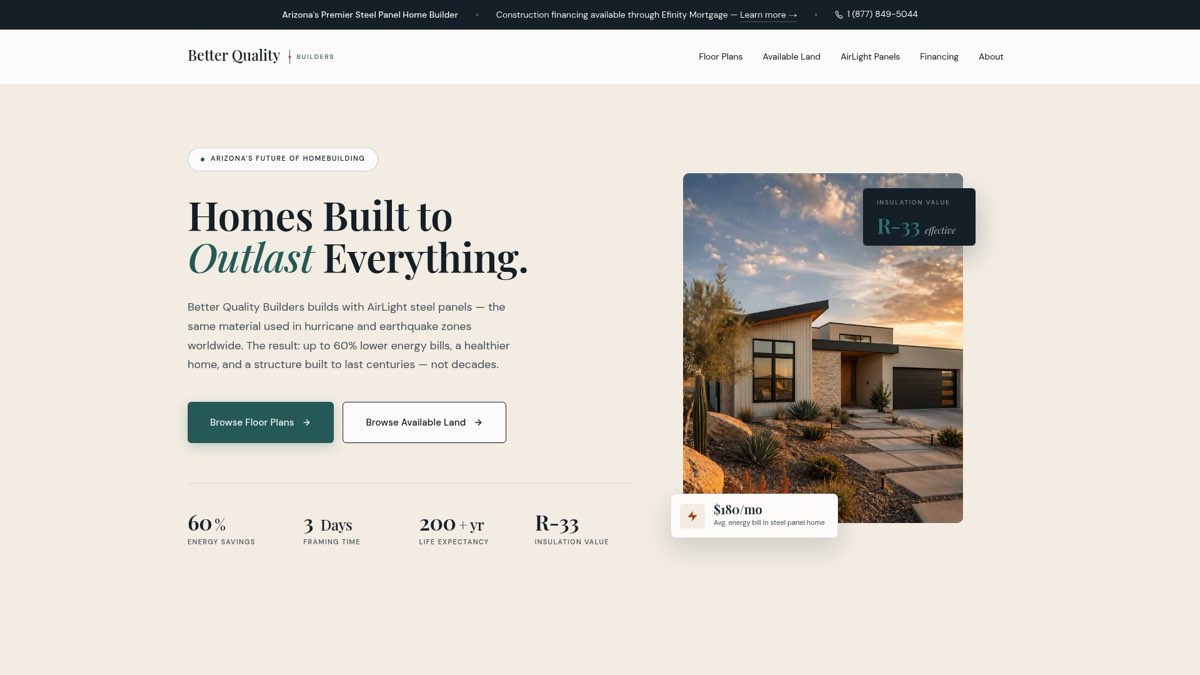
The foundation of every Better Quality Builders home is the AirLight steel-insulated panel system, a high-performance envelope used in hurricane and earthquake zones worldwide. If you’re ready to move from research to a preliminary spec review or pricing conversation, contact Better Quality Builders to get started.
Sources
The following authoritative sources were used throughout this article. Each covers a specific aspect of material quality, grading, or quality assurance relevant to custom home construction.
- Arizona Department of Transportation Quality Assurance Program Manual (QAPM)
- NIST Special Publication: Data Evaluation for Materials Properties
- APA – structural plywood panel grades and standards
- Southern Pine lumber grade descriptions
- Builder grade materials: what they are and when to upgrade (LegalClarity)