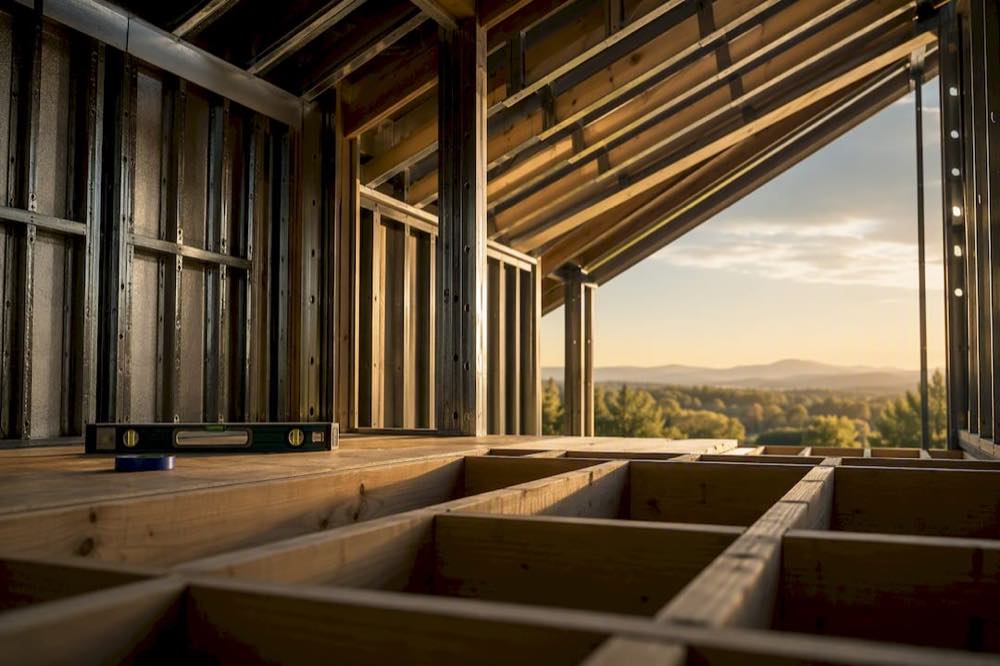
Most well-maintained homes last well beyond a single lifetime. Studies model the average U.S. house lifespan at around 130 years, but the structural shell and the mechanical systems inside it age at completely different rates. Framing and foundations often outlast three or four generations of roofs, furnaces, and water heaters, and the real limiting factor is almost always maintenance, climate exposure, and material choice, not the calendar.
TL;DR:
- Most houses’ structural shells can last 80 to 100 years with proper protection from moisture and maintenance.
- Demolition data shows many houses are torn down for economic reasons before structural failure, especially for wood-frame homes over 75 years old.
- Climate, material choice, and workmanship significantly influence how long a home can remain structurally sound and visually functional.
- Building with durable materials and designing for long-term maintenance can significantly extend a house’s usable life beyond typical component replacement cycles.
Table of Contents
- How Long Do Houses Last on Average?
- How Long Do the Parts of a House Last?
- What Factors Shorten or Extend a Home’s Lifespan?
- Budgeting for a House That Will Outlive Your Mortgage
- A Seasonal Maintenance Checklist That Actually Extends Lifespan
- When Should You Repair vs. Replace?
- Why Building for Longevity Changes How You Think About a House
- Build a Home That Outlasts the Mortgage
- Sources
- FAQ
How Long Do Houses Last on Average?
The honest answer is that it depends entirely on how you measure it, and the numbers you’ll find online often contradict each other because they’re measuring different things.
A 2020 ASCE Journal of Architectural Engineering studyAE.1943-5568.0000401) modeled U.S. residential housing lifespan using survival distributions (log-normal, gamma, and Weibull curves) applied to American Housing Survey demolition data. Under those modeling assumptions, the average house lifespan comes out to roughly 130 years. That’s a probabilistic estimate, not a guarantee. It reflects statistical patterns across millions of homes, not a promise about any single property.
Empirical, demolition-based studies tell a different story. Research on demolished buildings in U.S. and European cities found that most torn-down wood-frame houses were older than 75 years, while over half of demolished concrete buildings fell in the 26 to 50 year range. That gap exists because wood-frame houses and concrete structures get demolished for different reasons entirely, and because raw demolition data captures buildings that failed economically, not just physically.
That distinction matters more than the raw numbers:
- A house rarely dies of old age the way a car does.
- Owners can replace a roof, re-pipe plumbing, swap out HVAC systems, and update finishes indefinitely, keeping the shell alive far longer than any single component.
- What usually ends a house’s life is an economic decision. Repair costs exceed rebuild value, the lot becomes worth more without the structure, or the design no longer fits how people want to live.
Think of it as a Ship of Theseus problem. If you keep replacing the parts, how long can the whole thing keep going? The answer, for a well-built house, is often “longer than anyone planned for.”
How Long Do the Parts of a House Last?
The shell and the systems inside it operate on completely different clocks, and that mismatch is the single biggest source of confusion when people ask how long a house should last.
Foundations and framing, when built correctly and protected from moisture, commonly last 80 to 100 years or more, according to This Old House. Everything layered on top of that shell wears out much faster and in a predictable order.
Roofing varies the most by material:
- Asphalt shingles: typically one to two decades
- Metal roofing: generally two to four decades
- Slate or clay tile: several decades or more
Mechanical systems and appliances follow a tighter band, largely because they’re mechanical devices with moving parts:
- Furnaces and AC compressors: usually about a decade and a half
- Water heaters: roughly between eight and fifteen years
- Refrigerators: commonly in the range of fourteen to seventeen years
- Dishwashers: around 10 years
InterNACHI’s life-expectancy chart breaks down dozens of additional components, from cabinetry to window seals, and consistently notes that local climate and maintenance quality shift these ranges in either direction.
Pro Tip: Roofs, HVAC systems, and windows are the three components most likely to blow up a home budget, because they fail on similar timelines. If your roof is 18 years old and your furnace is 14, plan for both bills within the same five-year window, not one at a time.
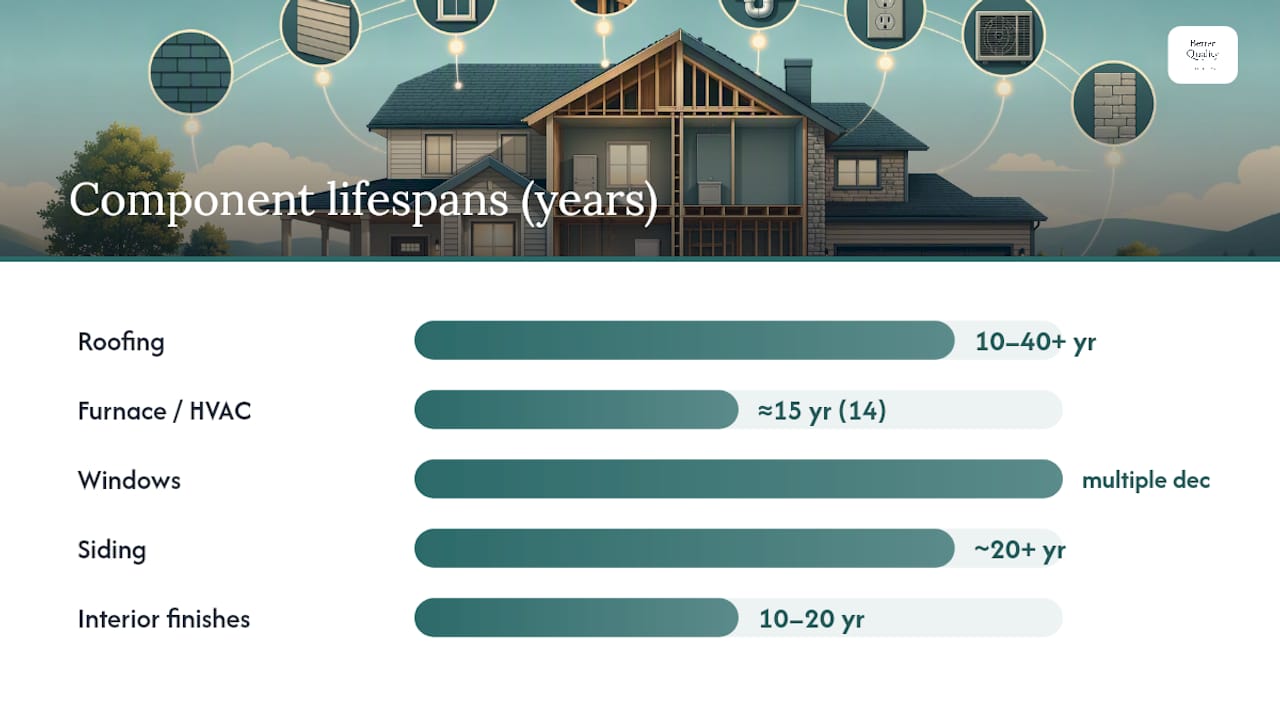
Windows generally last multiple decades depending on frame material, and siding lifespans vary widely, from a couple of decades for vinyl to several decades or more for fiber cement or brick veneer. Interior finishes like paint, flooring, and countertops turn over on much shorter 10 to 20 year cycles, but they rarely force a capital crisis the way a failed roof or dead compressor does.
What Factors Shorten or Extend a Home’s Lifespan?
Two houses built in the same year, to the same code, can age at wildly different rates depending on where they sit and how they’re treated.
Climate exposure does a lot of the damage. Coastal salt air corrodes fasteners and HVAC coils years ahead of schedule. Humid regions accelerate wood rot and mold growth in framing and sheathing. Freeze-thaw cycles crack foundations and driveways in the Midwest and Northeast. Wildfire-prone areas of the West put a premium on fire-resistant siding and roofing, because one bad season can erase decades of otherwise sound construction.
Material and workmanship matter just as much as location; choosing the right components like structural PVC fittings can greatly influence durability and lifespan:
- Wood framing performs well when kept dry but is vulnerable to pests and moisture.
- Brick and poured concrete resist fire and pests but can crack under poor soil conditions.
- Steel panel systems resist fire, mold, and termites in ways traditional wood framing cannot match.
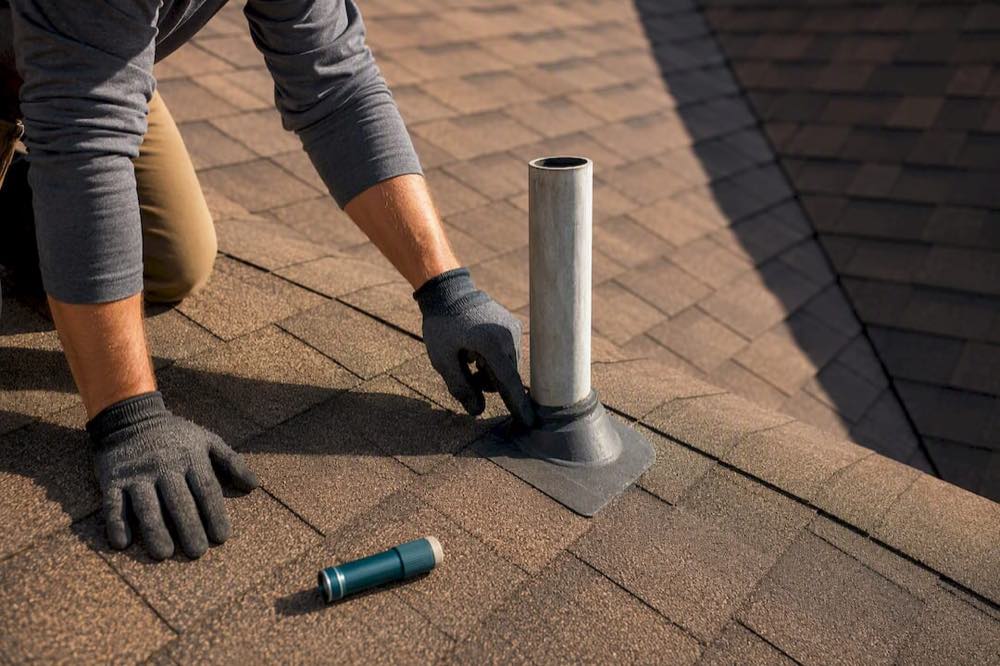
- Sloppy flashing or a rushed roof installation can shave a decade off a product rated for 30 years.
Market forces play a role too. When land values rise faster than renovation costs, owners and developers often choose to demolish and rebuild rather than repair, even when the structure itself still has decades of physical life left in it.
Budgeting for a House That Will Outlive Your Mortgage
A widely used rule of thumb, cited by This Old House and echoed across industry maintenance handbooks, says to commonly recommend setting aside a small percentage of your home’s value annually for maintenance and reserves. For example, on a moderately priced home, this can mean several thousand dollars annually, some years spent on small repairs, other years banked toward a bigger replacement.
Big-ticket items don’t arrive on a neat schedule, so it helps to know roughly when they’re coming:
- Roof: typically lasting around one and a half to three decades depending on material
- HVAC system: often between a dozen and eighteen years
- Water heater: usually lasts between eight and fifteen years
- Windows and siding: commonly have life expectancies ranging from two to four decades
Set up a dedicated capital fund separate from your emergency savings. If your roof and HVAC system are both approaching their late teens in age, that fund should already hold several thousand dollars earmarked specifically for those two items, not general emergencies.
A Seasonal Maintenance Checklist That Actually Extends Lifespan
The highest-impact maintenance tasks aren’t glamorous, but skipping them is how a house that should last a century starts failing in three decades.
- Spring: Inspect roof flashing and penetrations for winter damage. Clear gutters and downspouts before spring rains arrive.
- Summer: Service HVAC systems before peak cooling season; check exterior grading to confirm water still drains away from the foundation.
- Fall: Clean gutters again after leaf drop; inspect caulking and weatherstripping around windows and doors before cold weather sets in.
- Winter: Watch for ice dams on the roofline; monitor basements and crawl spaces for moisture intrusion.
Moisture control sits at the top of every trade guide for a reason. Failed waterproofing and small connection points, not the main structural elements, tend to be where damage starts and cascades into rot, mold, and eventually structural repair.
Pro Tip: Simple roof geometry with fewer valleys and penetrations, paired with durable exterior materials, cuts your long-term maintenance burden dramatically. Every roof valley and pipe penetration is a future leak waiting for the wrong storm. A low-maintenance custom build designed around this principle needs far less annual attention than a home with a complicated roofline and mismatched materials.
When Should You Repair vs. Replace?
The decision usually comes down to three numbers: the component’s age relative to its expected lifespan, how often you’ve already repaired it, and whether the repair cost approaches the replacement cost.
- If a furnace is 14 years old and has needed to service calls this year, replacement usually wins.
- Persistent roof leaks after multiple patch jobs signal a full replacement, not another patch.
- Foundation settlement, visible cracking that’s widening, or recurring water intrusion warrants a structural engineering assessment before you spend another dollar on cosmetic fixes.
Historic homes complicate this math. Original woodwork, plaster, or period hardware can justify repair costs a standard cost-benefit calculation would reject, simply because replacement erases value a spreadsheet can’t capture.
Why Building for Longevity Changes How You Think About a House
Most homeowners plan for the next repair, not the next 80 years. That’s backward. The decisions made during construction, wall assembly, roof geometry, material selection, determine whether future owners are fighting moisture intrusion or simply repainting.
Better Quality Builders builds with AirLight steel panels specifically because fire, mold, and termite resistance eliminate entire categories of the failures that cut lifespans short. If you’re planning new construction or a major renovation, prioritize aging-in-place design now. Retrofitting later costs far more than building it in from the start.
— David Kobierski
Build a Home That Outlasts the Mortgage
That’s a real advantage over a wood-frame home you’re still patching every winter.
If you’re weighing a custom build against buying an aging resale, this is worth a serious look. Browse the floor plans to see what’s buildable, or start with available land in Maricopa County to find your lot first.
Sources
- How Long Your Home’s Components Last - This Old House
- InterNACHI’s Standard Estimated Life Expectancy Chart for Homes
FAQ
Can Houses Last 200 Years?
Yes, physically a house’s structural shell commonly lasts 80 to 100 years or more if framing, foundation, and roof are protected from moisture and maintained continuously. The limiting factor is almost never the materials themselves. It’s whether owners keep replacing mechanicals, roofing, and finishes as they age rather than letting deferred maintenance compound into structural damage.
How Long Do Houses Usually Last?
Modeled estimates put the average U.S. house lifespan at around 130 years, though demolition-based studies often show shorter average ages because many houses are torn down for economic reasons long before they physically fail. The structural shell typically outlasts each mechanical system inside it by decades.
Is a 20 Year Old House Considered Old?
No, a 20 year old house is still relatively young by structural standards, since foundations and framing routinely last 80 to 100 years or more. At 20 years, you should expect to be replacing or servicing shorter-lived components like the roof, water heater, and HVAC system rather than worrying about the structure itself.
Is 40 Years Old a Good Age to Buy a House?
A 40 year old house can be an excellent buy if it’s been maintained, since the structural shell still has decades of life left under most estimates. Budget carefully for near-term replacements, though. Roofing, HVAC, and water heaters installed at construction are almost certainly past or approaching the end of their typical service life by that age.