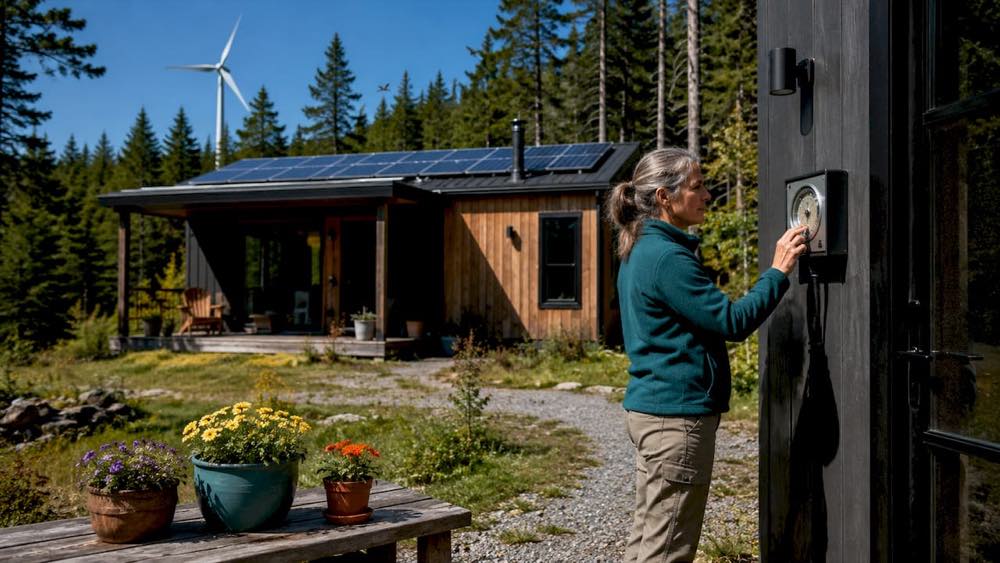
An off-grid home is a dwelling that operates entirely independent from municipal utilities, relying on its own power, water, and waste systems to sustain daily living. Understanding how off grid homes work is the first step toward deciding whether this lifestyle fits your goals. Nearly 180,000 U.S. households live fully off-grid as of 2026, double the number from 2020. These homes use three core systems: power generation, water supply, and waste management. Each system must be designed, sized, and maintained by the homeowner rather than a utility company.
How off grid homes work: power generation and storage
The electrical system is the backbone of any off-grid home. It accounts for 40–50% of total system costs, which makes it the most critical area to plan carefully. A well-designed power system combines solar panels, battery storage, a charge controller, an inverter, and a backup generator.
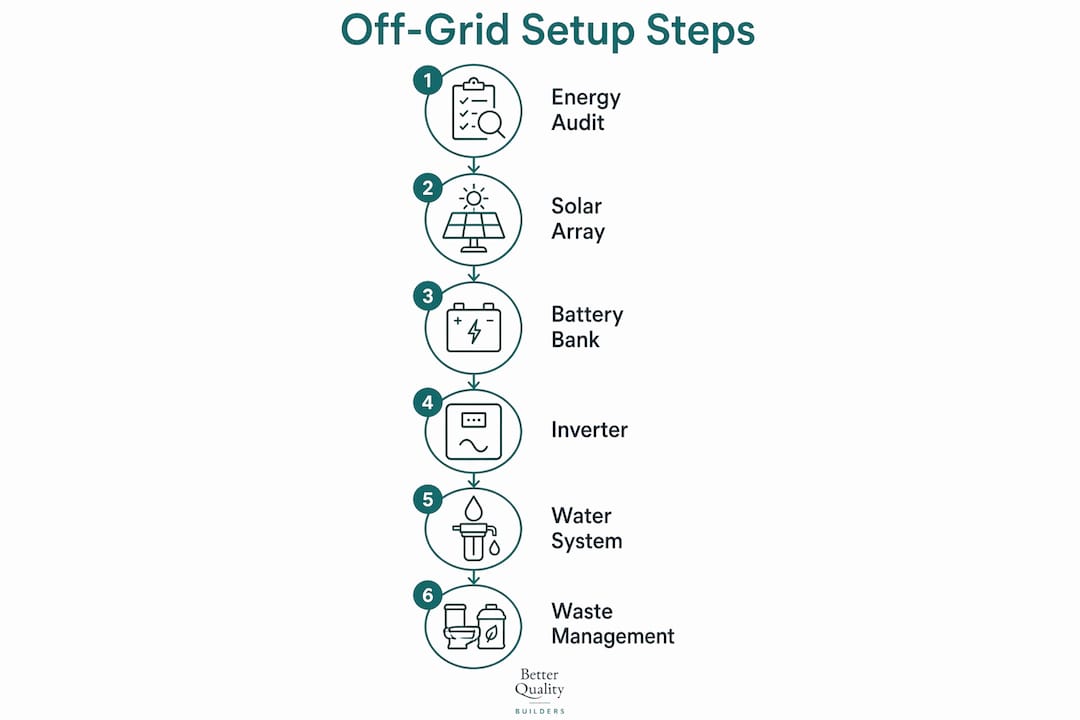
Solar arrays and how they’re sized
A four-person household typically needs a 10–15 kW solar array to cover daily electricity needs. That capacity powers lighting, refrigeration, HVAC, and appliances without drawing from any utility grid. Panels are mounted on rooftops or ground arrays and feed electricity into a charge controller, which regulates the flow into the battery bank.
Battery storage and inverters
Battery storage is the highest-cost component in any off-grid energy solution. LiFePO4 batteries (lithium iron phosphate) are the current standard, with most families needing 50–80 kWh of capacity to cover 2–3 days without sun. These batteries should be discharged no more than 80% depth of discharge to preserve their lifespan.
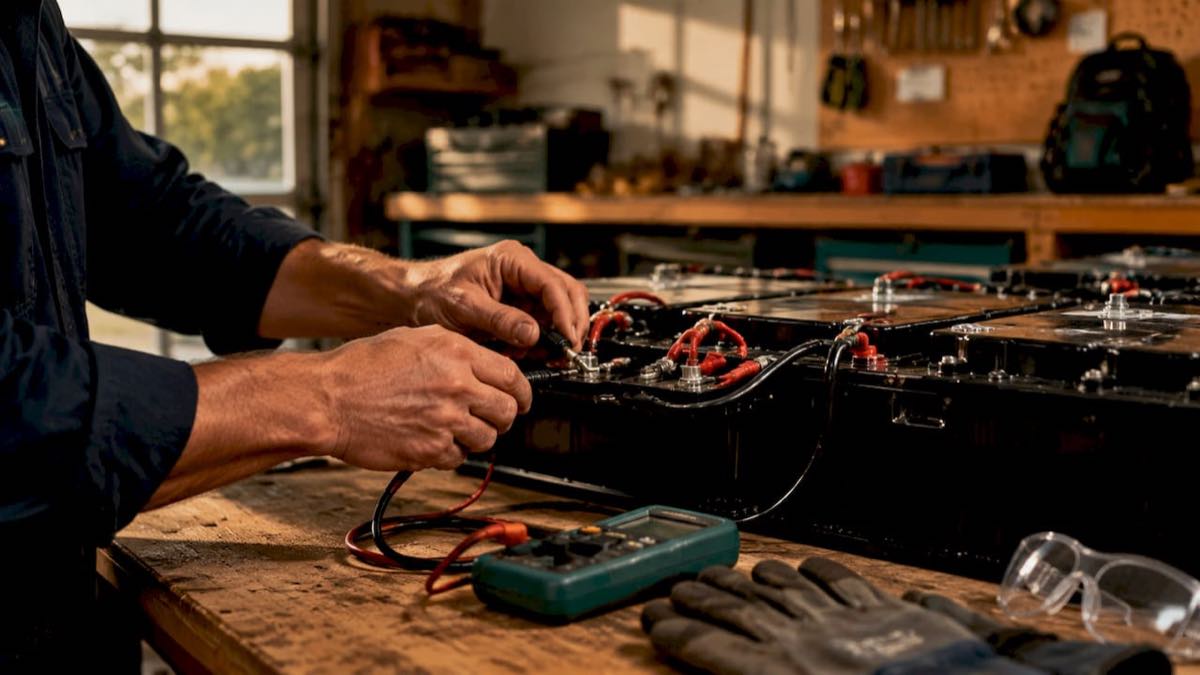
A pure sine-wave inverter converts stored DC battery power into the AC power your appliances use. Cheap modified sine-wave inverters damage sensitive electronics, so they are not an option for a reliable home system. Appliance surge loads run 3–8 times the normal operating wattage during startup, so your inverter must be sized to handle those brief peaks. Ignoring surge capacity causes system shutdowns and equipment damage.
Backup generators and 48V architecture
A backup generator running less than 5% of the year provides a reliable safety net during extended cloudy periods. This strategy reduces the need for a massive battery bank and limits battery degradation. For systems above 2 kW or 10 kWh, standardizing on 48V architecture reduces cable thickness, lowers resistive loss, and cuts overall cost compared to 12V or 24V setups.
Pro Tip: Size your inverter for surge, not just running load. A refrigerator compressor can draw 3–5 times its rated wattage at startup. If your inverter can’t handle that spike, it shuts down every time the fridge kicks on.
- Solar photovoltaic (PV) array: generates electricity from sunlight
- Charge controller: regulates current flow into batteries
- LiFePO4 battery bank: stores energy for nights and cloudy days
- Pure sine-wave inverter: converts DC to usable AC power
- Backup generator: covers extended low-sun periods
How do off grid homes get water and manage waste?
Water infrastructure represents 20–30% of off-grid system costs, and it requires just as much planning as the electrical side. Without a municipal connection, you source, filter, store, and distribute every drop yourself.
Water sourcing options
Three primary methods supply water to off-grid homes:
- Drilled wells: The most reliable long-term source in most regions. A submersible pump powered by your solar system draws water from the aquifer. Depth and yield vary by location, so a hydrogeological survey before drilling is money well spent.
- Rainwater catchment: Roof surfaces collect rainfall into storage tanks. This works well in high-precipitation regions but requires large tank capacity to bridge dry seasons.
- Hauled water: A practical short-term solution during construction or in arid areas. A 2,500-gallon storage tank gives a family of four roughly three weeks of supply at conservation levels.
Water filtration and daily usage
Raw water from any source requires treatment before drinking. A complete filtration train includes sediment filters, activated carbon filters, and UV purification. Daily water usage for a family of four averages 80–120 gallons even with strict conservation. That figure shapes tank sizing and pump capacity decisions.
Waste management without municipal sewer
Composting toilets are the most common off-grid waste solution. They aerobically process human waste into garden-safe compost with no water required. Septic systems are the legal requirement in many counties, so check local permitting before choosing a composting toilet. Waste management accounts for 10–15% of total off-grid costs, and legal compliance varies widely by state and county.
What design principles make off grid homes reliable?
Reliable off-grid operation comes down to accurate planning before a single panel is installed. The most common reason systems fail is under-sizing, not equipment quality.
Energy audits as the foundation
Room-by-room energy audits define your daily kWh load, which controls every subsequent sizing decision. You list every appliance, its wattage, and its daily hours of use. That total becomes the baseline your solar array and battery bank must meet. Skipping this step and guessing leads to a system that runs out of power on the third cloudy day of winter.
A net zero energy approach to home design pairs well with off-grid planning. Reducing the home’s baseline energy demand through insulation, passive solar design, and efficient appliances shrinks the required system size and cuts cost.
Sizing for worst-case conditions
Systems must be sized for the lowest monthly peak sun hours, not the annual average. In most of the continental U.S., december and january deliver the fewest sun hours. A system sized for the annual average will deplete its batteries every winter. Sizing for the worst month means the system runs comfortably all year.
Pro Tip: Pull your location’s peak sun hour data from NREL’s PVWatts calculator before finalizing your array size. A 10 kW system in Phoenix performs very differently than the same system in Seattle.
The table below shows how key design variables shift between a basic and a full-featured off-grid system.
| Design variable | Entry-level system | Full-featured system |
|---|---|---|
| Solar array capacity | 3–5 kW | 10–15 kW |
| Battery storage | 10–20 kWh | 50–80 kWh |
| Electrical architecture | 12V or 24V | 48V |
| Backup generator | Optional | Recommended |
| Autonomy without sun | 1 day | 2–3 days |
Regulatory compliance adds another layer of complexity. Building permits, electrical inspections, well drilling licenses, and septic approvals all apply to off-grid homes. The rules differ by county, and some jurisdictions still require a grid connection even for homes that never use it. Reviewing your custom home building checklist before breaking ground helps you catch permit requirements early.
What are the real benefits of off grid homes?
Off-grid living offers genuine advantages, and most of the common myths about it are wrong.
Off-grid living means infrastructure independence, not isolation. Most off-grid residents use cellular internet, shop at retail stores, and maintain active social lives. The defining feature is ownership of your utility systems, not rejection of modern life.
The real benefits of off-grid homes include:
- Energy independence: No utility bills, no rate increases, and no blackouts from grid failures
- Climate resilience: Your home keeps running when the grid goes down during storms or wildfires
- Long-term savings: High upfront costs of $15,000–$150,000 are offset by zero monthly utility bills over decades
- Sustainability: Solar power and composting toilets dramatically reduce your environmental footprint
- Location freedom: You can build on land without utility access, opening up rural and remote properties
The financial picture is straightforward. Upfront costs are real, but so is the elimination of ongoing utility expenses. A family spending $300 per month on electricity and water saves $3,600 per year. Over 20 years, that adds up to $72,000 in avoided costs, not counting rate increases.
Key Takeaways
Off-grid homes function reliably when each system, power, water, and waste, is accurately sized, built to code, and designed for worst-case conditions rather than average performance.
| Point | Details |
|---|---|
| Power system sizing | A four-person home needs a 10–15 kW solar array and 50–80 kWh of LiFePO4 battery storage. |
| Design for worst-case | Size your system for the lowest monthly sun hours, not the annual average, to avoid winter failures. |
| Water and waste planning | Daily water use averages 80–120 gallons per family; filtration and legal waste compliance are non-negotiable. |
| Energy audit first | A room-by-room energy audit is the required first step before sizing any component. |
| Off-grid means independence | Off-grid living means utility independence, not isolation from modern technology or community. |
Why I think most people plan their off-grid system backwards
Most homeowners I work with start by shopping for solar panels. That’s the wrong starting point. The right starting point is a detailed energy audit of the home you plan to build or retrofit. Every other decision flows from that number.
The technology available in 2026 is genuinely impressive. LiFePO4 batteries have longer cycle lives than earlier lithium chemistries. Hybrid inverter-chargers now combine multiple components into a single unit, reducing wiring complexity. But better technology does not fix a system that was sized wrong from day one.
The other mistake I see regularly is ignoring local regulations. People spend months designing a system, then discover their county requires a licensed electrician to sign off on the installation, or that composting toilets are not legally permitted on their parcel. Regulatory research belongs at the beginning of the process, not the end.
The mindset shift that separates successful off-grid homeowners from frustrated ones is simple. You are not escaping responsibility. You are taking on more of it. Your power, water, and waste systems are yours to maintain. That is genuinely empowering for the right person, and genuinely exhausting for the wrong one. Know which one you are before you commit.
— David Kobierski
Building an off-grid ready home with Better Quality Builders
Off-grid performance starts with the structure itself. A home that leaks heat or requires excessive energy to condition will always strain its power system, no matter how large the solar array.

Better Quality Builders constructs homes with AirLight steel panels, the same material used in hurricane and earthquake zones worldwide. The result is up to 60% lower energy bills compared to standard construction, which directly reduces the solar array and battery storage your off-grid system needs. Smaller systems cost less and last longer. Better Quality Builders also offers custom home plans designed for energy efficiency and regulatory compliance in Arizona and beyond. Contact the team to discuss a home built for the way you want to live.
FAQ
What does an off-grid home need to function?
An off-grid home needs three independent systems: a power system (solar, batteries, and inverter), a water system (well, catchment, or hauled supply with filtration), and a waste system (composting toilet or septic). Each must be sized for the household’s actual daily demand.
How much does it cost to set up an off-grid home?
Total setup costs range from $15,000 to $150,000 depending on home size and system complexity. Electrical systems account for 40–50% of that cost, water infrastructure for 20–30%, and waste management for 10–15%.
Can you use modern appliances in an off-grid home?
Yes. Off-grid homes run refrigerators, washing machines, computers, and internet connections on solar and battery power. The key is sizing the system to handle both running loads and appliance startup surge loads, which can be 3–8 times the normal wattage.
How do off-grid homes handle cloudy weather?
A properly designed system stores 2–3 days of energy in its battery bank. A backup generator running less than 5% of the year covers extended low-sun periods without requiring an oversized battery bank.
Is off-grid living legal everywhere in the U.S.?
Regulations vary widely by state and county. Some jurisdictions require grid connections or licensed inspections even for off-grid systems. Research local permitting for wells, septic or composting toilets, and electrical installations before purchasing land or starting construction.