North-facing rooms give steady, cool, diffuse light with almost no glare, while south-facing rooms bring bright, direct sun and real passive heating potential in winter. Choose north for spaces where you want consistency, like a home office or bedroom. Choose south for living areas and gardens, but only if you’re ready to manage summer heat with shading. Climate and latitude often decide which trade-off actually pays off.
TL;DR:
- South-facing rooms in hot climates require shading to prevent overheating and high cooling costs during summer months.
- North-facing rooms stay steady and diffuse, making them ideal for work or sleep spaces that benefit from consistent lighting without glare.
- In cold climates, larger south windows provide valuable passive solar heating, but in warmer regions, heavily shaded or north-facing glazing is more energy-efficient.
- Properly designed shading, upgraded glazing, and landscaping can manage the heat and glare issues associated with south exposure, optimizing comfort year-round.
- Lighting and plant choices should align with exposure, with south-facing windows supporting sun-loving plants and north-facing rooms suited for shade-tolerant species.
Table of Contents
- North vs South Exposure: What North-Facing Light Looks Like
- North vs South Exposure: Why South-Facing Rooms Run Warmer
- North vs South Exposure: Comfort, Energy, and Long-Term Wear
- How to Manage Light and Heat for Either Exposure
- How to Tell Which Way Your Windows Face
- Which Exposure Wins Depends on Where You Live
- How Custom Home Builders Design Around Exposure
- Daylight, Exposure, and How Your Body Reacts to It
- How Each Exposure Shifts With the Seasons
- Growing Plants Indoors: North Light vs South Light
- What Buyers Get Wrong About Exposure
- Sources
North vs South Exposure: What North-Facing Light Looks Like
North-facing windows never get direct sun in the Northern Hemisphere, which is exactly why designers and artists love them. The light stays diffuse, cool in color temperature, and remarkably steady from morning to evening. There’s no harsh midday spike, no blinding glare bouncing off a laptop screen, no need to chase the shade around the room with a chair.
That consistency is why north light has long been prized in artists’ studios: colors read true, and the light doesn’t shift dramatically as the day goes on. The same quality makes north exposure a smart pick for:
- Home offices, where screen glare and shifting light are the enemy of a full workday
- Bedrooms, where a cooler, calmer light supports better sleep timing
- Media rooms and home theaters, where contrast control matters more than brightness
- Art studios or craft rooms, where color accuracy is non-negotiable
North-facing rooms can feel dim if you don’t plan for it. Lighter wall colors, reflective finishes, and larger glazing areas help pull in more usable daylight without inviting glare, and a well-designed north-facing room can feel just as bright as a south-facing one, just without the heat load.
Pro Tip: If a north-facing room feels flat, add a skylight or roof glazing instead of just more wall windows. Top light bounces around the room and brightens it without changing the cool, even quality that makes north exposure valuable in the first place.
North vs South Exposure: Why South-Facing Rooms Run Warmer
South-facing windows catch the sun for most of the day, and in the Northern Hemisphere that means more direct light than any other orientation. The catch is that the sun’s angle changes dramatically by season, so a south-facing room that feels perfect in January can feel like a greenhouse by July.
That seasonal swing is what makes south exposure such a double-edged asset. In winter, low-angle sun pours deep into the room, warming floors and furniture for free. In summer, the sun climbs higher and delivers less direct heat per square foot of window, but it’s still enough to overheat a room without shading. South exposure tends to work well for:
- Living rooms and family rooms, where daytime brightness and winter warmth are welcome
- Sunrooms and conservatories, built specifically to capture solar gain
- Kitchens, where morning-into-afternoon light supports plants and general visibility
The downsides show up over time rather than all at once: glare on TV and computer screens, faster fading of rugs, upholstery, and wood finishes, and higher cooling bills if the glazing isn’t controlled.
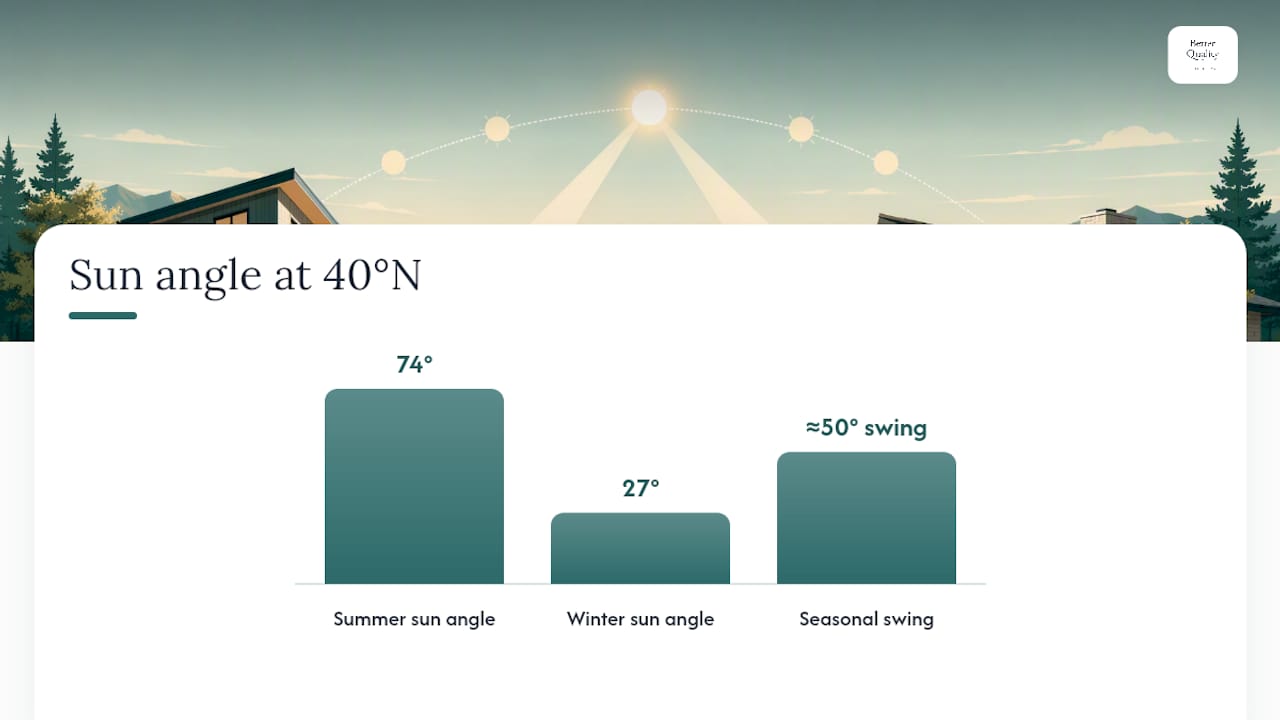
At 40 degrees north latitude, the summer sun sits at roughly 74 degrees while winter sun drops to about 27 degrees, a nearly 50 degree swing that explains why the same window can feel like a heater in December and an oven in August.
North vs South Exposure: Comfort, Energy, and Long-Term Wear
Passive solar gain is real money on the table for a south-facing home in a cold climate. Sunlight streaming through south glazing in winter reduces how hard your furnace has to work, sometimes noticeably, which is why passive solar design guidance consistently recommends orienting a home’s largest glazing toward the sun.
The trade-off flips hard in summer. That same glazing, left unshaded, turns a living room into a heat trap right when your air conditioner is already working overtime. North-facing rooms sidestep this problem entirely since they never receive direct sun, which keeps cooling loads more predictable year round.
Durability tells a similar story. Homes and interiors on the south side take more UV exposure over the years, which shows up as:
- Faster fading on rugs, fabric furniture, and wood flooring near south windows
- More frequent repainting or resealing needs on south-facing exterior walls
- Shorter service life for window seals and weatherstripping exposed to constant thermal cycling
None of this makes south exposure a bad choice. It just means the energy savings from winter solar gain need to be weighed against added maintenance and cooling costs, especially in warmer parts of the country where energy loss already runs high through poorly managed glazing.
How to Manage Light and Heat for Either Exposure
You don’t have to accept the downsides of either exposure as fixed. A handful of design moves can shift the balance significantly.
- Add horizontal shading on south windows. Overhangs, eaves, and awnings sized correctly let low winter sun in while blocking the high summer sun, which is the core idea behind most passive solar shading guidance.
- Upgrade the glass itself. Low-E coatings and spectrally selective glazing cut heat gain without sacrificing visible light, and operable windows on south and west walls help vent trapped heat in the evening.
- Rethink interior finishes. Lighter paint colors reflect heat better in south-facing rooms, while window films protect furniture and flooring from UV without blocking the view. Interior glass doors can also help push north-side daylight deeper into a floor plan.
- Use landscaping as a heat shield. Deciduous trees planted on the south and west sides shade the house in summer and drop their leaves to let winter sun through, a low-cost fix that works for decades.
Pro Tip: If you’re remodeling rather than building new, tackle glazing and shading before you touch paint or fabric. Fixing the heat source first means your finish choices actually last.
How to Tell Which Way Your Windows Face
You don’t need special equipment to figure out a room’s exposure.
- Use your phone’s compass app while standing at the window, facing outward, and note the direction reading.
- Adjust for magnetic declination if your compass app doesn’t already correct for it. Most modern smartphone compasses do this automatically.
- Cross-check with a map app by looking at your street’s orientation relative to true north.
- Watch where the sun sits at solar noon. If it’s roughly due south of the window, you’re looking at a south exposure.
Tall neighboring buildings or a street grid that isn’t aligned to true north can throw off a quick visual guess, so the compass check is worth the ten seconds it takes.
Which Exposure Wins Depends on Where You Live
Climate decides more than preference does here. In cold northern states, south-facing glazing is a genuine energy asset, since the winter heating benefit usually outweighs the summer cooling cost. In hot desert climates, unmanaged south exposure can backfire, driving cooling bills up for most of the year unless it’s paired with serious shading.
- Cold climates: favor larger south windows for winter solar gain, paired with basic overhangs
- Hot, sunny climates: favor north-facing glazing or heavily shaded south glazing with high-performance glass
- Mixed climates: match window size to season, using deciduous shading to shift with the calendar
Architects generally treat orientation as one piece of a larger system, since the same exposure can help or hurt depending on local climate and shading. There’s no universal winner, only the right match for your latitude and goals.
How Custom Home Builders Design Around Exposure
Better Quality Builders builds custom Arizona homes with AirLight steel-insulated panels, a material system built for extreme climates. In a state where south and west exposures can push cooling costs sky-high, that insulation performance pairs with cool-roof strategies to keep interiors comfortable regardless of which way the main glazing faces. Explore the AirLight panel system to see how orientation and building envelope work together in a custom build.
Daylight, Exposure, and How Your Body Reacts to It
Light direction affects more than comfort. It shapes how your body reads time of day. Bright, direct morning light from east and south windows helps set your circadian rhythm, the internal clock that governs sleep, alertness, and mood. A dose of strong light early in the day tends to make people feel more alert and helps them fall asleep more easily that night.
Rooms with only north exposure never get that jolt of high-intensity light, which is fine for a home office where steady, glare-free brightness matters more than a wake-up signal. It’s less ideal for a bedroom used all morning, or for anyone prone to low energy in winter months when daylight hours already run short.
South-facing rooms deliver light that changes intensity throughout the day, mimicking the natural rise and fall your body is wired to respond to. That variability is part of what makes south-facing living spaces feel more energizing during the day, though the same brightness can disrupt sleep if it hits a bedroom in the early morning without curtains or blinds to soften it.
The practical takeaway: put the rooms where you start your day, kitchens and living areas, on the brighter, more variable side when possible, and reserve the calm, even light of north exposure for spaces where focus matters more than stimulation, like a reading nook or a home office.
How Each Exposure Shifts With the Seasons
North exposure is the steadiest performer across the calendar. It never gets direct sun, so a north-facing room in July looks and feels almost identical to that same room in January, aside from the shorter winter days reducing total daylight hours. That predictability is valuable for anyone who dislikes seasonal swings in a workspace or studio.
South exposure tells a completely different story. Winter brings low-angle sun that reaches deep into the room, often the most welcome light of the year on a cold, clear day. Spring and fall sit in a middle zone, with moderate sun angles that usually feel comfortable without extra intervention. Summer is where south-facing rooms can turn uncomfortable fast, especially on cloudless afternoons when the sun’s higher angle still delivers plenty of heat through unshaded glass.
Overcast weather narrows the gap between the two exposures somewhat, since diffuse cloud light reaches north and south rooms more evenly. But even on a cloudy day, a south-facing room usually reads brighter than a north-facing one, because it’s still catching more of the sky’s overall light, scattered as it may be.
For homeowners weighing how energy savings play out over the life of a build, this seasonal swing matters more than a single snapshot of comfort. A south-facing room that saves on heating for four months but drives up cooling costs for three needs shading calculated for your specific latitude, not a one-size-fits-all overhang.
Growing Plants Indoors: North Light vs South Light
Plant selection has to match your window’s exposure, or you’ll spend a year wondering why nothing thrives. South-facing windows deliver the most light of any orientation, which makes them the best spot for sun-loving plants like succulents, citrus, and most flowering houseplants that need several hours of direct light daily.

North-facing windows suit shade-tolerant plants far better: pothos, ferns, snake plants, and other low-light species that would scorch or bleach in direct south sun. The steady, indirect light also means less risk of leaf burn, though growth tends to be slower overall since total light intensity is lower.
Outdoor gardening follows the same logic. South-facing yards and garden beds get the most sun exposure and support a wider range of vegetables and flowering plants, but they also dry out faster and may need more frequent watering in summer. North-facing yards work well for shade gardens, moss, hostas, and other plants that prefer cooler, more consistent conditions, and they typically need less irrigation.
If you’re planning outdoor living space around a new build, matching plant choices to exposure early saves money on replacement landscaping later. Reviewing floor plan layouts that account for yard orientation before construction starts is far easier than redesigning a patio after the fact.
What Buyers Get Wrong About Exposure
Check the sun at three different times during a showing, not just when you arrive. Watch for glare on hard surfaces near midday, and estimate cooling needs based on how much glass faces south or west. Buyers routinely fall for a bright, sunlit living room in the afternoon without realizing that same room bakes by 3 p.m. in July.
— David Kobierski
Sources
- Sun chart diagram — 40°N (macro climate sun chart)
- North light in an artist’s studio
- Shading and solar control: windows and skylights (BASC/PNNL)
- Why it matters which direction your home faces (BobVila)