Yes. Arizona building departments commonly require a geotechnical soil report before they will approve permits for new construction, and skipping one is how homeowners end up with cracked slabs, sinking additions, and permit reviewers who bounce their plans back for revisions. If you’re planning to build, the next move is simple: schedule a site evaluation with a licensed geotechnical engineer before you finalize your foundation design.
TL;DR:
- Arizona building departments require a licensed geotechnical soil report before permit approval to prevent foundation issues like cracking and sinking.
- The report must include borings, laboratory tests, bearing capacity, settlement estimates, and mitigation recommendations signed by a licensed engineer.
- Widespread soils such as expansive clay, collapsing soils, caliche, and high salinity often necessitate specialized foundation designs and soil remediation strategies.
- Tests like SPT, sieve analysis, Atterberg limits, and consolidation determine soil strength, plasticity, and settlement risk, guiding foundation choice.
- Obtaining the soil report early, ideally before purchasing land or finalizing foundation plans, is critical to avoid costly redesigns and permit delays.
Table of Contents
- What Is a Soil Report for Arizona Building Projects?
- Why Does Arizona Soil Cause So Many Foundation Problems?
- What Tests Appear in a Geotechnical Report and What Do They Show?
- When Should You Order a Soil Report and What Does It Cost?
- How Do You Find a Qualified Geotechnical Engineer in Arizona?
- How Do Soil Report Findings Shape Foundation Design?
- What Do Arizona Building Departments Expect in a Soil Report Submittal?
- How Better Quality Builders Uses Soil Reports to Build Better Foundations
- Where to Find Authoritative Arizona Soil Data
- Sources
What Is a Soil Report for Arizona Building Projects?
A soil report, formally called a geotechnical report, is the document that tells your structural engineer and your building department what’s actually underneath your lot. It combines three things: physical borings taken at the site, laboratory testing of the samples pulled from those borings, and a licensed engineer’s written recommendations for how to build on that specific ground. Without it, you’re designing a foundation based on guesswork, and Arizona soil rarely rewards guesswork.
The report exists because two houses built ten feet apart can need completely different foundations. One lot might sit on solid, well-drained soil that supports a standard slab-on-grade with no drama. The lot next door might have expansive clay six feet down that will heave your slab out of level within five years if nobody catches it first. A soil report catches it first.
What goes into the report itself:
- Boring logs documenting soil layers, moisture content, and groundwater depth at each test location
- Laboratory results from samples pulled during those borings, covering grain size, plasticity, and compaction behavior
- Bearing capacity recommendations, the pounds-per-square-foot value your structural engineer needs to size footings
- Settlement estimates, projecting how much the ground is likely to move under load over time
- Site-specific mitigation requirements, such as required overexcavation depth, structural fill specifications, or moisture-control measures
The report’s permit role goes beyond a checkbox. Plan reviewers use it to verify that your proposed footing sizes and foundation type actually match what the ground can support. If your structural plans call for a standard spread footing but the soil report flags expansive clay requiring a post-tensioned slab, the mismatch gets caught in review, and that costs you weeks.
Only a licensed geotechnical engineer, typically holding a PE (Professional Engineer) or PG (Professional Geologist) stamp, can sign a report that Arizona building departments will accept. That signature is what makes the recommendations legally defensible and permit-ready. A soils memo from a general contractor or an informal assessment doesn’t carry the same weight, and most jurisdictions won’t accept it as a substitute.
Why Does Arizona Soil Cause So Many Foundation Problems?
Arizona’s geology is unusually hard on foundations, and it’s not one problem, it’s four running at once: expansive clay, collapsing soils, caliche, and high salinity. The Arizona Geological Survey documents these problem soils as widespread across the state, and each one damages a foundation differently.
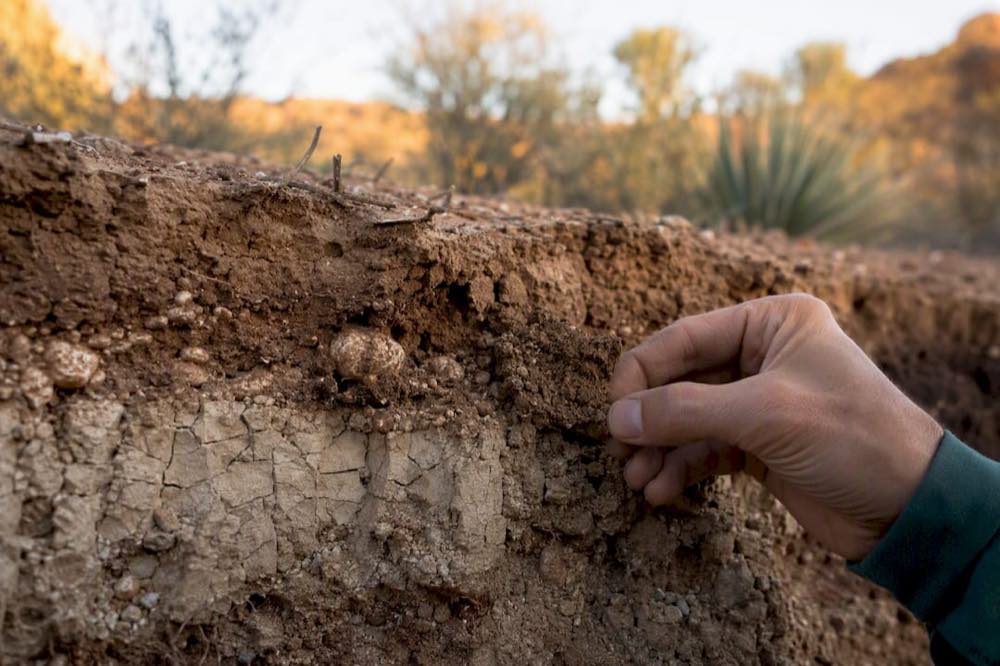
Expansive soils contain clay minerals that swell dramatically when wet and shrink hard when dry. That shrink-swell cycle pushes up on slabs during wet periods and pulls away during droughts, and the repeated movement cracks concrete and racks door frames out of square. You can often spot expansive clay before you ever drill a boring: look for deep desiccation cracks in dry soil, a sticky, gummy texture when the ground is wet, and existing structures nearby with diagonal cracks radiating from window corners.
Collapsing soils, sometimes called hydrocompactible soils, behave almost oppositely. These loosely packed, dry deposits look stable until water gets introduced, whether from a broken irrigation line, heavy rain, or a leaking pool. Once wet, the soil structure collapses and the ground can drop several inches with little warning. This is a quieter hazard than expansive clay because there’s no slow cracking to watch for. The settlement can happen fast.
Caliche is the layer almost every Arizona builder has a story about. It’s a hardened deposit of calcium carbonate that cements sand, gravel, and clay into something closer to soft rock than soil. Caliche layers can run a few inches thick or several feet, and standard excavation equipment often can’t cut through the denser deposits. That means specialized equipment, longer timelines, and a separate line item in your budget that a soil report will flag before you’re locked into a construction contract.
Salinity and pH round out the list. Arizona soils tend to run alkaline, and high electrical conductivity (EC) readings signal salt concentrations that can corrode buried metal, degrade certain fill materials, and interfere with drainage. It’s a quieter issue than clay or caliche, but it shows up in long-term material performance.
Statistic Callout: The Arizona Geological Survey identifies expansive and collapsing soils as widespread hazards across the state, tied directly to foundation damage when left unaddressed, which is exactly why Proctor and Standard Penetration Test (SPT) data show up in nearly every Arizona geotechnical report.
Pro Tip: If you’re touring a lot before you buy, do a quick visual check after a dry spell. Cracks in exposed soil wider than a pencil, especially forming a rough hexagonal pattern, are a strong sign of expansive clay. It’s not a substitute for testing, but it can help you flag a lot worth extra scrutiny before you write an offer.
What Tests Appear in a Geotechnical Report and What Do They Show?
A geotechnical report is built from a handful of standardized tests, and each one answers a specific engineering question. Here’s what actually happens on-site and in the lab, and why it matters for your foundation design.
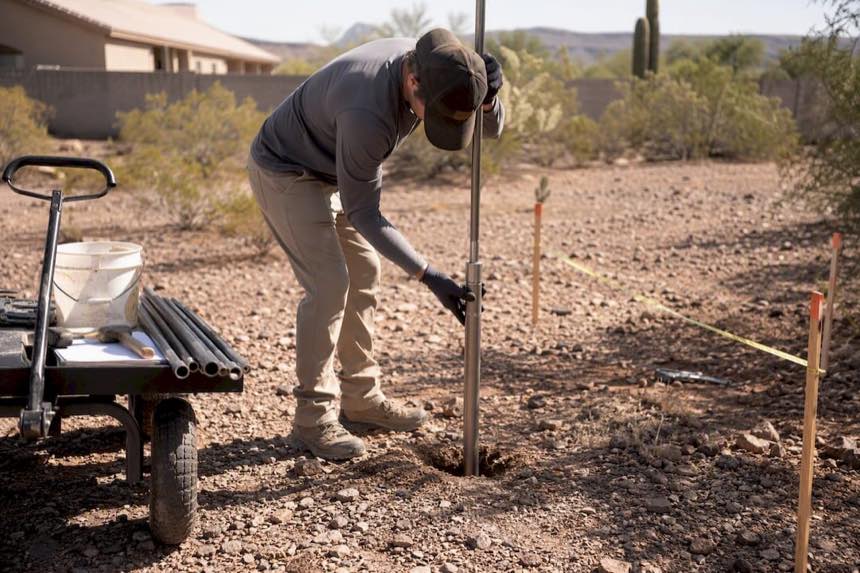
- Borings and boring logs. A drill rig bores into the ground at multiple points across your lot, and the engineer logs the soil type, color, and moisture at each depth, plus where groundwater shows up if it does.
- Standard Penetration Test (SPT). During the boring, a weighted hammer drives a sampler into the soil, and the number of blows required per interval, the “blow count,” gives engineers a fast field indicator of soil density and strength.
- Sieve analysis (grain-size distribution). Lab technicians pass a dried soil sample through a stack of increasingly fine screens to determine the percentage of gravel, sand, silt, and clay, which tells engineers how the soil will drain and compact.
- Atterberg limits. This test measures the moisture content at which soil changes from solid to plastic to liquid states, and it’s the primary lab indicator of expansive potential. High plasticity numbers mean high shrink-swell risk.
- Proctor compaction test. Engineers compact soil samples at varying moisture levels to find the optimum moisture content and maximum dry density, which becomes the compaction spec your contractor has to hit during grading.
- Consolidation testing. This test loads a soil sample incrementally to predict how much settlement will occur under the weight of a structure over time, critical for sites with soft or compressible layers.
- Electrical conductivity (EC) and pH testing. These measure salinity and alkalinity, both routine in Arizona given the state’s alkaline, calcareous soil chemistry, and they inform decisions about concrete mix design and buried material selection.
| Test | What It Measures | What It Tells the Engineer |
|---|---|---|
| SPT (Standard Penetration Test) | Blow counts during boring | Soil density and general strength |
| Sieve analysis | Grain-size distribution | Soil classification and drainage behavior |
| Atterberg limits | Plasticity and moisture thresholds | Expansive clay potential |
| Proctor compaction | Optimum moisture and max dry density | Required compaction specification for fill |
| Consolidation | Settlement under sustained load | Long-term settlement prediction |
| EC / pH | Salinity and alkalinity | Corrosion risk and concrete mix requirements |
All of these follow ASTM standards, the industry-recognized testing procedures that building departments expect to see referenced in a submitted report. That standardization is what makes a report defensible when a plan reviewer or a structural engineer questions the numbers.
The output that matters most to you as the homeowner is usually two numbers: the recommended allowable bearing pressure (how much weight per square foot the soil can safely support) and the required compaction percentage for any structural fill. Everything else in the report exists to justify those two figures.
When Should You Order a Soil Report and What Does It Cost?
Order your soil report before you close on the lot, not after you’ve already committed to it. A pre-purchase geotechnical evaluation can reveal expansive clay or dense caliche that would blow up your foundation budget, and finding that out before closing gives you real leverage. You can renegotiate the price, ask the seller to credit remediation costs, or walk away entirely. Finding it out after closing just means you eat the cost.
If pre-purchase testing isn’t possible, order the report as early as you can in the permit process, well before your structural engineer finalizes foundation drawings. Foundation design depends entirely on bearing capacity and settlement numbers from the soil report, so sequencing matters. Submit structural plans before the soil report comes back, and you’ll likely be redoing them.
Typical Arizona timeline:
- Site visit and borings: usually 1 to 3 days depending on lot size and number of test locations
- Laboratory testing turnaround: several days to a few weeks depending on the lab’s backlog and which tests are ordered
- Final signed report: 2 to 4 weeks from the initial site visit is a realistic target for most residential lots
Costs vary widely based on site conditions. Ballpark residential soil report costs in Arizona commonly range from $1,000 to $4,000, with the number of borings, site access, travel distance to remote parcels, and the need for specialized caliche excavation all pushing the price toward the higher end.
Statistic Callout: Caliche removal frequently requires equipment and subcontractors beyond standard grading crews, and factoring that into your early budget avoids the kind of mid-construction change order that derails a build schedule.
If you’re financing construction, coordinate your soil report timing with your lender too. Many construction loan underwriters require a signed geotechnical report as part of their due diligence package, so a delayed report can delay your loan closing right alongside your permit.
How Do You Find a Qualified Geotechnical Engineer in Arizona?
Hiring the right firm matters as much as ordering the report at all. A poorly scoped soil report, one with too few borings or the wrong test suite, can miss the exact problem it was supposed to catch. Here’s how to vet a firm properly.
- Verify licensing first. Confirm the engineer signing your report holds an active PE or PG license in Arizona. This isn’t optional; unlicensed recommendations won’t satisfy most building departments.
- Ask about local soil experience. A firm that’s tested dozens of lots in your specific county or even your specific subdivision will recognize caliche depth patterns and expansive clay zones faster than a generalist.
- Request a written scope of work. Before you sign anything, get a document specifying the number and location of borings, the exact tests to be run, the reporting format, and the delivery timeline.
- Check insurance and references. Professional liability insurance protects you if a recommendation turns out to be wrong, and references from recent Arizona residential clients tell you how the firm handles delays or unexpected findings.
Questions worth asking before you sign a contract:
- Which ASTM standards do you follow for your borings and lab tests?
- How do you handle sites with suspected caliche, and does your quote already include contingency for it?
- How many borings do you recommend for a lot this size, and why that number specifically?
- What’s your typical turnaround from site visit to signed final report?
- Will you coordinate directly with our structural engineer if questions come up during design?
For the laboratory side of testing, the University of Arizona Cooperative Extension maintains AZ1111, a state directory of certified testing labs that distinguishes between labs suited to homeowner-scale testing and those set up for certified environmental work. A few names that show up on that list include Eurofins Environmental Testing Southwest, a large multi-service lab with broad geotechnical and environmental testing capacity; IAS Laboratories, which handles soil and materials testing commonly used in residential and commercial geotechnical work; and Turner Laboratories, an Arizona-based lab frequently used for environmental and soil chemistry testing including EC and pH analysis relevant to the state’s alkaline soils.
Pro Tip: Don’t assume every lab on the AZ1111 list runs the same tests. Confirm the specific lab uses extractants and methods suited to alkaline, calcareous soil, since a method calibrated for acidic Midwest soils can produce misleading results out here.
How Do Soil Report Findings Shape Foundation Design?
The soil report doesn’t just describe your dirt, it dictates your foundation. Every major finding maps to a specific engineering response, and understanding that connection helps you anticipate cost and design decisions before your structural engineer even draws the first line.
Low bearing capacity readings typically push the design toward deep foundations or drilled piers rather than a standard spread footing, since piers transfer building loads down past the weak surface layer to more competent soil. Expansive clay findings usually trigger either a post-tensioned slab, which is engineered to flex slightly without cracking, or a raised foundation with a moisture barrier and controlled grading to keep water cycling away from the slab rather than under it. Caliche findings change the excavation approach entirely, sometimes requiring specialized breaking equipment or a decision to found footings above the caliche layer rather than fight through it.
Common remediation options and their trade-offs:
- Undercut and replace: Removing problem soil and replacing it with engineered structural fill. Effective and often the most straightforward option, but excavation and haul-off costs rise fast on larger footprints.
- Soil stabilization: Mixing lime, cement, or other additives into the existing soil to reduce its expansive behavior. Cheaper than full replacement on some sites, but performance varies with soil composition.
- Deep foundations or piers: Bypassing poor near-surface soil entirely by transferring loads to depth. Reliable for severe conditions, but a bigger upfront investment than shallow foundation types.
Beyond the foundation itself, the report drives site-level decisions that are easy to overlook. Positive drainage grading, sloping the ground away from the structure, keeps water from pooling against your foundation. Root-free zones around the foundation perimeter prevent tree roots from disrupting moisture balance in expansive clay. Irrigation placement matters more than most homeowners expect too; a sprinkler head running daily six feet from your slab can recreate the exact wet-dry cycling that causes clay to heave.
Pro Tip: The most durable defense against expansive soil isn’t a fancier foundation, it’s controlling water. Grading and landscaping choices that keep moisture consistent around your foundation often do more long-term work than the foundation type itself.
All of these decisions eventually show up as line items in your construction specifications: fill type, required compaction percentage, drainage slope requirements, and moisture barrier placement. Your soil report is effectively the source document your structural engineer and contractor both work from for the life of the build.
What Do Arizona Building Departments Expect in a Soil Report Submittal?
Permit reviewers across Arizona are looking for a fairly consistent set of items in a geotechnical submittal, even though exact requirements shift somewhat by county. Getting these right the first time is the difference between a smooth review and a stack of correction comments.
Most jurisdictions expect a report that includes a licensed engineer’s signature and stamp, an explicit recommended bearing value stated in pounds per square foot, settlement estimates for the specific structure type proposed, and clear notes on required structural fill material and compaction percentage. Vague language, “soil appears adequate” without a supporting number, tends to get kicked back for clarification.
County requirements do vary. Some jurisdictions accept a shorter soils memo for simple, low-risk sites with well-documented soil history nearby, while others require a full geotechnical report with multiple borings regardless of site history, particularly in areas with known expansive clay or caliche concerns. It’s worth confirming which tier your specific county and lot fall into before you scope the report, since ordering the wrong tier means paying for a redo.
Practical steps to avoid permit delays:
- Coordinate the soil report timeline with your structural engineer early so foundation drawings aren’t finalized before soil data arrives
- Ask your geotechnical engineer to include a clear summary table of bearing values and fill requirements up front, not buried on page 40
- Request the report reference specific ASTM test standards by name, since some reviewers check for this explicitly
- Confirm your engineer’s report format matches what your specific county’s building department typically accepts
Coordinating your lot setbacks and buildability checks alongside your soil report submittal tends to streamline the whole permit package, since reviewers are looking at site conditions holistically, not just soil.
How Better Quality Builders Uses Soil Reports to Build Better Foundations
Every foundation decision we make for a custom home starts with the same document: your soil report. We build with AirLight steel-insulated panels specifically because they perform well across the range of foundation types Arizona soil conditions demand, whether that’s a standard slab on stable ground or a post-tensioned design responding to expansive clay. The panel system doesn’t change based on your soil, but your foundation certainly does, and we plan for that from day one rather than treating it as a surprise mid-build.
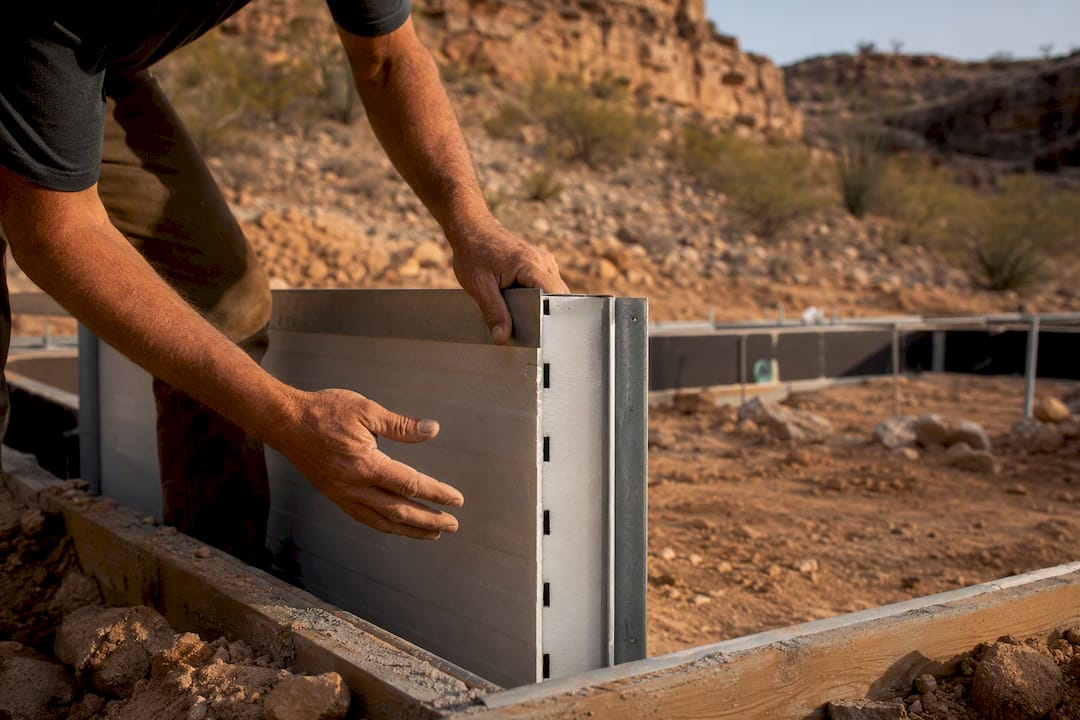
When a client shares their soil report early, before we’ve locked in cost estimates, we can price the foundation accurately instead of guessing. A lot with dense caliche or expansive clay changes the foundation budget meaningfully, and clients who bring us that report during initial planning get a far more reliable number than clients who find out about soil conditions after groundbreaking.
Our practical advice: get your soil report in hand before you finalize your floor plan selection from our library, and definitely before you lock in construction financing. A signed geotechnical report speeds up lender due diligence as much as it speeds up your permit review, and having it early lets us produce an accurate 3D preview rendering and permit-ready package faster, because we’re not waiting on a structural redesign triggered by soil data that showed up late.
If you’re still evaluating land, our real-time lot inventory lets you see buildable parcels across Arizona, and we can talk through what soil conditions are typical for a given area before you commit to a purchase. Building with AirLight steel panels means your home is engineered to outlast typical wear regardless of foundation type, but the foundation itself still has to match what your specific ground demands. That match starts with the report.
Where to Find Authoritative Arizona Soil Data
For statewide geohazard context, the Arizona Geological Survey’s problem soils page documents expansive and collapsing soil risks by region. The University of Arizona Cooperative Extension publishes both the AZ1111 lab directory and the AZ1412 soil sampling guide for testing methodology. For parcel-level planning before you order borings, the NRCS Web Soil Survey offers free soil mapping data.
Sources
- Problem Soils | Arizona Geological Survey - AZGS
- Soil Sampling and Analysis (AZ1412) | University of Arizona Cooperative Extension
- Soil survey resources | NRCS (USDA)