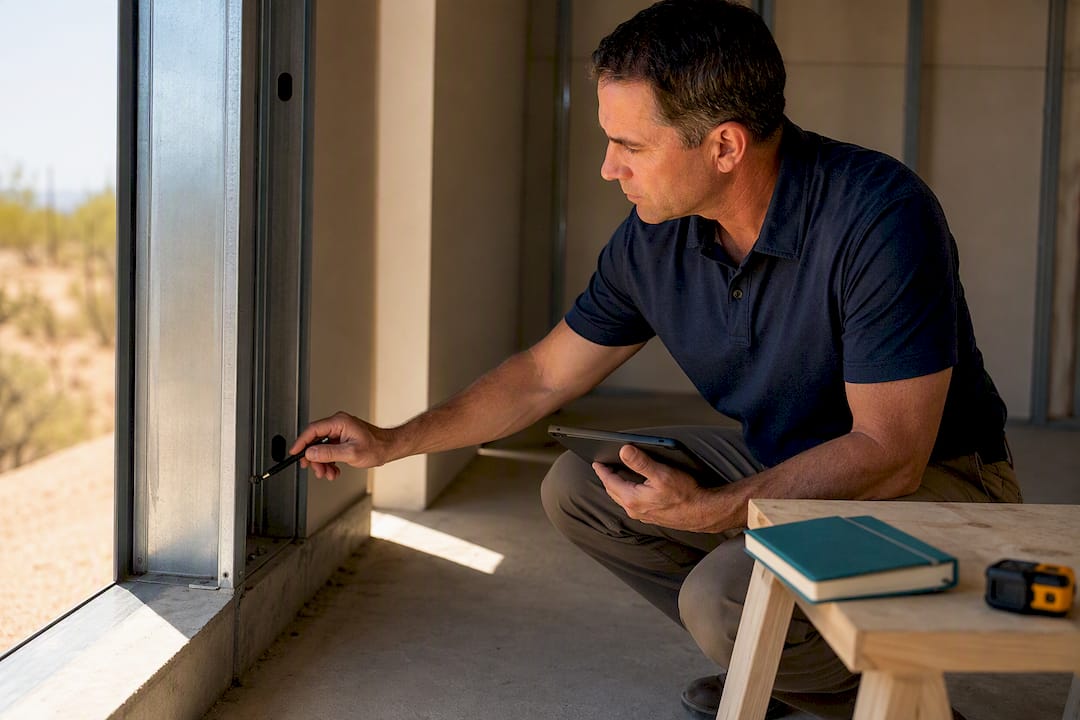
Steel-framed homes on permanent foundations can be appraised like standard site-built homes in Arizona once they’re titled as real property and meet local building code. The lender still needs a licensed appraiser experienced with nonstandard construction. Do three things before you schedule anything: confirm your foundation and title status, gather your permits and build specs, and call an appraiser who has actually handled metal or steel construction before. Skip the paperwork and expect a slower, more conservative number.
TL;DR:
- Proper documentation, including permits, engineering drawings, and manufacturer specs, is essential to obtain a fair appraisal for steel homes in Arizona.
- Appraisers will verify that the home is on a permanent foundation, legally titled, and built to code, often requiring specific proof from the homeowner.
- The appraisal process for steel-framed homes typically involves a full on-site inspection, focusing on foundation, square footage, and construction quality.
- Limited comparable sales in the local market mean appraisers rely more heavily on cost and documentation when valuing steel or metal homes.
- Having organized, detailed records before starting construction can significantly reduce appraisal delays and improve valuation confidence.
Table of Contents
- Steel Home Appraisal Arizona: Your Pre-Appraisal Checklist
- What Happens During an Arizona Metal Home Appraisal Process
- Which Documents Prove Your Steel Home’s Value
- How Much Does a Steel Home Appraisal Cost in Arizona?
- Why Comparable Sales Are Harder to Find for Steel Homes
- How to Choose an Appraiser for a Steel-Framed Home
- Do Steel Homes Hold Their Value Longer in Arizona?
- How Arizona’s Housing Market Shapes Steel Home Values
- Steel Homes vs. Wood-Framed Homes: How Appraisal Standards Differ
- What Good Documentation Actually Buys You
- Building a Steel Home That Appraises Well From Day One
- Sources
Steel Home Appraisal Arizona: Your Pre-Appraisal Checklist
The single biggest lever you control before an appraiser ever steps on your property is documentation. Appraisers working on a steel or metal home appraisal in Arizona need proof that the structure is permanently affixed, legally titled, and built to code, and the burden of assembling that proof falls on you, not the appraiser.
Pull together these items before you make the call:
- Building permits and the final certificate of occupancy
- Stamped engineering drawings for the structure and foundation
- Title documentation or an affidavit of affixture showing the home is classified as real property
- Manufacturer spec sheets for your steel panel system, including any AirLight panel documentation if that’s what you built with
- Receipts for foundation work, grading, and site improvements
On the photo side, shoot clear exterior elevations from all four sides, close-ups of any serial or data plates, foundation connection points, and utility hookups (well, septic, power). A one-page construction timeline that lines up permits with paid invoices does more work than people expect.
Pro Tip: Keep every receipt tied to a date and a permit number. Appraisers move faster, and adjust less conservatively, when they can verify a paper trail instead of taking your word for it.
What Happens During an Arizona Metal Home Appraisal Process
Not every appraisal involves someone walking your property. Lenders sometimes order a desktop appraisal (data-driven, no site visit), a drive-by (exterior only), or a full appraisal with interior and exterior inspection. Steel-framed homes almost always warrant the full version, because desktop tools rarely have reliable data on metal construction in a given neighborhood.
Here’s what a full on-site visit typically covers:
- Foundation verification. The appraiser confirms the home sits on a permanent foundation rather than a temporary or movable base.
- Gross living area measurement. They measure and record square footage using standard ANSI guidelines, same as any wood-framed home.
- Construction and condition assessment. This includes noting the panel system, roof, windows, and any visible durability or energy features.
- Report preparation. The final report follows USPAP standards and typically blends the sales-comparison approach with a cost approach, adjusting for construction type and noting any limiting conditions tied to the property.
Ask your appraiser directly which type of report the lender ordered. That single question tells you how much prep work you actually need to do before the visit.
Which Documents Prove Your Steel Home’s Value
Lenders and appraisers want a paper trail that proves your home is permanent, legal, and built to spec, and the strength of that trail directly affects how confident the appraiser feels putting a number on the property.
Four categories matter most:
- Title and legal evidence: your deed, proof of real-property titling, and an affidavit of affixture where the county requires one
- Permits and approvals: building permits, stamped engineering drawings, and the final inspection or certificate of occupancy
- Manufacturer and installation records: panel spec sheets, stamped engineering, warranties, and installer certifications, along with photos of structural connections and foundation anchoring
- Site and utility evidence: receipts for foundation and grading work, septic or well permits, and documentation showing utilities are permanently connected rather than temporary hookups
Appraisers in Arizona routinely ask for verification of permanent foundation and title status before they’ll treat a metal or steel structure the same way they’d treat a conventional build. Metal building guidance backs this up: confirming code compliance and supplying stamped engineering drawings up front heads off permitting and appraisal problems before they start.
How Much Does a Steel Home Appraisal Cost in Arizona?
Fee ranges in Arizona depend heavily on scope and complexity. A simple residential appraisal can start in the low hundreds, while a steel-framed property that requires extra research, travel to a rural parcel, or a more detailed cost-approach analysis will run higher.
A few things drive that price up:
- Distance from the appraiser’s typical service area, especially for rural Arizona parcels
- Additional time spent researching comparable sales for nonstandard construction
- Extra analysis needed to justify cost-approach adjustments for steel framing
Turnaround usually runs anywhere from a few days to two weeks, and complete documentation is the fastest way to shrink that window. If the appraisal comes back lower than expected, don’t panic. Contact your lender about a reconsideration of value, submit additional comps or missing documentation the appraiser may not have seen, and ask whether a review appraisal or a second opinion makes sense given the property’s construction type.
Why Comparable Sales Are Harder to Find for Steel Homes
The core challenge with any Arizona steel home valuation isn’t the structure itself. It’s the shortage of recent, similar sales. Wood-frame construction remains the local market standard, so appraisers frequently pull from site-built comps and apply adjustments rather than finding a matching steel-framed sale down the street.
That gap is exactly where documentation earns its keep:
- Manufacturer spec sheets and stamped engineering give the appraiser something concrete to anchor a cost-approach adjustment
- Energy-efficiency data, measured or certifiable, helps justify a positive adjustment when the appraiser has to bridge a construction-type gap
- Where applicable, Fannie Mae’s MH Advantage® and Freddie Mac’s CHOICEHome® programs offer a pathway toward valuation parity for qualifying manufactured or metal-framed homes
Land-owned steel and metal homes that meet foundation, title, and utility requirements can be appraised much like their site-built neighbors, but a shortage of matching comps still leaves room for appraiser discretion. That’s precisely why the paperwork matters more here than it does for a standard wood-frame sale.
In rural Arizona counties, lot size and site improvements often move the number more than framing type does, so highlight any grading, well, or septic work you’ve completed. If your loan is headed toward Fannie Mae or Freddie Mac, confirm CHOICEHome or MH Advantage eligibility early. Those programs come with manufacturer- and design-specific requirements that affect which comps an appraiser can pull.
How to Choose an Appraiser for a Steel-Framed Home
Not every licensed appraiser has handled a metal or steel structure before, and that inexperience shows up as conservative numbers or delayed turnaround. Vet your candidate the same way you’d vet a contractor.
- Verify the license. Confirm active Arizona state licensure and USPAP compliance before you book anything.
- Ask about construction experience. Find out whether they’ve appraised steel-framed or metal residential properties in your market specifically, not just commercial metal buildings.
- Request a work sample. A redacted past report on a similar property tells you more than a sales pitch ever will.
- Confirm scope and fee upfront. Get the report type, price, and turnaround in writing before the inspection date.
When you call, ask directly: “Have you appraised a steel-panel or metal residential home in this county before, and what comps did you use?” Their answer tells you everything about how smooth this process will be.
Pro Tip: Request a pre-appraisal consultation with your lender or appraisal management company. Confirming upfront whether the appraiser will accept manufacturer spec packs and MH Advantage or CHOICEHome comps can save you a costly do-over.
Do Steel Homes Hold Their Value Longer in Arizona?
Steel doesn’t rot, warp, or feed termites, and that durability profile matters more in Arizona’s climate than almost anywhere else in the country. Extreme heat cycles, UV exposure, and the occasional monsoon-driven moisture spike all take a toll on wood framing over decades. A properly engineered steel structure shrugs most of that off.
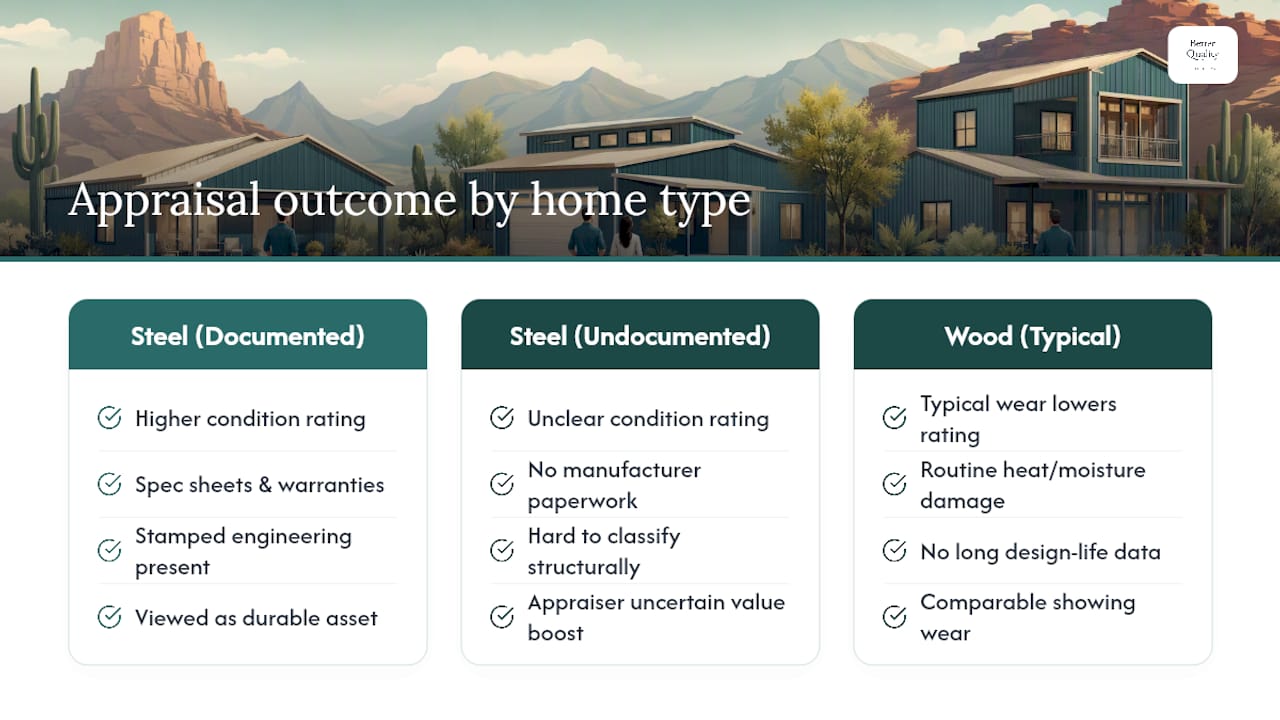
Appraisers don’t have a standardized line item for “expected structural lifespan” the way they do for square footage, but condition and quality ratings absolutely factor into the cost approach. A steel home with documented corrosion protection, stamped engineering, and a panel system rated for decades of service gives the appraiser something to point to when justifying a stronger condition rating than a comparable wood-frame home showing typical wear.
The catch is that this advantage only shows up in the appraisal if you document it. An appraiser walking through a steel home with no manufacturer paperwork sees a structure they can’t easily classify. One walking through with spec sheets, warranty documentation, and stamped engineering sees a durable asset with a quantifiable design life. That difference in information, not the steel itself, is what moves the needle on the report. Homeowners who built with panel systems designed for insulation and structural performance, the kind used in steel frame home construction, have an easier time making that case because the performance data already exists.
How Arizona’s Housing Market Shapes Steel Home Values
Local market conditions matter as much as construction type when it comes to Arizona steel home valuation. Maricopa County’s rapid growth over the past decade has pushed buyers toward energy efficiency and lower long-term ownership costs, and that shift works in favor of steel-framed properties that can document real energy performance.
Rural counties tell a different story. In places like Pinal, Yavapai, or Cochise County, comparable sales are thinner across the board, wood-framed or steel. That scarcity means appraisers lean more heavily on adjustments, site characteristics, and whatever documentation you can hand them. A steel home on five acres with a private well and a permanent foundation might get compared against a wood-framed home on a similar parcel, with adjustments made for construction type in either direction.
Arizona’s heat also changes how buyers and appraisers alike weigh energy performance. A home with materials engineered for thermal efficiency carries real appeal in a state where summer utility bills routinely become a line item buyers ask about before they ask about the kitchen. That’s a genuine market signal, not a marketing angle, and it’s part of why energy documentation belongs in your appraisal packet regardless of which county you’re in.
Steel Homes vs. Wood-Framed Homes: How Appraisal Standards Differ
USPAP governs every residential appraisal in Arizona regardless of framing material, so the rules don’t change. What changes is the amount of supporting work the appraiser has to do to reach a defensible number.
For a wood-framed home, the appraiser usually has a deep bench of recent, nearby comparable sales to pull from. Adjustments tend to be minor: lot size, finishes, square footage. For a steel-framed home, that comp pool shrinks fast, and the appraiser often has to reach for site-built comps and apply construction-type adjustments manually, which introduces more subjectivity into the final figure.
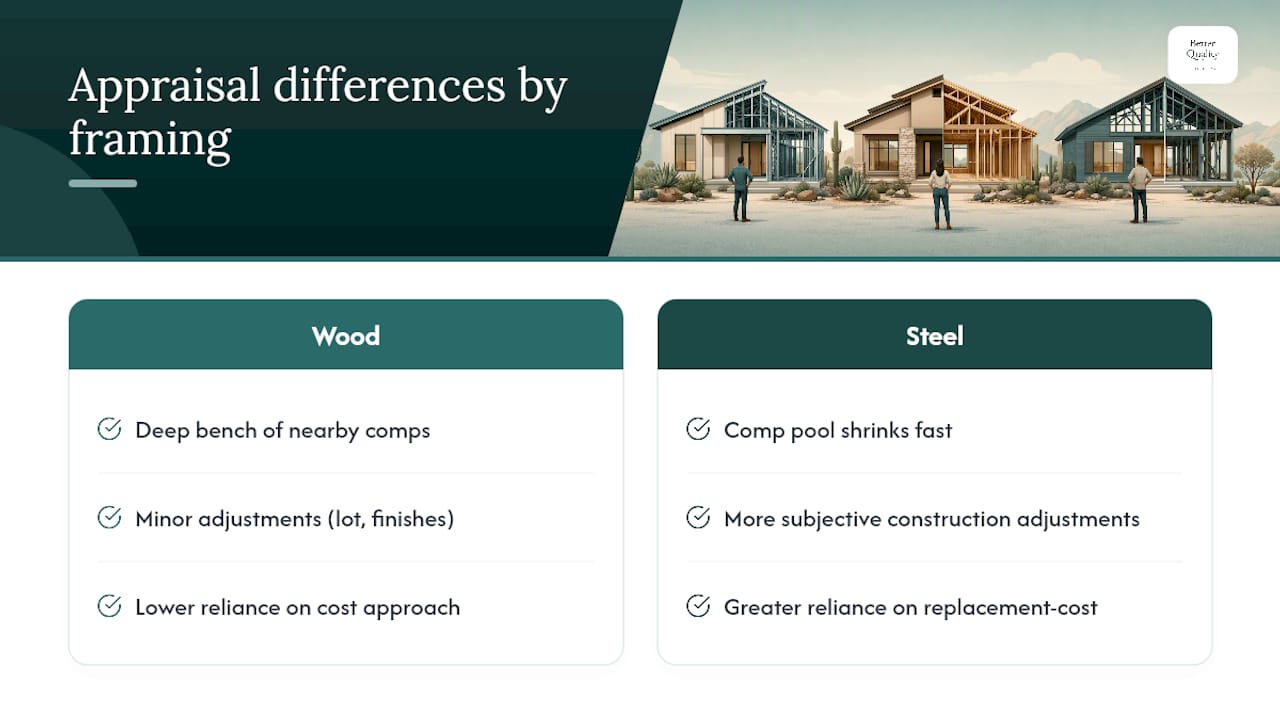
The cost approach also carries more weight for steel homes than it typically does for standard wood-frame appraisals. Because sales-comparison data is thinner, appraisers lean harder on replacement cost calculations, factoring in the steel panel system, foundation work, and finish quality. That’s exactly why stamped engineering and manufacturer documentation matter so much here. They give the appraiser real numbers to plug into that cost approach instead of estimates pulled from general metal-building averages that may not reflect your specific construction.
Mortgage eligibility follows the same underlying framework across construction types, too. Steel-framed homes permanently affixed to a foundation qualify for conventional, FHA, VA, and USDA financing, the same programs available to wood-framed buyers, provided the property meets local code and titling requirements. If FHA financing is part of your plan, it’s worth understanding how construction loans work in Arizona before you lock in an appraisal timeline, since loan type can affect what the appraiser is asked to verify.
What Good Documentation Actually Buys You
Documentation doesn’t just make an appraiser’s job easier. It’s the difference between a conservative number and one that reflects what you actually built. When manufacturer specs, stamped engineering, and proof of a permanent foundation are sitting in front of an appraiser, they spend less time guessing and more time confirming.
That paper trail also carries weight beyond the appraisal itself. Lenders reviewing the file see the same documentation, and it tends to smooth out questions about financing eligibility down the line. Future buyers benefit too, since a well-documented steel home resells with fewer unanswered questions about foundation status or construction quality.
None of this requires perfect paperwork or a construction background. It requires keeping what you already have organized and handing it over before the appraiser asks.
— David Kobierski
Building a Steel Home That Appraises Well From Day One
The best time to solve appraisal risk is before you break ground, not after. Some builders use AirLight steel panels and provide the manufacturer spec sheets, stamped engineering, and warranty documentation that appraisers and lenders want to see, so homeowners aren’t scrambling to reconstruct a paper trail years later.
That said, documentation from your builder complements a licensed appraisal, not substitutes for one. You’ll still need an independent, licensed appraiser to produce the report your lender requires, and nothing here changes that step. What Better Quality Builders can do is make that appraiser’s job easier from the start, with organized records and a construction process built around real property classification rather than temporary structures. The company also packages construction and land financing together, including 10% down payment options, which matters if you’re trying to line up a build timeline with an appraisal and closing date. If you’re weighing floor plans and want to see how a fully engineered steel SIP panel home fits your lot and budget, that’s the natural next step before you ever pick up the phone to schedule an appraisal.
Sources
- Do Manufactured Homes Qualify for Appraisal Like Site-Built Homes? | MHIA
- How much is a home appraisal in Arizona? — Houzeo
- Commercial Appraiser: Appraisal Services | Phoenix, Mesa, Arizona
- Metal Buildings As Houses FAQ’s: Costs, Codes & Tips 2026