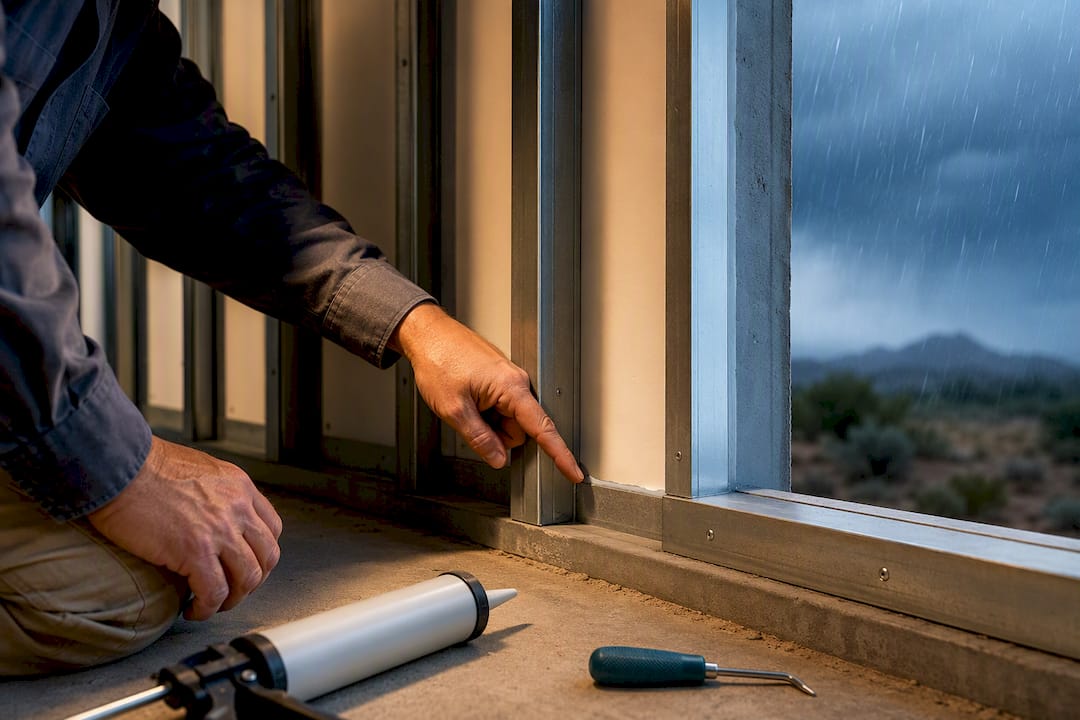
For Arizona homes built with AirLight steel panels, a routine of semiannual homeowner checks plus one annual professional energy, HVAC, and pest inspection preserves durability, reduces energy costs, and prevents termite and moisture damage. The three priorities that matter most are air sealing before insulation work, moisture and grade control around the foundation, and consistent termite prevention. Get these right and your steel-panel home stays efficient and structurally sound for decades.
TL;DR:
- Homeowners should inspect exterior panel seams, fasteners, foundation areas, and sealant twice a year to catch early issues like gaps, rust, or insect activity.
- Before and after monsoon season, it is essential to clear gutters, reseal penetrations, and look for termite signs such as mud tubes or soft wood.
- Effective air sealing must precede insulation work to ensure insulation maintains its rated R-value and prevents moisture and dust entry.
- Duct sealing with proper materials and verifying leakage rates can significantly improve energy efficiency and indoor air quality.
- Regular termite inspections and moisture management, including keeping soil away from the foundation and removing debris, greatly reduce infestation risks.
Table of Contents
- Your maintenance checklist and inspection schedule
- Monsoon prep and summer heat protection
- Why air sealing comes before insulation maintenance
- Keeping your HVAC and ductwork efficient
- Termite prevention and the post-monsoon inspection
- Protecting panels, fasteners, and roof-mounted equipment
- Choosing the right professionals and spotting urgent problems
- What years of steel-panel homes in Arizona have taught us
- Building a home that needs less maintenance from day one
- Sources
- FAQ
Your maintenance checklist and inspection schedule
A steel-panel home rewards consistency more than intensity. You do not need to inspect constantly, but you do need a rhythm you actually follow.
Monthly quick tasks:
- Replace HVAC filters on the schedule your manufacturer recommends.
- Clear roof drains and gutter debris before it compacts.
- Check that irrigation spray or drip lines are not soaking the stem wall.
Semiannual homeowner checks (spring and fall):
- Walk the exterior and inspect panel seams for gaps or failed sealant.
- Check visible fasteners for loosening, rust streaks, or missing caps.
- Look along the foundation for mud tubes or other insect activity.
- Inspect window and door perimeter sealant for cracking.
Annual professional inspections:
- A whole-house energy checkup using blower-door testing.
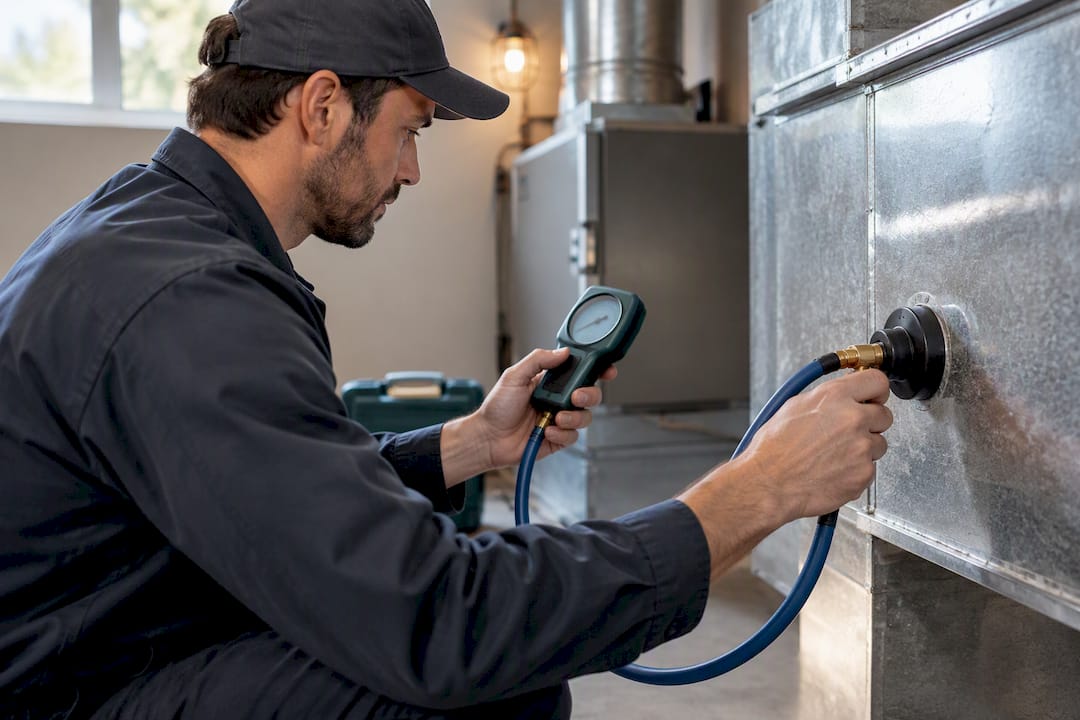
- A duct leakage test paired with HVAC tune-up.
- A termite inspection from a licensed pest management professional.
Hand this list to a property manager or inspector and you have a working baseline for the entire year.
Monsoon prep and summer heat protection
Arizona’s climate asks steel-panel homes to survive two extremes: a bone-dry summer and a monsoon season that can dump heavy rain in short bursts. Your maintenance calendar should treat both as distinct events.
Before monsoon season:
- Clear gutters and downspouts completely.
- Reseal any roof or wall penetrations showing gaps.
- Verify flashing and roof transitions are intact and properly lapped.
After monsoon season:
- Check stucco and grade gaps near the foundation for erosion.
- Look for shelter tubes or damp spots along the stem wall.
- Schedule a termite inspection if rainfall was heavy that season.
During peak summer heat:
- Confirm the mechanical closet is fully sealed.
- Check that ducts remain inside conditioned space wherever possible.
- Inspect solar mounts and flashing after repeated thermal expansion and contraction.
Pro Tip: Walk the exterior right after the first big monsoon storm of the season, not weeks later. Fresh water staining and shelter tubes are far easier to spot before the sun bakes them away.
Why air sealing comes before insulation maintenance
Insulation only performs at its rated value when air is not moving through the assembly around it. According to Building America’s air sealing guidance, effective air sealing must happen before insulation work, because air leaks rob insulation of its effective R-value and pull moisture and dust into the home. This sequence matters just as much for steel-panel construction as it does for traditional framing.
In an AirLight panel home, the places that need attention are specific:
- Panel-to-panel joins and seams where the core insulation meets adjacent panels.
- Window and door perimeters where the panel meets the frame.
- Utility penetrations for plumbing, electrical, and low-voltage wiring.
- Rim and plate junctions at the foundation and roofline.
- Mechanical closet interfaces where ductwork or air handlers pass through panel walls.
For service penetrations, closed-cell spray foam holds up well against Arizona’s temperature swings. Panel seams need a sealant compatible with the panel’s own coating, not a generic caulk that will fail after a few summers. A blower-door test tells you whether your sealing actually worked or if hidden leaks remain. That is diagnostic work for a certified home performance contractor, not a homeowner project, especially when you are trying to verify results rather than guess at them.
Effective air sealing before insulation work prevents leaks from undermining insulation performance, according to DOE and PNNL Building America research, which is why it always comes first on the maintenance list, not last.
Keeping your HVAC and ductwork efficient
Ducts are one of the most common places where a well-built steel-panel home quietly loses efficiency. Building America’s duct sealing guidance notes that leaky return ducts pull contaminants from wall cavities and attics directly into your living space, which affects both energy bills and indoor air quality.
- Seal duct joints with mastic or UL-181-rated tapes, never cloth duct tape, which fails under Arizona’s heat cycles.
- Keep the mechanical closet free of storage so airflow and access stay unobstructed.
- Fully air seal the mechanical closet itself and confirm the plenum is properly built, not improvised.
- Schedule filter changes and HVAC service on a fixed calendar rather than waiting for a problem.
If your ducts run outside conditioned space, in an attic or unconditioned crawl area, ask your HVAC technician for a duct leakage number in CFM. A high reading, or ducts that keep failing tests after sealing, is a sign it may be time to discuss relocating ductwork into conditioned space or replacing aging equipment.
Pro Tip: Ask any HVAC contractor to hand you the actual duct leakage test result, not just a verbal “it looks fine.” A number gives you something to compare next year.
Termite prevention and the post-monsoon inspection
Subterranean termites are the dominant economic pest threat to Arizona homes, according to the University of Arizona Cooperative Extension, and regular inspection of the stem wall along with control of moisture sources reduces infestation risk substantially.
- Keep soil and mulch pulled back from the stem wall, and never let stucco extend below grade.
- Remove cellulose debris, firewood, or scrap lumber from close proximity to the structure.
- Watch for mud tubes, discarded wings, or soft wood as early warning signs.
- Inspect twice a year yourself, and schedule one annual inspection with a licensed pest management professional.
The Cooperative Extension recommends this semiannual-plus-annual rhythm as the most reliable practice for Arizona homeowners. The EPA’s termite guidance adds that maintaining drainage away from the foundation and fixing leaks immediately are essential, and that termiticide treatments should always come from a licensed pest-control firm since these products are regulated and must be applied per label instructions. Whether baiting or a liquid barrier makes more sense for your property is a call best left to that licensed applicator, not a DIY decision. For homeowners who want prevention baked into the build itself, our guide to termite-proof design for steel panel homes covers the construction side in more depth.
Protecting panels, fasteners, and roof-mounted equipment
Steel holds up remarkably well in Arizona’s dry climate, but fasteners, flashings, and sealants are the components that actually wear first.
- Inspect fasteners and flashing annually, and always after a significant storm.
- Reseal any failed sealant bead and replace sealants that have become brittle from heat exposure.
- Use corrosion-resistant fasteners and panel-compatible sealants whenever a repair is made.
- Check roof transitions and equipment mounts for trapped debris or standing water that accelerates wear.
If you have solar panels, tighten mounting hardware, inspect the surrounding flashing, and clear any bird nests or debris that can trap moisture against the roof. General solar panel maintenance guidance applies well here even though it is not Arizona-specific.
Pro Tip: Keep a small tube of the same sealant your builder used on file. Matching the original product avoids compatibility issues that cause premature failure at repair points.
Choosing the right professionals and spotting urgent problems
Your annual professional lineup should include three specialists: a licensed pest management professional for the termite inspection, an HVAC technician who can run a duct leakage test, and a home performance auditor who runs the full test-in, work, test-out energy checkup, as recommended by Building America.
- Ask for actual measurement results, not summaries: blower-door numbers, duct CFM readings, moisture readings.
- Request photos of any problem areas found during inspection.
- Get a prioritized list of recommended repairs, not just a general “everything looks fine.”
Some issues cannot wait for the next scheduled visit. Visible water intrusion, active termite evidence, or indoor humidity that stays high after a repair all warrant an immediate call.
What years of steel-panel homes in Arizona have taught us
The homes that hold up best are not the ones with the most expensive finishes. They are the ones where someone actually walked the exterior twice a year and kept the mechanical closet sealed. Small, boring habits prevent the service calls that add up over a decade. Save this checklist, print it, and bring in a local professional when conditions on your specific lot warrant it.
— David Kobierski
Building a home that needs less maintenance from day one
The easiest way to reduce long-term upkeep is to get the details right during construction, before a single panel goes up. Better Quality Builders’ AIRLIGHT BUILD approach uses AirLight steel panels with commissioning and handoff documentation that tells you exactly where seals, penetrations, and mechanical closets were built to spec, so your semiannual checks start from a known baseline instead of a guess.

Our custom home building process includes access to a large library of customizable floor plans, real-time lot inventory so you can see what land is actually buildable, and 3D preview renderings before you commit to a site. For buyers assembling land and construction into one move, we also offer combined construction and land financing with 10% down payment options. Proper flush sill drainage detailing at window and panel transitions, a technical practice worth asking any builder about, is one of the small design choices that prevents water intrusion issues years down the road.
If you are ready to see what a steel-panel home could look like on your own lot, start with our AIRLIGHT BUILD floor plans or browse available land to see what is buildable in your area today.
Sources
- Home air sealing — Building America Solutions Center (PNNL)
- Building America: Energy renovations — Insulation guide (DOE)
- Arizona Termites of Economic Importance — University of Arizona Cooperative Extension
- Termites: How to identify and control them — EPA
FAQ
How often should I inspect my steel-panel home in Arizona?
Check the exterior, fasteners, and foundation area yourself twice a year, in spring and fall, and schedule one annual professional round covering energy performance, HVAC ductwork, and termite inspection. The University of Arizona Cooperative Extension recommends this same semiannual-plus-annual cadence specifically for termite risk.
Do AirLight steel panels rust in Arizona’s climate?
Steel panels are engineered with corrosion-resistant coatings, and Arizona’s dry climate is generally favorable compared to humid regions, but fasteners, flashing, and exposed edges still need annual inspection. Reseal failed sealant promptly and use corrosion-resistant fasteners at any repair point to keep small wear from becoming a bigger issue.
What are early signs of termite activity to watch for?
Look for mud tubes along the foundation or stem wall, discarded insect wings near windows or doors, and wood that sounds hollow or feels soft when tapped. The EPA also recommends watching for persistent moisture near the foundation, since damp soil and poor drainage attract subterranean termites.
When should I schedule a home energy checkup?
Plan on one annual whole-house energy checkup that includes blower-door testing and a duct leakage test, ideally before the peak summer cooling season begins. This test-in, work, test-out approach, outlined by Building America, helps confirm your home is performing the way it was designed to.
Does Better Quality Builders offer maintenance services after construction?
Better Quality Builders focuses on custom home building with AirLight panels, including floor plans, lot selection, 3D rendering, and financing, rather than ongoing maintenance contracts. For maintenance items like termite inspections or HVAC service, homeowners should work with licensed local professionals as outlined in this guide.