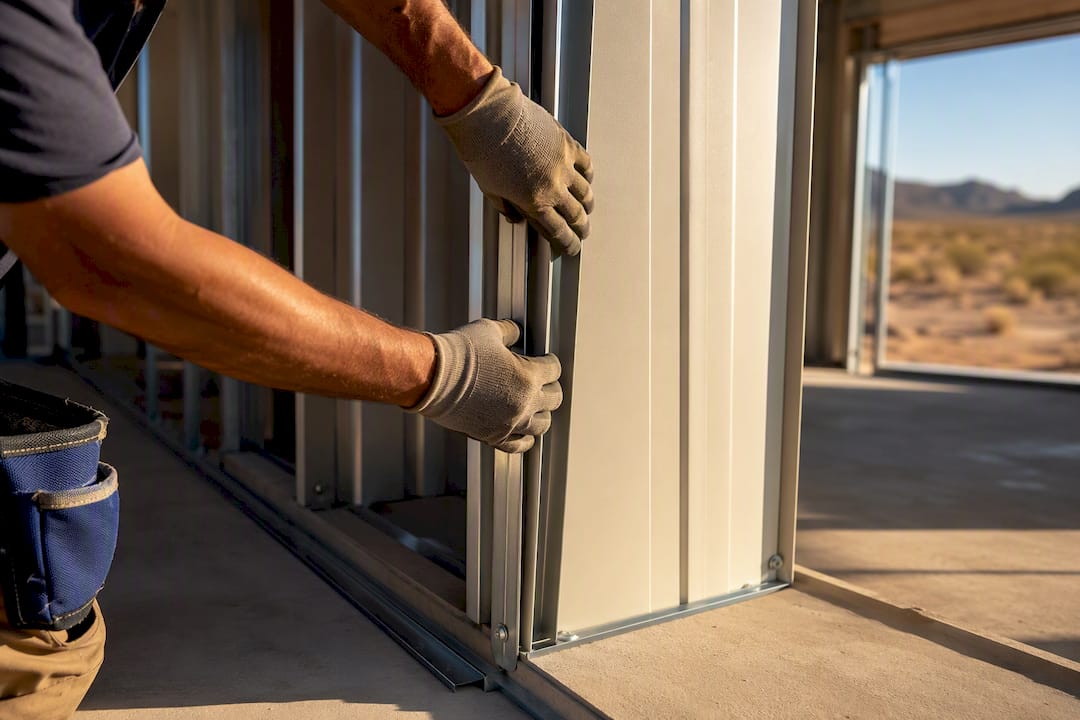
Yes, you can build a genuinely termite proof home in Arizona, and the answer is steel. Cold-formed steel framing and steel-insulated panels contain no cellulose, so termites have nothing to eat, and federal housing guidance already recognizes steel as a termite-protection option. The catch: the resistance only holds if you seal every junction and skip the wood trim and foam shortcuts that give termites a side door. The sections ahead walk through the materials, the detailing, and a buyer checklist you can hand straight to a contractor.
TL;DR:
- Steel framing is inherently termite-proof because it contains no cellulose for termites to digest, unlike wood or foam-based insulation.
- Properly sealed steel-insulated panels and non-cellulose finishes are essential to fully block termite entry paths in steel homes.
- Arizona’s climate requires adding continuous exterior insulation and thermal breaks to mitigate steel’s heat transfer and ensure energy efficiency.
- Building codes may offer some relief by recognizing steel or concrete framing as not requiring additional termite pretreatment, depending on local jurisdiction.
- A detailed buyer contract specifying sealed panels, inspection milestones, and manufacturer documentation reduces the risk of non-structural gaps that could compromise termite resistance.
Table of Contents
- Why Steel Framing Stops Termite Damage Cold
- What Construction Details Actually Make a Steel Home Termite Resistant?
- How Does Arizona’s Climate Change the Assembly?
- Your Buyer Checklist for a Termite Resistant Build
- Building These Homes Firsthand: What Buyers Miss
- Build Your Termite Resistant Home With Better Quality Builders
- Sources
- FAQ
Why Steel Framing Stops Termite Damage Cold
Termites eat wood because wood is cellulose, a carbohydrate their gut microbes can break down for food. Steel is iron and carbon. There’s nothing in it for a termite colony to digest, no matter how hungry or how many decades they spend trying. That’s the entire mechanism, and it’s why cold-formed steel shows up in federal and industry guidance as a structural answer to termites, not just a marketing claim.
U.S. residential guidance backs this up directly. Issue papers referencing NAS 1033 and HUD standards list steel or concrete framing among the construction types that may not require additional termite protection under certain code-based criteria, precisely because there’s no organic material for termites to colonize.
The lifecycle math is where this really pays off. Industry sources tracking property damage from termites and dry rot point to hundreds of thousands of home infestations a year nationally and billions in cumulative losses, almost all of it tied to wood-frame construction. Steel framing removes that exposure at the structural level.
Beyond termite immunity, steel brings side benefits that matter in a desert climate:
- Lower moisture uptake than lumber, which reduces dry rot risk in humid monsoon months
- Less job-site waste during construction, since panels arrive pre-cut to spec
- Dimensional stability that doesn’t warp or shrink the way seasoned lumber can
Statistic callout: Industry data on cold-formed steel durability shows the material can last for centuries when installed to AISI standards, a service life wood framing simply cannot match once termite exposure enters the picture. For a buyer thinking about resale value twenty or thirty years out, that’s not a small distinction. A home with no termite-vulnerable structure is a home an inspector never flags for wood-destroying organism damage, and that shows up in appraisal and insurance conversations later.
If you want the fuller technical rundown on what steel framing changes structurally, our steel frame home benefits guide covers the engineering side in more depth.
What Construction Details Actually Make a Steel Home Termite Resistant?
Steel framing alone doesn’t finish the job. Termites are opportunists, and a steel-framed house with untreated wood trim, gaps at penetrations, or exposed foam insulation still hands them an entry point. The resistance lives in the details, not just the frame.
Here’s what to specify:
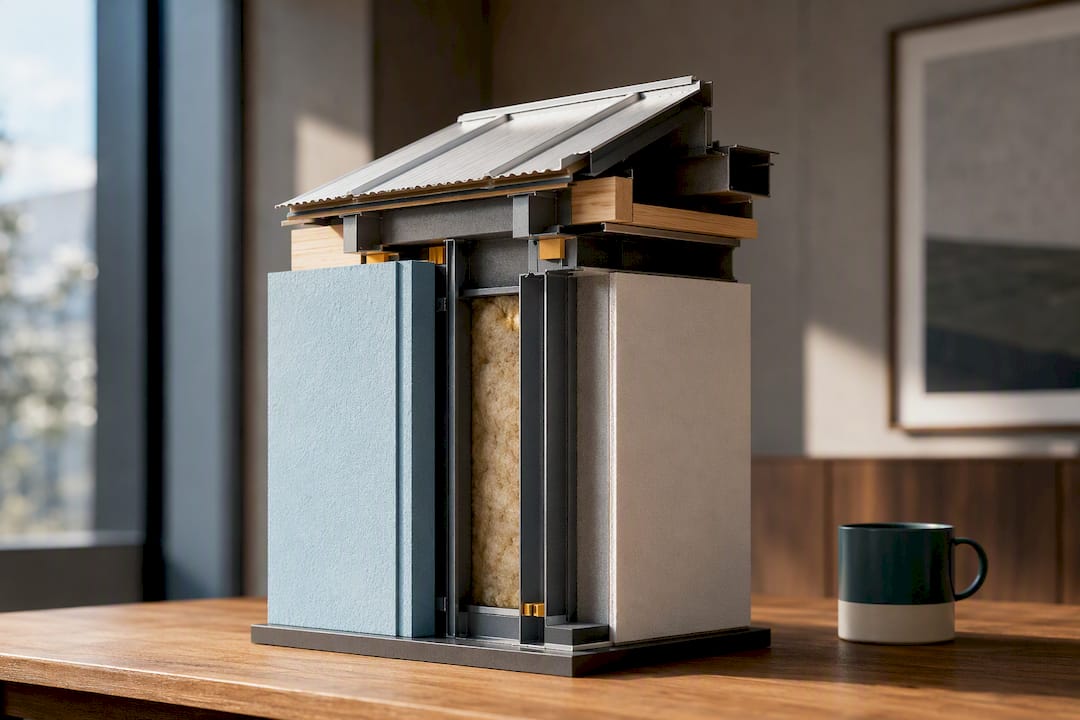
- Fully steel-insulated panels, not steel studs with cavity insulation. A sealed steel SIP assembly closes the gaps a stick-framed steel wall leaves open. Loose-fill or exposed EPS in a cavity wall can still create voids termites exploit.
- Sealed junctions at every critical transition. Foundation-to-frame connections, plumbing and electrical penetrations, roof-to-wall intersections, soffit returns, and window and door openings all need continuous sealing, not just insulation stuffed into the gap.
- Non-cellulose finish materials wherever possible. Metal trim, fiber cement, or PVC-based casings around openings avoid reintroducing wood at exactly the points where termites are most likely to probe.
- Metal flashing and foam-free closures at blocking points. Manufacturer guidance on EPS insulation behavior warns that foam products containing organic additives, or foam with voids behind it, can still attract termite activity even inside an otherwise steel structure.
- Thermal breaks integrated into the panel system. Steel conducts heat efficiently, which means an unbroken steel connection from exterior to interior creates a thermal bridge. Continuous insulation layers and factory-integrated thermal breaks solve this without reintroducing wood blocking.
Pro Tip: Ask your builder for the factory panel joint detail sheet before you sign anything. A sealed seam on paper and a sealed seam on the job site are two different things, and the joint detail is how you verify which one you’re getting.
If your finish package includes interior doors or millwork, look for suppliers who understand sealed-frame installation around steel openings. Local providers like One Day Doors & Closets of Arizona can advise on non-cellulose door frame options that keep this detail consistent throughout the home.
How Does Arizona’s Climate Change the Assembly?
Building termite resistant homes in Arizona means solving two problems at once: keeping termites out and keeping the house livable at 115 degrees. Steel panels handle both, but only with the right supporting details.
Thermal bridging is the real trade-off. Steel transfers heat far faster than wood, so a panel system without continuous exterior insulation and proper thermal breaks can lose the energy performance steel homes are known for. Resilient construction guidance for Arizona’s extreme heat recommends continuous exterior insulation layers, careful shading design, and cool roof assemblies to offset that conductivity. Pairing steel panels with a cool roof system is one of the more direct ways to keep interior comfort high without undercutting the panel’s insulation value.
Steel also brings a wildfire advantage that matters across much of Arizona’s higher-elevation and wildland-adjacent terrain: it’s non-combustible, which pairs well with fire-resistant exterior cladding choices.
When you get to plan review, bring documentation, not just drawings. Ask your local building department:
- Whether steel framing qualifies for reduced or waived termite pretreatment under their adopted code
- What product data submittals they require for panel assemblies
- Whether your jurisdiction has specific continuous insulation R-value requirements for steel-framed walls
Your Buyer Checklist for a Termite Resistant Build
Contract language, not verbal promises, is what actually protects you here. Before you sign:
- Order a soil and drainage report on the lot. Standing water and poor drainage increase termite pressure regardless of what the house is made of.
- Specify panel type by name in the contract. “Steel framing” isn’t precise enough. Require sealed steel-insulated panels, insulation type, and non-cellulose trim throughout.
- Build in inspection milestones. Require photo documentation and sign-off at foundation connection, panel seam sealing, and roof-to-wall junctions before drywall closes them off.
- Get product data and warranty terms in writing. Ask specifically what’s covered on sealing work and panel joints, not just general structural warranty language.
Building These Homes Firsthand: What Buyers Miss
Some builders have worked with AirLight steel panels enough to see where the resistance actually breaks down, and it’s rarely the steel itself. It’s the finish package. A buyer specifies steel framing, feels satisfied, and then approves untreated wood window returns or standard foam trim without realizing those choices reopen the exact pathway the steel was supposed to close.
The AirLight panel system was built around sealed seam details specifically to remove that guesswork, and buyers who ask for factory QA reports and panel joint documentation up front consistently end up with fewer post-occupancy surprises than buyers who take “steel framed” at face value. If there’s one lesson from building termite resistant homes in this state, it’s that the contract language matters as much as the material.
— David Kobierski
Build Your Termite Resistant Home With Better Quality Builders
Some custom home builders in Arizona use AirLight steel-insulated panels, a sealed panel system designed to remove the termite pathways ordinary steel-stud construction can leave open. Some builders provide sealing details built into the panels themselves, reducing reliance on field crews to seal every seam correctly on-site.
Browse the available floor plans or start a conversation with Better Quality Builders about your lot today.
Sources
FAQ
Do Termites Eat Steel Framing?
No. Steel contains no cellulose, so termites have no biological reason to target it, unlike wood-frame construction.
Are Steel Panel Homes Actually Termite Proof, or Just Resistant?
The steel structure itself is immune to termite damage, but the home is only as resistant as its weakest non-structural detail, so sealed junctions and non-cellulose trim are what make the whole assembly termite resistant in practice.
Does Arizona Code Recognize Steel Framing as Termite Protection?
Federal guidance referenced in Steel Framing Alliance documentation lists steel and concrete framing among construction types that may not require additional termite pretreatment, though local building departments confirm specifics at plan review.
Can Foam Insulation in a Steel Home Still Attract Termites?
Yes, if the foam contains organic additives or leaves voids behind it. Manufacturer guidance recommends fully sealed steel panel assemblies instead of loose-fill insulation in open cavities.
How Does Better Quality Builders Address Termite Resistance?
Better Quality Builders uses factory-sealed AirLight steel-insulated panels with sealed seam details built into manufacturing, reducing the field-sealing errors that create termite entry points on standard steel-stud jobs.