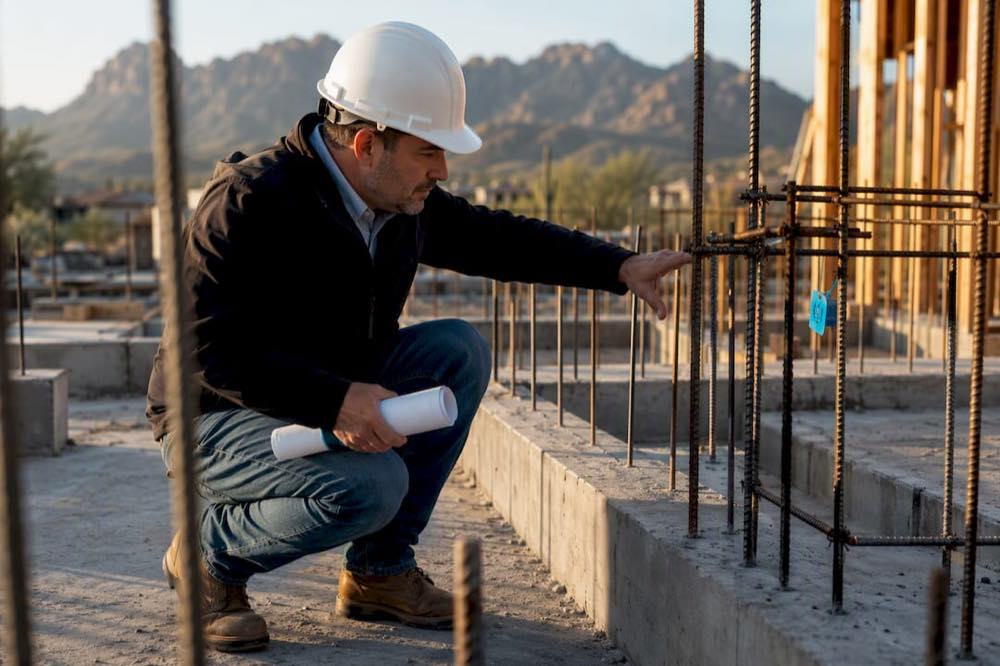
USDA construction loans are available for eligible properties in rural and suburban Arizona, and they solve a real problem: financing land and a new build under one closing that converts straight into a permanent USDA mortgage. The tradeoff is real too. Your property must sit inside a USDA-eligible zone, your income and credit have to clear program thresholds, and your builder must meet USDA’s contractor standards.
TL;DR:
- Only lenders with USDA experience in construction-to-permanent loans can reliably manage staged draws and inspections, preventing delays.
- A builder must have proper licensing, insurance, and at least two years of relevant experience to qualify for funding, not just experience alone.
- Delays often stem from slow contractor documentation, missed inspection windows, or lenders unfamiliar with USDA staged draws, not simply income or property eligibility.
- Failing to bundle land purchase costs into the USDA loan can result in expenses not being reimbursed if land was bought separately with cash.
- The most critical factor for smooth USDA construction loans in Arizona is lender familiarity with draw schedules and inspection processes, not just land or property eligibility.
Table of Contents
- What Is a USDA Construction-to-Permanent Loan?
- Do You Qualify for a USDA Loan in Arizona?
- What Do Contractors and Project Documents Need to Show?
- How Do You Find a Lender and What’s the Timeline?
- Is a USDA Construction Loan Right for Your Arizona Build?
- How Better Quality Builders Coordinates With USDA Lenders
- What Arizona Builders Should Actually Prioritize
- Sources
What Is a USDA Construction-to-Permanent Loan?
A USDA construction-to-permanent loan replaces the two-step process most builders dread: a short-term construction loan followed by a separate mortgage closing once the house is finished. Instead, you close once. The Single Family Housing Guaranteed Loan Program funds land acquisition and construction together, then rolls the balance into a 30-year USDA mortgage the moment your builder finishes the final walkthrough.
During construction, your lender does not hand over the full loan amount up front; coordinating with a trusted local supplier like One Day Doors & Closets of Arizona can help streamline finish selections within your budget. Funds release in stages, tied to physical progress on the house:
- Foundation and site work trigger the first draw.
- Framing and roofing unlock the next portion.
- Mechanical rough-ins (plumbing, electrical, HVAC) release another chunk.
- Final finishes and inspection clear the last draw before conversion.
Each draw requires a lender-ordered inspection confirming the work matches the approved budget and schedule. Skip a milestone or fall behind, and your next draw stalls until the inspector signs off. Once the certificate of occupancy is issued, the construction loan converts automatically into your permanent mortgage. No second application, no second set of closing costs, no second appraisal.
Do You Qualify for a USDA Loan in Arizona?
USDA eligibility runs on four tracks: income, credit, residency, and property location. Miss any one, and the loan does not close, regardless of how strong the rest of your file looks.
- Income limits. Guaranteed loans cap household income at 115% of the area median income for your county; Direct loans use a lower threshold aimed at very low- and low-income households. Arizona’s limits vary by county, so check your specific number rather than assuming a statewide figure applies.
- Credit and DTI. Lenders typically want a FICO score in the 620 to 640 range, with debt-to-income ratios landing near 41% to 46%. Borrowers below that credit floor can often still qualify through manual underwriting, but expect the lender to ask for a thicker paper trail.
- Citizenship and residency. You need to be a U.S. citizen, U.S. non-citizen national, or qualified alien, and the home you’re building must become your primary residence, not a rental or vacation property.
- Property eligibility. Not every parcel in Arizona qualifies. Run the address through the USDA eligibility mapping tool before you fall in love with a lot.
If your score sits closer to 620, lean on compensating factors. Steady employment history, low other debt, and cash reserves all help a manual underwriter say yes.
What Do Contractors and Project Documents Need to Show?
USDA will not fund a construction loan for just any builder swinging a hammer. Your contractor needs to be licensed, insured, and typically able to show at least two years of relevant building experience before a lender will approve them for draw funding. Most lenders also run a background check on the builder as part of underwriting.
Your project file needs to include:
- Detailed architectural plans and specifications
- An itemized construction budget broken out by trade and phase
- A signed construction contract with a milestone payment schedule
- Proof of builder’s liability insurance, usually at minimums the lender sets
- A written warranty covering workmanship and materials
- A draw and inspection schedule matching the lender’s requirements
You generally cannot act as your own general contractor unless you personally hold a contractor’s license and carry the required insurance. USDA treats owner-builders as a lending risk most guaranteed-loan investors won’t accept.
Pro Tip: Ask any builder you’re considering for a sample draw schedule before you sign anything. If they can’t produce one that matches how USDA-approved lenders release funds, that’s a sign they haven’t closed this loan type before.
How Do You Find a Lender and What’s the Timeline?
USDA does not lend directly on guaranteed loans and does not endorse specific companies. It maintains a list of participating lenders and expects borrowers to comparison shop, because not every approved lender actively originates construction-to-permanent products.
Work through these steps in order:
- Pull the current participating lender list for Arizona and call the Arizona USDA Rural Development state office to confirm which lenders are actively accepting new-construction applications right now.
- Ask each lender directly whether they’ve closed a USDA construction-to-permanent loan in the past 12 months, not just whether they “offer” the product on paper.
- Compare at least three lenders on draw-schedule flexibility, inspection turnaround time, and rate lock policies for the construction period.
- Get preapproved before you commit to a lot or a builder contract.
Realistically, plan for about one to two months from application to loan closing, then add your construction timeline, which commonly spans several months for a custom home in Arizona, before loan conversion to permanent mortgage. The most common delays come from slow contractor documentation, missed inspection windows, and lenders unfamiliar with staged draws sitting on paperwork longer than they should.
Is a USDA Construction Loan Right for Your Arizona Build?
USDA construction financing offers real advantages for the right borrower, but it isn’t the only path to a new home, and it isn’t the fastest.
- The upside: eligible borrowers get 100% financing, meaning no down payment, and the USDA guarantee gives lenders enough confidence to approve buyers who might not clear conventional underwriting.
- The downside: fewer lenders actively originate this product, contractor vetting is stricter than a conventional build requires, and guarantee fees plus lender margins can add upfront cost compared with other government-backed options.
- Worth comparing: FHA one-time-close construction loans work in any location, not just USDA-eligible zones. VA construction loans serve eligible veterans with similarly low down payments. Conventional or portfolio construction loans trade the income caps and property restrictions for higher down payment requirements, often 10% to 20%, like the option described in Better Quality Builders’ guide to 10% down construction loans.
One rule trips up buyers repeatedly: USDA construction loans generally will not reimburse you for land you already bought with cash. Bundle the land purchase into the loan itself, or plan on financing land separately before you assume USDA will cover it retroactively.
How Better Quality Builders Coordinates With USDA Lenders
A builder who has actually managed USDA draw schedules before saves you weeks of back-and-forth with underwriting. Every inspection that clears on schedule keeps your construction timeline on track and your lender relationship friction-free.
That efficiency claim matters to a USDA appraiser evaluating long-term home value, and it matters to your monthly budget for decades after closing.
A builder who hands your lender a complete, milestone-based draw schedule on day one, rather than scrambling to produce one after underwriting asks, is the difference between a 45-day close and a 90-day close.
Before signing a builder contract:
- Confirm your chosen lender is actively closing USDA construction-to-permanent loans this year, not just listed as a participant.
- Ask your builder for a sample draw schedule and copies of required warranties up front.
- Review combined construction and land financing options that pair with 10% down alternatives if USDA eligibility doesn’t fit your property.
What Arizona Builders Should Actually Prioritize
The conventional advice on USDA construction loans stops at eligibility. Check your income, check the map, check your credit score. That’s necessary, but it’s not where most Arizona builds actually fall apart.
The real failure point is lender experience with the draw schedule itself. A lender who’s approved plenty of USDA purchase mortgages but never closed a construction-to-permanent file will treat every inspection milestone like a new negotiation. That’s where the 30 to 60 day closing estimate quietly turns into 90 days, and where a contractor with thin documentation gets your file kicked back to manual underwriting for reasons that have nothing to do with your credit score.
Property eligibility and income caps get all the attention because they’re binary and easy to check on a map. Contractor readiness and draw-schedule fluency are harder to verify, which is exactly why they cause more delays. If you’re building in Arizona, spend as much time vetting your builder’s USDA track record as you spend checking whether your lot sits inside an eligible zone. Both determine whether you close.
— David Kobierski
This article is general information, not a substitute for advice from a qualified financial advisor. Consult a qualified financial professional about your own circumstances before acting on anything here.
Sources
- Single Family Housing Guaranteed Loan Program | Rural Development
- Eligibility
- Arizona USDA 502 Housing Program Guide - USDA Mortgage Hub
- USDA Construction Loan to Buy Land | Requirements 2026