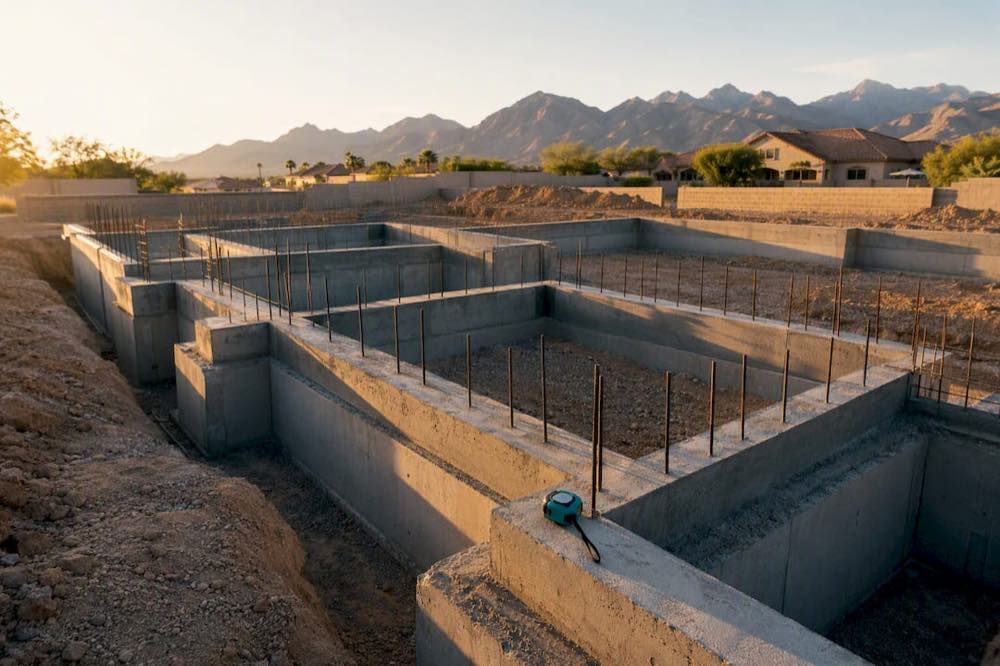
Yes, eligible Arizona veterans can use a VA construction loan to build a primary residence, but it takes three pieces working together: a VA-registered builder, VA-approved plans and specs, and a lender that actually offers construction financing. You’ll find both one-time close and two-time close options. Your first move is simple: confirm your Certificate of Eligibility, then call a lender with real construction loan experience in Arizona.
TL;DR:
- Verify your VA builder registration, plans, and lot buildability early, as delays in any area can stall or increase costs for your project.
- Choose a lender experienced in VA construction loans in Arizona, preferably one offering one-time close options, to minimize closing costs and streamline the process.
- Ensure your builder has an active VA builder ID, Arizona licensing, and relevant references, especially for VA-financed builds, before signing any contracts.
- Be aware that Arizona’s water, septic, and permitting requirements can cause delays, particularly in rural areas or during peak summer months.
- Budget a contingency reserve of at least 5 to 10 percent and respond promptly to draw approval requests to avoid project delays or budget overruns.
Table of Contents
- What Every Arizona Veteran Should Check Before Moving Forward
- How VA Construction Loans Actually Work
- Getting Approved: Eligibility, Entitlement, and Paperwork
- Where to Find Lenders Who Actually Close These Loans
- Vetting a VA-Registered Builder in Arizona
- Arizona-Specific Hurdles That Catch Veterans Off Guard
- What Your Timeline and Budget Should Actually Look Like
- Your Step-by-Step Path From Application to Move-In
- Mistakes That Cost Arizona Veterans Time and Money
- Why Most Guides Get Arizona VA Construction Wrong
- Build Your VA-Financed Home With Better Quality Builders
- Sources
What Every Arizona Veteran Should Check Before Moving Forward
Before you fall in love with a lot or a floor plan, run through the fundamentals. Skipping any of these is the fastest way to stall your project for months.
- Certificate of Eligibility (COE) pulled and reviewed for remaining entitlement
- Builder confirmed as VA-registered, or willing to register before you sign
- Plans and specs finalized enough for a VA appraiser to value them
- Lot buildability verified: water rights, sewer or septic, utility hookups
- Lender identified that actively closes VA construction loans, not just VA purchase loans
- Cash reserves set aside for contingencies and interim costs
Here’s how the practical side breaks down:
| Factor | What to know |
|---|---|
| Funding fee timing | Due within 15 days of closing for one-time close loans |
| Lot cost inclusion | Allowed if the lot was acquired within one year of closing or value is documented |
| Typical Arizona build timeline | Several months, weather and permitting dependent |
| Appraisal basis | Based on plans and specs, not a finished structure |
When you call a lender, ask directly: “Do you offer one-time close VA construction loans in Arizona, and how many have you closed this year?” When you talk to a builder, ask: “Do you have an active VA builder ID, and can you give me two references from past VA-financed builds?” Their answers tell you more than any brochure will.
How VA Construction Loans Actually Work
VA construction financing comes in two structures, and picking the wrong one for your situation can cost you thousands in duplicate fees.
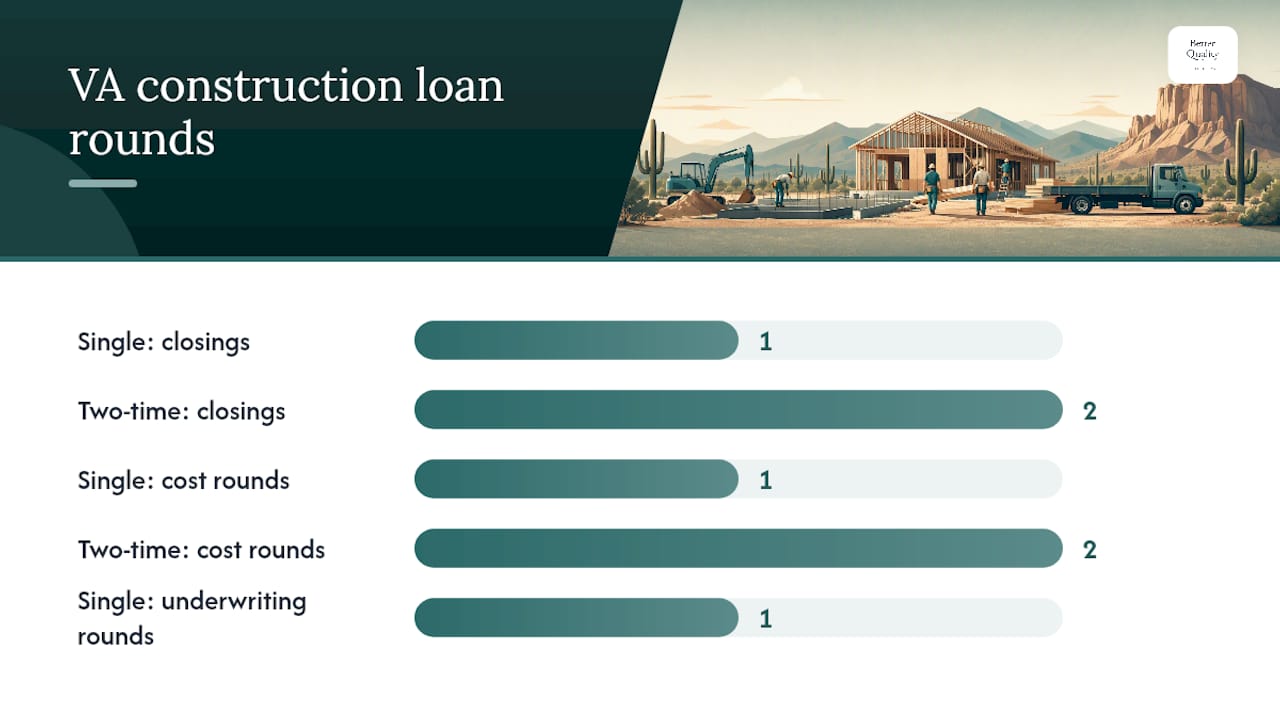
One-time close (single-close) loans combine the construction loan and the permanent mortgage into a single closing. You sign once, the loan converts automatically when the home is finished, and you pay one set of closing costs. This is the structure most Arizona VA lenders prefer, because it’s simpler to underwrite and easier for veterans to budget around.
Two-time close loans treat construction and the permanent mortgage as separate transactions. You close on a short-term construction loan first, often through a local or regional lender, then refinance into a VA loan once the home is complete. This route can make sense if you’re using a builder who won’t work with one-time close terms, but expect two rounds of closing costs and two rounds of underwriting.
- The lender orders a VA appraisal based on your plans and specifications, not a walk-through of a finished house.
- The appraiser issues a Notice of Value (NOV) that sets the loan amount the VA will guarantee.
- Funds move through a draw account, sometimes called a Loan-in-Process account, releasing money to your builder as construction milestones are met.
- Each draw typically requires your written approval before the lender releases funds.
- An inspector confirms the work matches the approved plans before each disbursement.
- Once construction wraps and passes final compliance inspection, the lender submits compliance reports to the VA.
- The VA Loan Guaranty Certificate is issued only after that final inspection clears, not at the start of construction.
That last point trips up a lot of borrowers. The VA guaranty isn’t a formality tacked onto closing. It’s the finish line, dependent on your home passing final inspection exactly as specified in the appraisal. If your builder deviates from approved plans without documentation, you risk a hiccup in that final sign-off. The VA Lender’s Handbook spells out draw-account handling and builder requirements in detail, and any lender worth working with should be able to walk you through it without hesitation.
Getting Approved: Eligibility, Entitlement, and Paperwork
Your Certificate of Eligibility is the starting point for everything else. You can Va, and it determines your entitlement, the dollar amount the VA will guarantee on your behalf. Full entitlement generally means no down payment is required on a standard purchase, but construction loans often work differently in practice.
Remaining entitlement matters more here than on a typical home purchase. If you’ve used VA benefits before, your bonus entitlement calculation ties directly to your county’s conforming loan limit, and a lender may ask for a down payment if your remaining entitlement doesn’t fully cover the construction loan amount. This is where combining construction and land financing with a lower down payment sometimes becomes part of the conversation for veterans without full entitlement remaining.
Lender overlays are the other piece people underestimate. VA doesn’t set a minimum credit score, but most lenders offering construction financing want stronger profiles than they’d require for a standard VA purchase loan, often 620 or higher, plus documented cash reserves for contingencies. Construction carries more risk for the lender than a finished home purchase, and underwriting reflects that.
Here’s what to gather before you approach a lender:
- Signed builder contract with detailed scope of work
- Complete plans and specifications for appraisal
- Permits or evidence of permit readiness for your county
- Lot documentation, including purchase date and price if applicable
- Recent income verification (pay stubs, W2s, or tax returns if self-employed)
- Two months of asset statements showing reserves
- Documented contingency reserve, typically 5 to 10% of build cost
Pro Tip: Pull your COE before you contact any lender. Lenders move faster once entitlement is confirmed, and it prevents a frustrating back-and-forth in the first week of your application.
Where to Find Lenders Who Actually Close These Loans
Most national VA lenders that dominate the refinance and purchase-loan advertising space simply don’t touch construction financing. It’s administratively heavier: more inspections, more draw approvals, more coordination with builders. That complexity pushes many big-name lenders to skip the product entirely, which means Arizona veterans typically have better luck with regional banks and specialty construction lenders who’ve built the internal process to handle draws and inspections.
Start local. Credit unions with a strong veteran membership base and regional Arizona banks are often better positioned than a call-center lender you found through a rate comparison site. When you get someone on the phone, ask these questions directly:
- Do you offer one-time close VA construction loans, and how many have you closed in Arizona this year?
- How many draws are typical, and who schedules the inspections?
- Who orders the VA appraisal on plans and specs, and how long does that usually take?
- What are your specific overlays on credit score, reserves, and contingency funds?
- What’s your average timeline from application to construction closing?
Watch for red flags. A lender who can’t clearly explain their draw and inspection process, or who seems unfamiliar with basic VA construction terminology, is not the right fit for a project this complex. Same goes for anyone who can’t confirm they’re licensed to close construction loans in Arizona specifically. If they hesitate on that question, keep calling.
Vetting a VA-Registered Builder in Arizona
Your builder needs two separate credentials, and having only one isn’t enough. First, they need a valid VA builder identification number, which you can verify through WebLGY, the VA’s system for builder registration. Without an active VA builder ID, the appraiser can’t issue an NOV, and your loan stalls before it starts. Second, they need active licensing through the Arizona Registrar of Contractors, plus proof of insurance and bonding specific to your county.
- Ask for the builder’s VA builder ID number and confirm it’s active in WebLGY yourself. Don’t take their word for it.
- Request references from past VA-financed builds specifically, not just general custom home projects.
- Ask to see certificates of occupancy from at least two recent completed projects.
- Confirm they’ve pulled permits in your specific county before, since Maricopa County and, say, Yavapai County have different processes.
- Ask about HOA approval experience if your lot sits inside a planned community.
- Get their warranty terms in writing before you sign anything.
If your preferred builder isn’t VA-registered yet, that’s not automatically a dealbreaker. Registration through WebLGY typically takes a matter of weeks once the builder submits the required documentation, so a builder motivated to work with veteran clients can usually get registered in time for your project, provided you build that timeline into your planning.
Pro Tip: Ask your builder how many VA construction loans they’ve completed, not just how many homes they’ve built. The VA draw and inspection process is a different animal from a standard cash or conventional build, and experience with it matters.
Arizona-Specific Hurdles That Catch Veterans Off Guard
Arizona’s geography and climate create planning issues that a generic VA construction guide won’t warn you about.
Water availability tops the list, especially outside metro areas. Counties require documented proof of adequate water supply before permits get issued, and in rural stretches of Arizona, that documentation process alone can take weeks. If your lot relies on a well rather than a municipal water connection, get that verified early, because a VA appraiser needs to see it resolved before finalizing plans-based value.
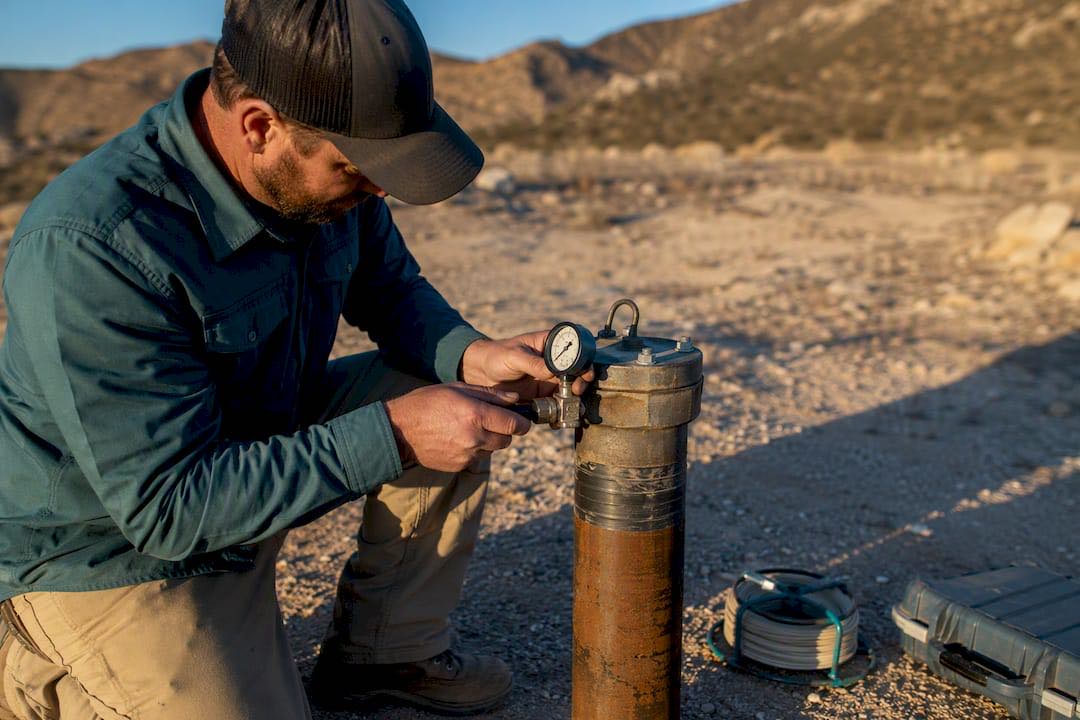
Septic versus sewer is the next fork in the road. Urban and suburban lots typically connect to municipal sewer, while rural lots often require septic systems approved through your county health department. That approval process varies significantly between counties, so check with your specific county authority rather than assuming statewide consistency.
Seasonality shapes your entire build calendar. Concrete pours, roofing, and exterior finish work are typically scheduled outside the peak summer months, when triple-digit heat slows curing times and makes outdoor labor riskier for crews. Builders who understand Arizona’s climate sequence exterior work around the hottest stretches, which is one reason experienced local builders often outperform out-of-state contractors on timeline accuracy.
- Confirm water documentation before you commit to a lot
- Verify septic or sewer status with your county health department
- Ask your builder how they sequence work around Arizona summers
- Check HOA and deed restrictions before signing your builder contract
- Understand that thin comparable sales in rural areas can complicate plans-based appraisals
Rural lots present a specific appraisal risk: when comparable sales are sparse, VA appraisers have less data to support your plans-based valuation, which can lead to a lower NOV than your build cost. Checking lot buildability and comps before you commit saves you from discovering this problem after you’ve already signed a builder contract.
What Your Timeline and Budget Should Actually Look Like
Most custom builds in Arizona run 8 to 12 months from ground-breaking to final inspection, and that range assumes no major surprises. Permit delays, material shortages, and weather-driven scheduling shifts are the usual culprits when a project runs long, and the VA’s own buyer guidance flags contingency planning as essential precisely because timelines routinely exceed initial estimates.
Your total cost breaks into a few major buckets, and each one deserves its own line in your budget.
| Cost driver | Why it moves |
|---|---|
| Lot cost | Fixed once purchased, but timing affects loan inclusion |
| Build cost per square foot | Varies with finish level and floor plan complexity |
| Change orders | Add cost mid-build when specs shift from original plans |
| Permit and inspection fees | Vary by county and project scope |
| Material and labor pricing | Fluctuates with market conditions during your build window |
During construction, you’ll typically make interim interest-only payments on funds already drawn, rather than a full mortgage payment, which helps cash flow while the home isn’t yet livable. The funding fee is due within 15 days of closing on one-time close loans, so plan for that expense at the start of the project, not the end. Tools like Buildberry can help you and your builder track schedule and budget against draws in real time, which reduces the guesswork around whether you’re on pace for your next disbursement.
Pro Tip: *Budget your contingency reserve as a real line item, not as an afterthought.
Your Step-by-Step Path From Application to Move-In
Here’s the order operations actually happen in, and who’s responsible for each step.
- Confirm your COE and entitlement. You do this through VA.gov or your lender, and it determines your remaining benefit before anything else moves forward.
- Prequalify with a VA construction lender. The lender reviews income, assets, and credit, and confirms whether your entitlement covers the projected loan amount.
- Select and verify your builder. Confirm their VA builder ID and Arizona license before signing a contract, and get the contract itself in writing with a detailed scope.
- Submit plans and specs for appraisal. The lender orders the VA appraisal, and the appraiser issues an NOV based on those plans, not a finished structure.
- Close your construction loan. For one-time close loans, this is your only closing; for two-time close, this is the first of two.
- Follow the draw schedule. Your builder requests funds at defined milestones, an inspector verifies progress, and you approve each release in writing.
- Complete final inspection and convert to permanent financing. Once the home passes final compliance inspection and receives its certificate of occupancy, the loan converts (one-time close) or you refinance into permanent VA financing (two-time close).
The borrower’s biggest responsibility throughout is responding quickly to draw approval requests and change order decisions. A single delayed signature on your end can push back the entire inspection and disbursement chain, so build a habit of checking in with your lender and builder weekly rather than waiting for problems to surface.
Mistakes That Cost Arizona Veterans Time and Money
The single most expensive mistake is signing a builder contract before confirming VA registration. Once you’ve committed to a builder who can’t get registered in time, you’re stuck renegotiating or starting over, both of which cost weeks.
Weak draw inspection language in your builder contract is the second-biggest problem. If the contract doesn’t clearly tie payment milestones to specific, inspectable stages of construction, you have little leverage if work quality slips.
- Verify builder VA registration before signing anything
- Insist on a written draw schedule tied to specific inspection milestones
- Budget a genuine 5 to 10% contingency, not a token 2%
- Confirm HOA and architectural review approval before closing
- Get every lender commitment in writing, including rate locks and fee estimates
Thin appraisal comps in rural counties and insufficient contingency reserves round out the most common failure points. If your project involves significant change orders or a builder relationship that’s turning contentious, understanding how change orders typically work before you’re in the middle of a dispute saves both money and stress.
Pro Tip: If your builder resists putting draw milestones or warranty terms in writing, that’s a signal to walk away, not to push harder for a verbal agreement. A construction attorney’s review of your contract, even a one-time consultation, is worth the cost on a project this size.
Why Most Guides Get Arizona VA Construction Wrong
Most VA construction loan content treats the process as a national, one-size-fits-all product. It isn’t. Arizona’s water documentation requirements, its county-by-county permitting quirks, and its brutal summer scheduling window all shape whether your project finishes on time and on budget, and generic guides written for a national audience simply don’t mention any of it.
The bigger issue is that veterans often assume the hardest part is qualifying for the loan. In practice, the harder part is finding a lender who actually closes construction loans regularly and a builder who understands both VA compliance and Arizona’s building conditions. Loan approval is a paperwork exercise. Execution is where projects actually succeed or stall.
Better Quality Builders approaches this the way an experienced Arizona builder should: with AirLight steel panel construction, a working knowledge of VA appraisal requirements, and direct coordination between lenders and county permitting offices. If you’re a veteran weighing whether to build, the next right step is the same one outlined earlier: confirm your COE, then start the lender and builder conversations in parallel rather than sequentially. It saves months.
— David Kobierski
Build Your VA-Financed Home With Better Quality Builders
Most builders treat VA construction loans as a paperwork hurdle to work around. We treat it as part of the plan from day one, reviewing floor plans against VA appraisal expectations before you ever sign a contract, to help avoid a Notice of Value lower than budgeted.
Better Quality Builders builds custom homes across Arizona using AirLight steel panels, the same insulated steel technology used in hurricane and earthquake zones, delivering up to 60% lower energy bills and a structure engineered to outlast typical wood-frame construction by centuries, not decades. If you’re ready to see what a VA-financed AirLight home could look like on a specific lot, start a consultation with Better Quality Builders and get a 3D preview rendering before you commit to a single plan.
Sources
- VA offers construction loans for Veterans to build their dream homes - VA News
- Va
- VA builder registration / WebLGY (VA)