
A custom home build is defined as a residential construction project where the homeowner controls every major decision, from the original floor plan to the final finishes. Unlike production or spec homes, a custom build starts with a blank page. No pre-drawn plans, no builder-selected materials, no compromises on layout. Custom home construction represents 8–10% of all new U.S. single-family homes, a share that has grown steadily as buyers seek homes that fit their lives rather than the other way around. If you are planning a custom home project, this guide covers every phase, from land selection to move-in.
What is a custom home build, and how does it differ from other options?
A custom home build means original architectural drawings created specifically for your lot and your lifestyle. That definition matters because the word “custom” gets used loosely in real estate marketing. True custom means original drawings tailored to the buyer and the land, while “semi-custom” typically limits changes to finishes and fixtures within a pre-designed framework. The difference shapes your home’s value, livability, and long-term satisfaction.
Three main construction paths exist for new homes. A spec home is built by a developer without a specific buyer in mind. The developer chooses the floor plan, materials, and finishes, then sells the finished product. A semi-custom home lets you pick from a catalog of floor plans and swap out countertops, cabinets, or flooring within set options. A true custom home gives you full control: you work with an architect to design original plans, select every material, and manage the entire build process.
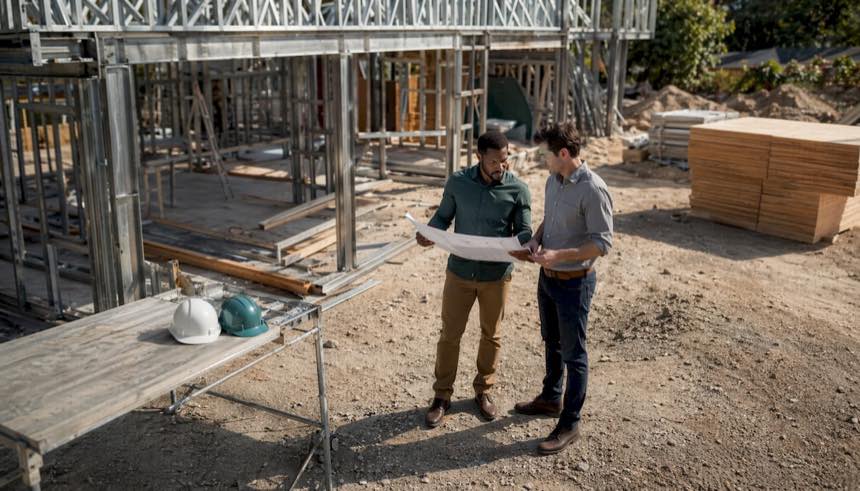
Not all builders claiming “custom” offer full plan flexibility. Some restrict buyers to pre-designed plans with finish options only. That is semi-custom by another name. Before signing any contract, ask directly whether the builder will create a floor plan from scratch based on your lot and requirements.
| Feature | Spec home | Semi-custom home | True custom home |
|---|---|---|---|
| Floor plan origin | Builder-designed | Pre-designed, limited edits | Original drawings for your lot |
| Material control | None | Limited selections | Full control |
| Timeline | Move-in ready | 6–12 months | 12–24 months |
| Cost level | Lowest | Mid-range | Highest |
| Personalization | None | Moderate | Complete |
What are the main steps in the custom home build process?
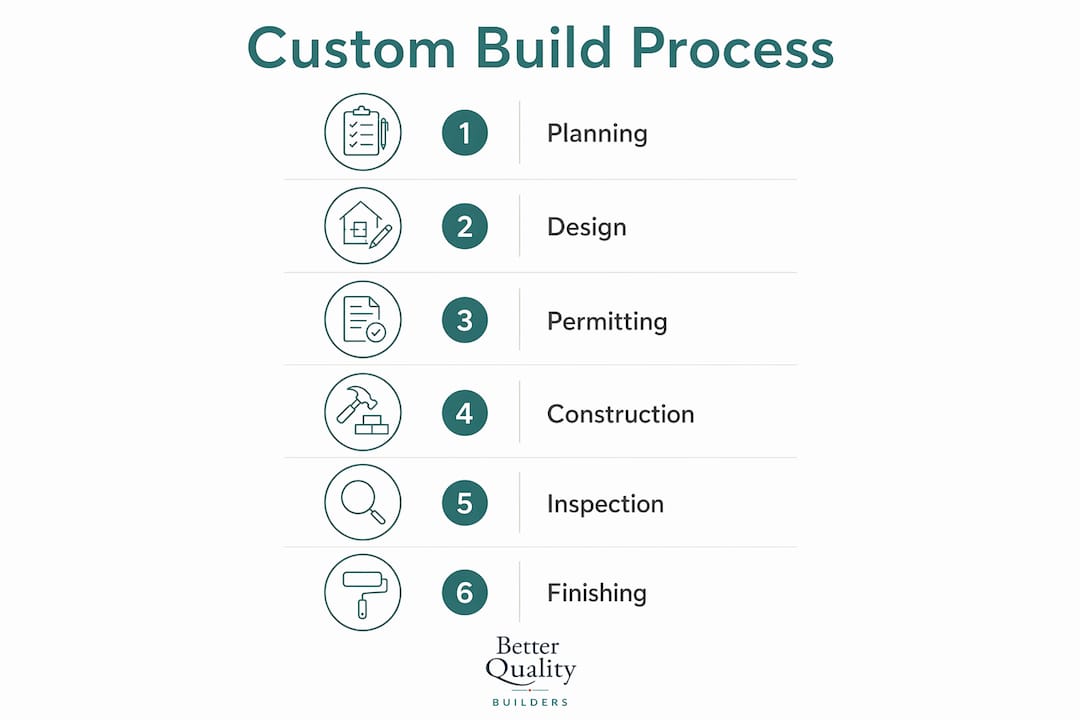
A custom home build follows a clear sequence of phases. Skipping or rushing any phase creates problems that compound later. The process includes initial consultation, design collaboration, financing and permitting, site preparation, and phased construction. Each phase requires active homeowner involvement.
-
Land feasibility and acquisition. Evaluate the lot for soil conditions, drainage, utility access, and zoning rules before purchasing. A site that looks perfect can carry hidden costs if it requires extensive grading or septic installation.
-
Architect and builder selection. Hire an architect to create original drawings based on your lot dimensions, orientation, and lifestyle needs. The role of an architect goes beyond aesthetics. Structural decisions made at this stage affect energy efficiency, maintenance costs, and resale value for decades.
-
Design development and custom home specification. A custom home specification is the written document that lists every material, product, and finish selected for the build. It covers everything from foundation type to door hardware. This document protects you legally and keeps contractors accountable.
-
Permitting and site engineering. Submit architectural drawings to your local building department for approval. Permits cover structural, electrical, plumbing, and mechanical systems. This phase typically takes 4–12 weeks depending on your municipality.
-
Site preparation. Clear the land, excavate the foundation, and install utilities. This phase sets the physical baseline for everything that follows.
-
Phased construction. Construction moves through foundation, framing, mechanical rough-in, insulation, drywall, and finish work in sequence. Each phase requires inspection sign-off before the next begins.
-
Final walkthrough and move-in. Conduct a detailed punch-list inspection before closing out the project. Document every incomplete or defective item in writing.
Pro Tip: Schedule weekly check-in calls with your general contractor throughout the build. Decisions get made daily on a construction site. Staying informed prevents costly change orders caused by miscommunication.
Following a step-by-step build checklist keeps every phase on track and reduces the risk of budget overruns.
How much does a custom home build cost, and how long does it take?
A true custom home build is the most expensive and time-intensive new construction category available. That is not a reason to avoid it. It is a reason to plan carefully.
The typical timeline runs 12–24 months from land acquisition to move-in. That range reflects variables like design complexity, permit processing times, material lead times, and weather. Highly customized homes with imported materials or complex structural systems sit at the longer end of that range.
Modular or panelized custom builds achieve 80–90% of traditional on-site construction quality in 4–9 months at 65–80% of the cost. This method uses factory-built components assembled on site, which reduces weather delays and labor inefficiency. It is worth understanding this option before committing to a fully site-built approach.
| Build method | Typical timeline | Relative cost | Customization level |
|---|---|---|---|
| Spec home | Move-in ready | Baseline | None |
| Semi-custom | 6–12 months | 110–130% of baseline | Moderate |
| Traditional custom | 12–24 months | 150–200% of baseline | Complete |
| Modular/panelized custom | 4–9 months | 65–80% of traditional custom | High |
Cost factors in a custom build include architectural fees, engineering reports, permits, site work, materials, labor, and builder margin. Material selection alone can shift the total budget by 20–30%. Choosing energy-efficient building materials upfront often reduces lifetime ownership costs significantly, even when the initial price is higher.
What are the benefits and challenges of building a custom home?
Custom builds offer advantages that no production home can match. Custom homes allow integration of modern energy-efficient and sustainable technologies from the start. You choose the insulation system, the HVAC design, the window specifications, and the structural materials before a single nail is driven. That level of control produces a home that fits your health, comfort, and efficiency goals precisely.
The core benefits of custom home construction include:
- Full design control. Every room, ceiling height, window placement, and storage solution reflects your actual lifestyle, not a developer’s assumptions about the average buyer.
- Material quality. You select materials based on durability and performance, not builder margin. This directly affects long-term repair costs and home value.
- Energy performance. Homes designed for efficiency from the ground up outperform retrofitted production homes on utility costs year after year.
- Long-term value. Custom builds generally cost more upfront but may offer higher long-term value and satisfaction due to personalization and quality choices.
The challenges are real and should not be minimized. The process demands patience, active involvement, and tolerance for uncertainty. Decision fatigue is common. You will make hundreds of choices across design, materials, and finishes. Budget creep is the most frequent problem. Change orders, material price increases, and scope additions push final costs above original estimates on most custom projects.
Pro Tip: Lock your design and specifications before breaking ground. Every change made during construction costs two to three times more than the same change made on paper during the design phase.
Custom builds require buyer patience and tolerance for a longer, more complex process. The result is a home better tailored to your lifestyle and future needs than any production option can deliver.
Key Takeaways
A true custom home build gives you complete control over design, materials, and construction, but it demands more time, budget, and active involvement than any other new home option.
| Point | Details |
|---|---|
| Definition matters | True custom means original drawings for your lot, not finish swaps on a pre-designed plan. |
| Verify builder claims | Ask directly whether the builder creates floor plans from scratch before signing any contract. |
| Plan for 12–24 months | Traditional custom builds take 12–24 months from land acquisition to move-in. |
| Modular is a real option | Panelized or modular custom builds deliver high quality in 4–9 months at 65–80% of traditional cost. |
| Lock specs before breaking ground | Changes made during construction cost two to three times more than changes made during design. |
What most buyers get wrong about custom home builds
The word “custom” is the most abused term in residential construction. I have seen buyers sign contracts with builders who call their product “fully custom” and then discover they cannot change the staircase location or add a window to the primary bedroom. That is not a custom home. That is a semi-custom home with better marketing.
The first question to ask any builder is simple: “Will you create a floor plan from scratch based on my lot and my requirements?” If the answer involves showing you a catalog of existing plans, you are looking at a semi-custom product. That is not necessarily bad. Semi-custom homes offer real value at lower cost and shorter timelines. But you should know what you are buying.
The second thing buyers underestimate is how much their own involvement shapes the outcome. A custom home build is not a passive purchase. You are a project participant from day one. Buyers who stay engaged, ask questions, and review documents carefully end up with better homes and fewer surprises. Buyers who delegate everything and check in at the end often face costly corrections.
Modern building technologies have changed the calculus on materials. Steel-based structural systems, for example, now offer durability and energy performance that wood framing cannot match at comparable cost over a 30-year horizon. Choosing materials based on 30-year performance rather than upfront price is the single decision that separates good custom homes from great ones.
— David Kobierski
Building a custom home that lasts with Better Quality Builders
Better Quality Builders specializes in custom home construction in Phoenix and Scottsdale, Arizona, using AirLight steel panels. The same structural material used in hurricane and earthquake zones worldwide. The result is a home built to last centuries, not decades, with up to 60% lower energy bills compared to standard construction.
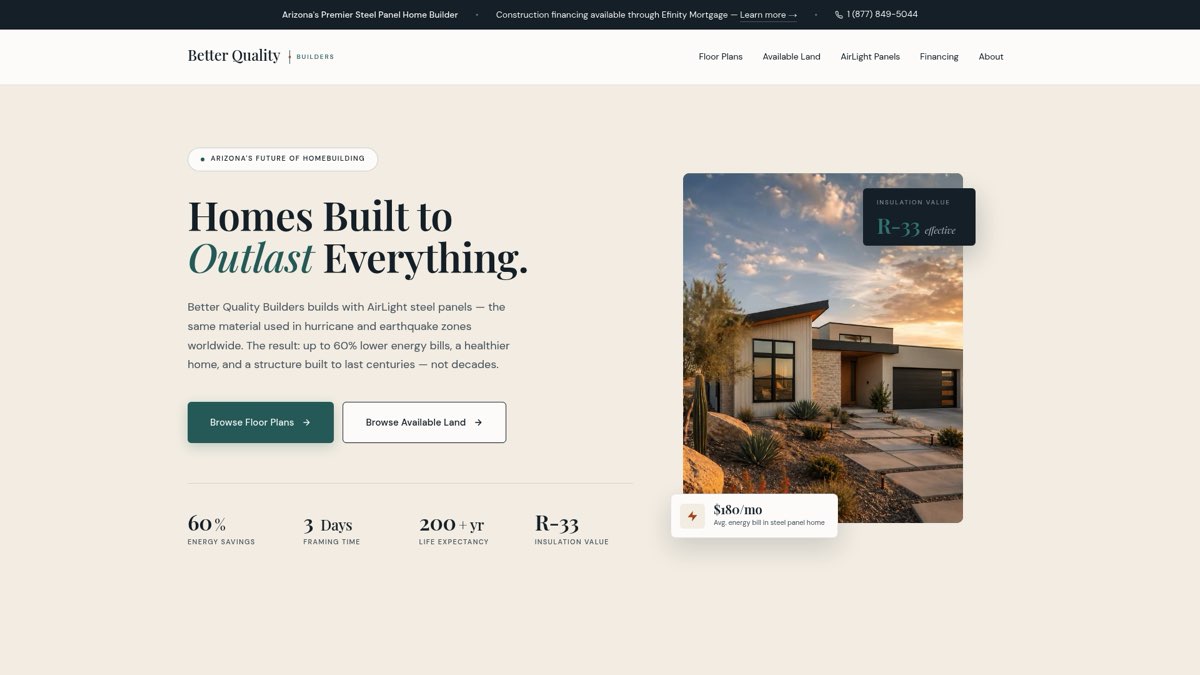
Better Quality Builders designs every home from original plans tailored to your lot and lifestyle. Their steel SIP panel homes deliver the durability and energy performance that wood-frame construction cannot match. Browse custom home plans and designs to see what a true custom build looks like from the ground up. Contact Better Quality Builders directly to discuss your project and get a personalized consultation for your Arizona build.
FAQ
What is the difference between a custom and semi-custom home?
A true custom home uses original architectural drawings created for your specific lot and requirements. A semi-custom home lets you modify finishes and minor features within a pre-designed floor plan framework.
How long does a custom home build take?
Traditional custom home builds typically take 12–24 months from land acquisition to move-in. Modular or panelized custom builds can be completed in 4–9 months.
What is a custom home specification?
A custom home specification is a written document listing every material, product, and finish selected for the build. It serves as the legal and practical reference for all contractors throughout construction.
What are the main benefits of building a custom home?
Custom home construction gives you full control over floor plan design, material quality, energy performance, and long-term durability. These choices produce a home better matched to your lifestyle than any production option.
How do I verify that a builder truly offers custom home services?
Ask whether the builder will create a floor plan from scratch based on your lot. Builders who only offer modifications to existing plans are providing semi-custom, not true custom, construction.