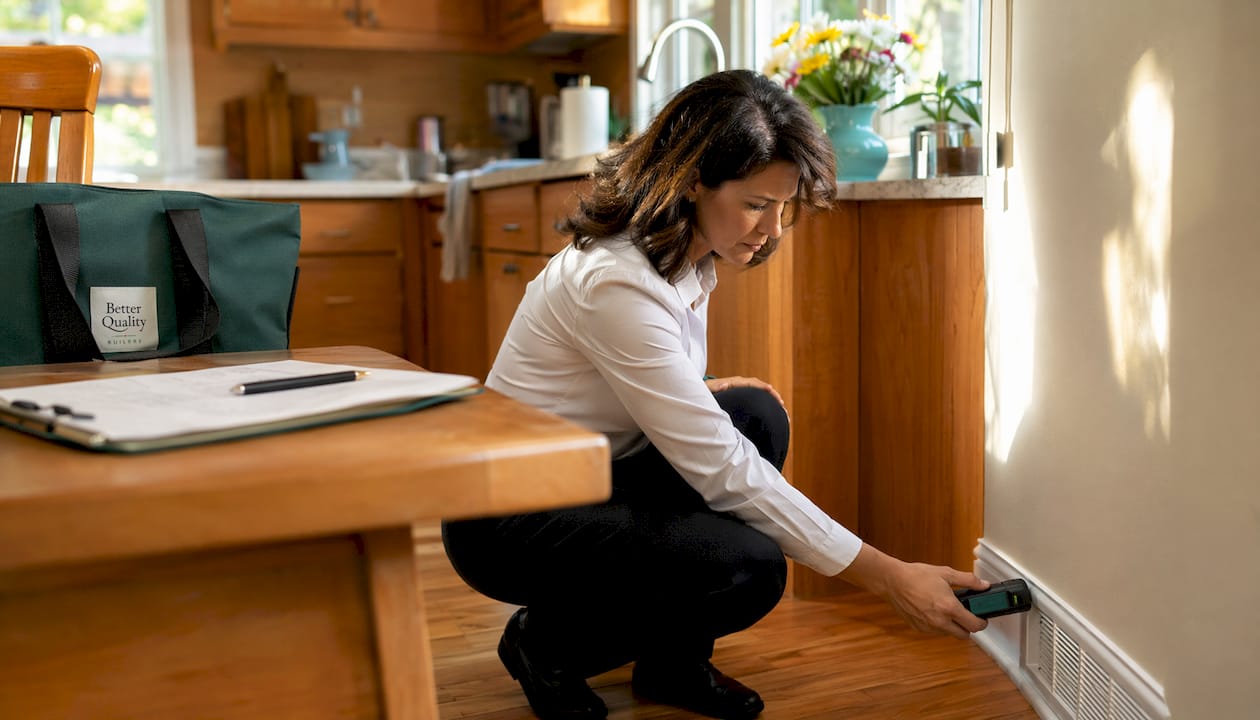
A healthy home standard is a set of criteria that defines whether a living space actively supports the health, comfort, and safety of its occupants. The National Center for Healthy Housing defines a healthy home as one that is dry, clean, safe, well-ventilated, pest-free, thermally comfortable, accessible, and prepared for natural disasters. These are not aspirational goals. They are measurable benchmarks that affect your respiratory health, mental well-being, and long-term quality of life. Whether you own your home or rent it, understanding what these standards require puts you in control of your living environment.
What is a healthy home standard and what does it include?
A healthy home standard covers nine core principles, each targeting a specific health risk. The Nehemiah Project outlines these principles as the foundation for any home that genuinely protects its occupants. Missing even one creates a chain reaction of health problems that compounds over time.
| Principle | Health impact |
|---|---|
| Dry | Prevents mold, dust mites, and lead paint deterioration |
| Clean | Reduces allergens, pests, and toxic exposures |
| Safe | Eliminates injury risks from falls, burns, and structural hazards |
| Well-ventilated | Controls indoor air pollutants and humidity |
| Pest-free | Removes asthma triggers and disease vectors |
| Thermally comfortable | Supports cardiovascular health and reduces breathlessness |
| Well-maintained | Prevents hazard escalation from deferred repairs |
| Accessible | Reduces injury risk for all ages and abilities |
| Disaster-ready | Protects occupants during earthquakes, floods, and fires |

Moisture control is the most consequential of these principles. Poor maintenance and moisture accelerate lead-based paint deterioration, causing lead poisoning in approximately 535,000 U.S. children every year. That number reflects what happens when dryness and maintenance are treated as optional rather than foundational.
Thermal comfort has its own measurable parameters. A home that cannot hold a stable indoor temperature forces the body to compensate, which strains the cardiovascular and respiratory systems. Ventilation works alongside thermal control. Newer, tightly sealed homes trap pollutants if mechanical systems are not operating correctly, which makes indoor air quality standards a non-negotiable part of any healthy home checklist.
Pro Tip: Run your bathroom and kitchen exhaust fans for at least 20 minutes after use. In tightly built homes, this single habit removes a significant share of daily moisture and cooking pollutants before they accumulate.
How do healthy home standards improve health and well-being?
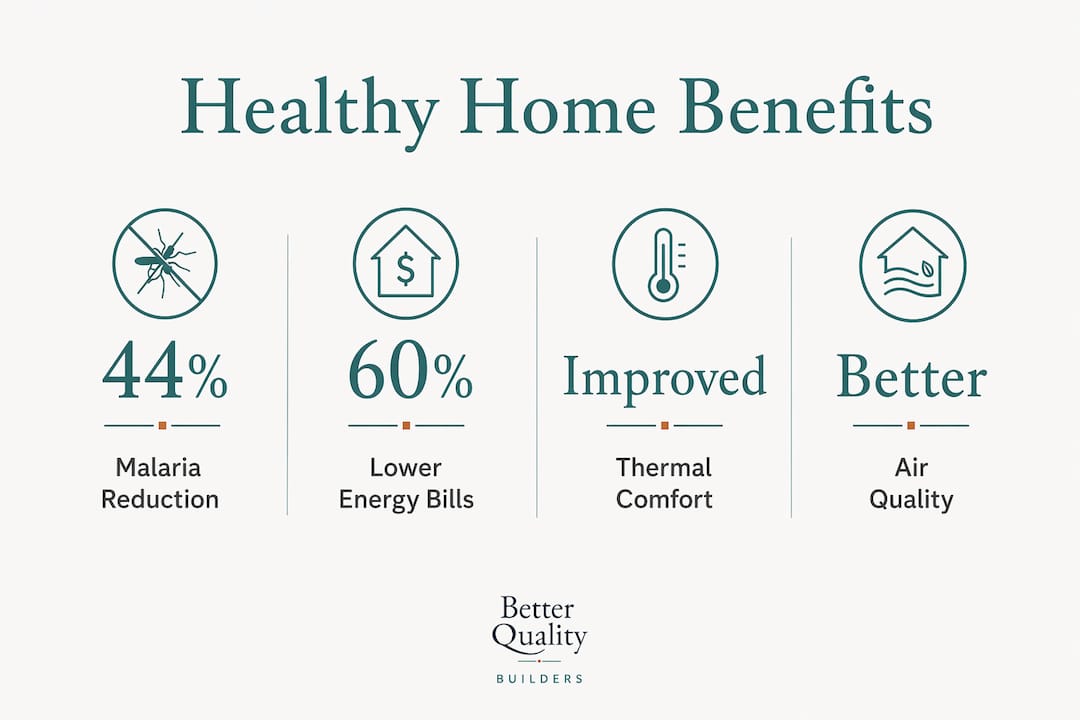
The evidence connecting healthy home standards to measurable health outcomes is now concrete. A 2026 study published in Nature Medicine followed 110 “Star Homes” and 513 traditional homes over three years. Children in Star Homes had 44% less malaria, 30% less diarrhea, and 18% fewer acute respiratory infections compared to children in conventional housing. Star Homes featured insect-proofing, cleaner cooking areas, smoke-free zones, and passive cooling. The results show that structural design choices directly determine childhood disease rates.
Mental health benefits are equally documented. A randomized controlled trial in Victoria, Australia found that home energy upgrades improved mental health and social well-being by reducing symptoms like breathlessness and enhancing daily functioning. This matters because most people think of healthy home guidelines as physical safety measures. The data shows they also shape psychological resilience and social participation.
“Upgrades targeting thermal comfort and cleanliness show measurable impacts on mental health, improving the ability to perform daily activities.” — Health and Well-Being Outcomes from a Non-Health Population-Level Intervention, Springer, 2025
| Health outcome | Improvement in healthy homes |
|---|---|
| Malaria in children | 44% reduction (Star Homes study, 2026) |
| Diarrheal illness in children | 30% reduction |
| Acute respiratory infections | 18% reduction |
| Mental health and daily functioning | Improved through thermal comfort upgrades |
| Lead poisoning risk | Reduced through moisture control and maintenance |
The connection between thermal comfort and physical functioning is particularly underappreciated. When a home cannot maintain a consistent temperature, occupants with asthma, heart conditions, or arthritis experience more frequent flare-ups. Addressing thermal comfort through proper insulation and heating is not a luxury upgrade. It is a clinical intervention with documented outcomes.
What regulations and voluntary standards guide homeowners and renters?
Regulations now give healthy home guidelines legal weight, not just moral weight. New Zealand’s Healthy Homes Standards reached their final compliance deadline on July 1, 2025. All rental properties must now meet minimum thresholds across five categories:
- Heating: A fixed heating device capable of warming the main living area to at least 18°C (64°F)
- Insulation: Ceiling and underfloor insulation meeting current depth and R-value requirements
- Ventilation: Extractor fans in kitchens and bathrooms, plus openable windows in all habitable rooms
- Moisture ingress and drainage: Gutters, downpipes, and drainage systems must be functional and clear
- Draft stopping: All unreasonable gaps in walls, ceilings, floors, and windows must be sealed
These standards apply to rental properties, not owner-occupied homes. The gap between rental and owner-occupied housing quality has historically been significant. Regulations like these close that gap by making landlords legally accountable for the same benchmarks that health researchers have recommended for decades.
In the United States, the National Healthy Housing Standard serves as the primary voluntary framework for local governments and housing agencies. Many local building codes draw directly from its principles. Homeowners benefit from understanding these benchmarks even when no law requires compliance, because the health outcomes apply regardless of legal status.
Pro Tip: If you rent, request a written statement from your landlord confirming compliance with local healthy homes regulations before signing or renewing a lease. In jurisdictions with active standards, this documentation protects both parties.
Voluntary green building certifications like LEED and WELL Building Standard go further than minimum regulations. They set performance targets for air quality, water quality, lighting, and acoustic comfort that exceed what most codes require.
How can you practically implement healthy home standards?
Meeting a healthy home standard requires consistent action across several areas. The following steps address the most common gaps found in both owned and rented homes.
-
Inspect for hidden moisture twice a year. Check attics, crawlspaces, and under sinks every spring and fall. Semi-annual proactive inspections outperform occasional deep cleaning because moisture damage compounds silently over months before it becomes visible.
-
Operate mechanical ventilation correctly. Energy-efficient homes with tight building envelopes require mechanical ventilation to maintain safe indoor air quality. Failure to run these systems traps pollutants indoors. Check that heat recovery ventilators (HRVs) or energy recovery ventilators (ERVs) are set to run continuously at low speed, not just when you remember.
-
Seal drafts and upgrade insulation. Drafts are not just a comfort issue. They allow outdoor allergens, pests, and humidity to enter. Weatherstripping around doors and windows is a low-cost fix with a direct impact on thermal comfort and energy efficiency.
-
Implement integrated pest management. Seal entry points, eliminate standing water, and store food in sealed containers. Chemical pesticides introduce their own indoor air quality problems, so physical barriers and sanitation come first.
-
Build disaster readiness into your home assessment. Securing furniture and maintaining clear exits is a critical healthy home component that most checklists miss entirely. Anchor tall bookshelves and water heaters, keep emergency supplies accessible, and know your evacuation route.
-
Optimize heating and cooling for consistent thermal comfort. A programmable thermostat set to maintain 68°F–72°F (20°C–22°C) during waking hours reduces cardiovascular strain and supports respiratory health. Pair this with adequate insulation to avoid the energy waste that comes from heating or cooling a leaky envelope.
Renovation and retrofitting projects offer the highest return on investment when they target multiple principles simultaneously. Upgrading insulation, for example, addresses thermal comfort, moisture control, and energy efficiency in one intervention. Reviewing resilient home construction examples gives homeowners a concrete picture of what these upgrades look like in practice.
Key Takeaways
A healthy home standard is the single most effective framework for connecting building quality to measurable occupant health outcomes across every age group.
| Point | Details |
|---|---|
| Nine core principles | Healthy homes must be dry, clean, safe, ventilated, pest-free, maintained, thermally comfortable, accessible, and disaster-ready. |
| Documented health outcomes | Children in standard-compliant homes had 44% less malaria and 18% fewer respiratory infections than those in conventional housing. |
| Mental health connection | Thermal comfort upgrades measurably improve mental health and daily functioning, not just physical safety. |
| Regulatory compliance | New Zealand’s Healthy Homes Standards set a July 2025 deadline; U.S. homeowners benefit from the National Healthy Housing Standard as a voluntary benchmark. |
| Practical priority | Semi-annual moisture inspections and correct mechanical ventilation operation prevent the most common and costly health hazards. |
Why healthy homes are bigger than most people realize
I have spent years watching homeowners focus on aesthetics while ignoring the systems that actually determine whether a home supports health. The kitchen gets renovated. The crawlspace never gets inspected. That pattern is backwards.
What changed my thinking was seeing the data on disaster readiness. Every healthy home checklist I reviewed early in my career treated safety as fire alarms and carbon monoxide detectors. The research from the Nehemiah Project reframed it entirely. Securing furniture, maintaining clear exits, and planning for natural events are not emergency management tasks. They are healthy home tasks. That distinction matters because it changes who is responsible and when the work gets done.
The other thing most people miss is the mental health dimension. When a home is thermally stable, clean, and free from moisture problems, occupants sleep better, feel less anxious, and perform better in daily life. The Victoria, Australia trial made this concrete. Non-health interventions, meaning building upgrades, produced mental health outcomes that a clinical program would be proud of. That is a profound argument for treating your home as a health asset, not just a financial one.
My honest recommendation: treat your home the way you treat your health. Schedule regular checkups. Address small problems before they compound. And build or buy with the understanding that the structure itself is either working for your health or against it. Better Quality Builders designs homes with that principle at the core, and the difference in long-term outcomes is not subtle.
— David Kobierski
How Better Quality Builders helps you meet healthy home standards
Better Quality Builders constructs homes with AirLight steel panels that deliver up to 60% lower energy bills while maintaining the thermal stability and air tightness that healthy home standards require. These are the same materials used in hurricane and earthquake zones worldwide, which means disaster readiness is built into the structure from day one, not added as an afterthought.
Every home Better Quality Builders designs in Arizona addresses indoor air quality, moisture control, and thermal comfort as structural priorities, not finish-level options. If you are ready to build a home that meets and exceeds healthy home guidelines from the foundation up, explore custom home plans or connect with the team at Better Quality Builders to discuss your project.
FAQ
What is the simplest definition of a healthy home standard?
A healthy home standard is a set of criteria requiring a home to be dry, clean, safe, well-ventilated, pest-free, thermally comfortable, well-maintained, accessible, and disaster-ready, as defined by the National Center for Healthy Housing.
Does a healthy home standard apply to renters or only homeowners?
Healthy home standards apply to both. New Zealand’s Healthy Homes Standards legally require landlords to meet minimum thresholds for heating, insulation, ventilation, and moisture control as of July 1, 2025, and similar frameworks guide U.S. housing policy.
What is the biggest health risk in homes that fail these standards?
Moisture is the most consequential failure point. Poor moisture control accelerates lead paint deterioration and contributes to lead poisoning in approximately 535,000 U.S. children annually, according to the Nehemiah Project.
How does indoor air quality connect to healthy home guidelines?
Indoor air quality is a direct function of ventilation and moisture control. Energy-efficient homes with tight building envelopes must use mechanical ventilation systems correctly, or pollutants accumulate to levels that cause respiratory and cardiovascular harm.
What is one healthy home improvement with the broadest impact?
Upgrading insulation addresses thermal comfort, moisture control, and energy efficiency simultaneously. It is the single renovation most likely to improve multiple healthy home principles with one investment.