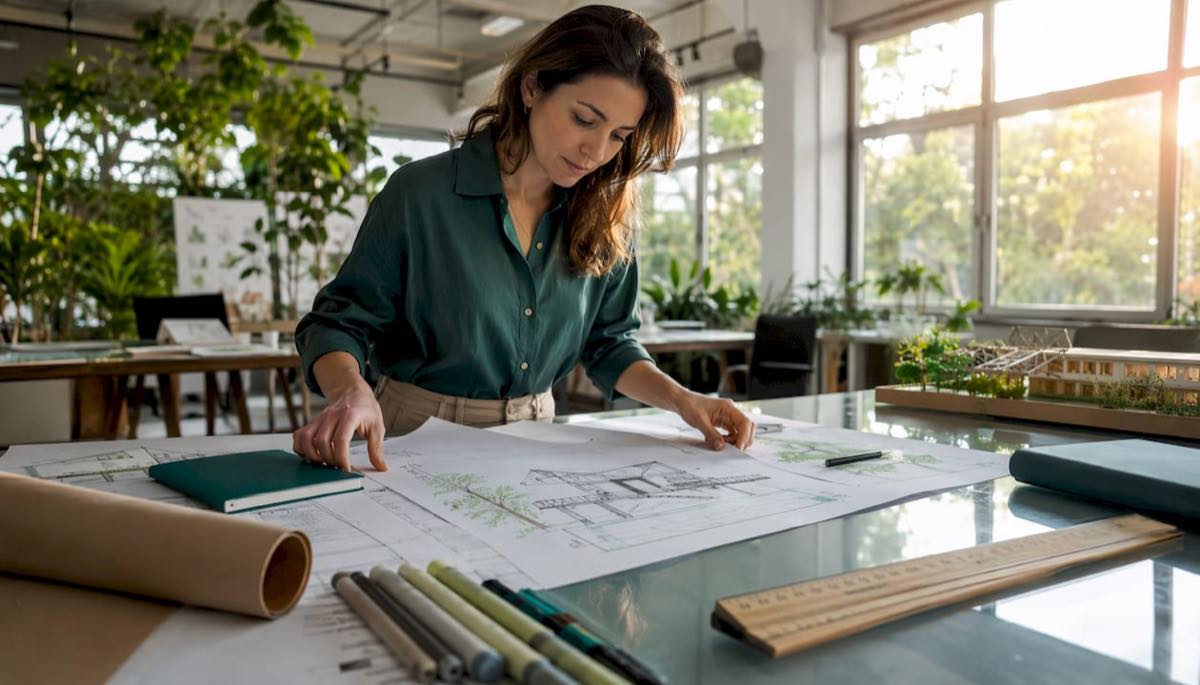
Eco-friendly home construction is the practice of designing and building homes that minimize environmental impact through sustainable materials, energy-efficient systems, and resource-conscious methods throughout the entire lifecycle of the structure. It goes well beyond installing solar panels or choosing recycled flooring. A truly green home is planned from the ground up with siting, design, construction, operation, and eventual deconstruction all considered together.
The core elements of eco-friendly home construction include:
- Energy efficiency: High-performance insulation, airtight building envelopes, and passive solar design
- Sustainable materials: Renewable, recycled, or locally sourced products with low embodied carbon
- Water conservation: Low-flow fixtures, rainwater harvesting, and water-efficient landscaping
- Indoor air quality: Avoidance of VOC-emitting adhesives, paints, and finishes
- Renewable energy integration: Solar panels, geothermal systems, and battery storage
- Third-party certification: Programs like LEED and the ICC 700-2025 National Green Building Standard
- Advanced materials: Products like AirLight steel panels, used by Better Quality Builders, that combine structural durability with thermal performance
What are the key principles of eco-friendly home construction?
Green building treats a home as a system, not a collection of independent parts. Every decision, from where you site the structure to how you plan its eventual deconstruction, affects the whole. The U.S. Environmental Protection Agency defines this as a lifecycle approach covering siting, design, construction, operation, maintenance, renovation, and deconstruction.
Smart growth is where sustainability often begins. Selecting a well-connected location reduces transportation emissions and infrastructure costs before a single wall goes up. The U.S. Green Building Council’s LEED program rewards exactly this kind of location thinking through its Location and Transportation credits.
Core principles that guide the practice:
- Integrated design: Architects, engineers, contractors, and owners collaborate from day one
- Energy efficiency: Prioritizing the building envelope before adding mechanical systems
- Waste reduction: Minimizing construction debris through prefabrication and careful planning
- Water conservation: Designing for lower consumption and smarter site drainage
- Indoor environmental quality: Specifying materials that protect occupant health
The World Green Building Council confirms that green buildings deliver lower operating costs, higher asset values, and measurable health benefits for occupants. These are not aspirational claims. They are documented outcomes from buildings already in operation.
What green building certifications matter most in the US?
Certifications give you a verified, measurable way to confirm a home’s sustainability performance rather than relying on marketing language. Three programs dominate the U.S. residential market.
- LEED (Leadership in Energy and Environmental Design): Administered by the U.S. Green Building Council, LEED evaluates energy, water, materials, indoor air quality, and site selection. Certified LEED homes use 30%–40% less electricity and avoid more than 100 metric tons of CO2 emissions over their lifetime.
- ICC 700-2025 National Green Building Standard (NGBS): Developed jointly by NAHB and the International Code Council, the 2025 NGBS is the only residential green building standard approved by the American National Standards Institute (ANSI). It covers energy, water, resource efficiency, and indoor environmental quality with transparent, measurable performance thresholds.
- ENERGY STAR for Homes: An EPA program that certifies homes meeting strict energy performance criteria, typically verified by a third-party rater.
Each program moves the conversation away from vague eco-claims toward documented, third-party-verified results. If a builder cannot point to a recognized certification pathway, ask why.
Pro Tip: Request the specific certification level a builder is targeting before signing a contract. LEED Certified, Silver, Gold, and Platinum represent meaningfully different performance levels, and the gap between them affects your long-term utility costs.
Which sustainable materials and practices make the biggest difference?
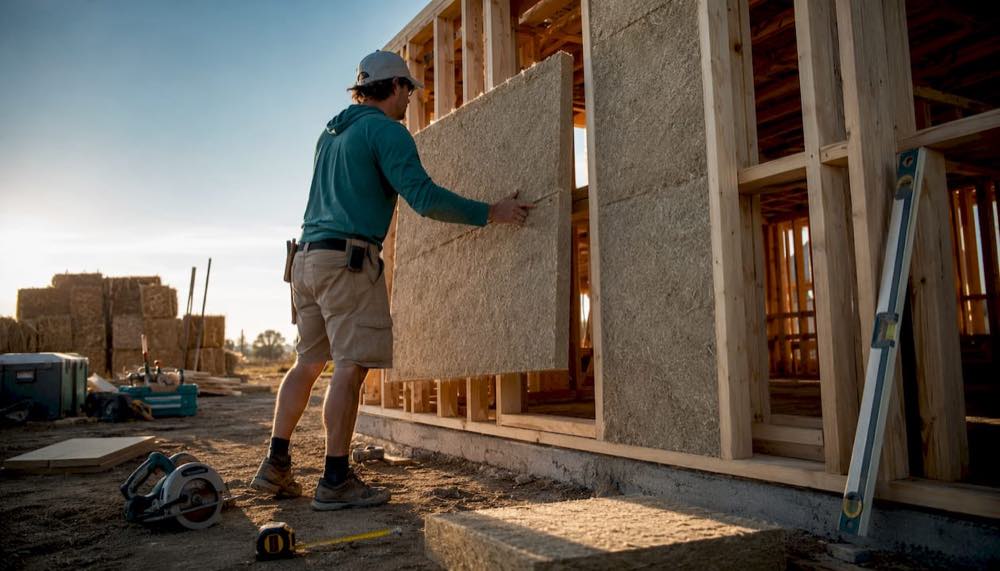
The building envelope is the single most cost-effective place to invest. Prioritizing insulation and airtightness delivers better long-term energy performance than layering on expensive technology over a leaky shell. Get the fabric right first.
Passive design strategies compound those gains at little to no added cost. Strategic building orientation, window placement for natural daylighting, and designed airflow paths reduce heating and cooling loads before any mechanical system runs. These are techniques humans have used for centuries, now validated by modern energy modeling.
Materials worth specifying in a sustainable build:
- Recycled-content products: Reduce landfill waste and often cost less than virgin alternatives
- Locally sourced materials: Cut transportation emissions and support regional economies
- Forest Stewardship Council-certified wood: Verified responsible harvesting practices
- Low-VOC paints and adhesives: Protect indoor air quality from day one
- AirLight steel panels: Used by Better Quality Builders for structural resilience and thermal efficiency in hurricane and earthquake-prone regions
- No-water or low-flow plumbing fixtures: Reduce consumption without sacrificing performance
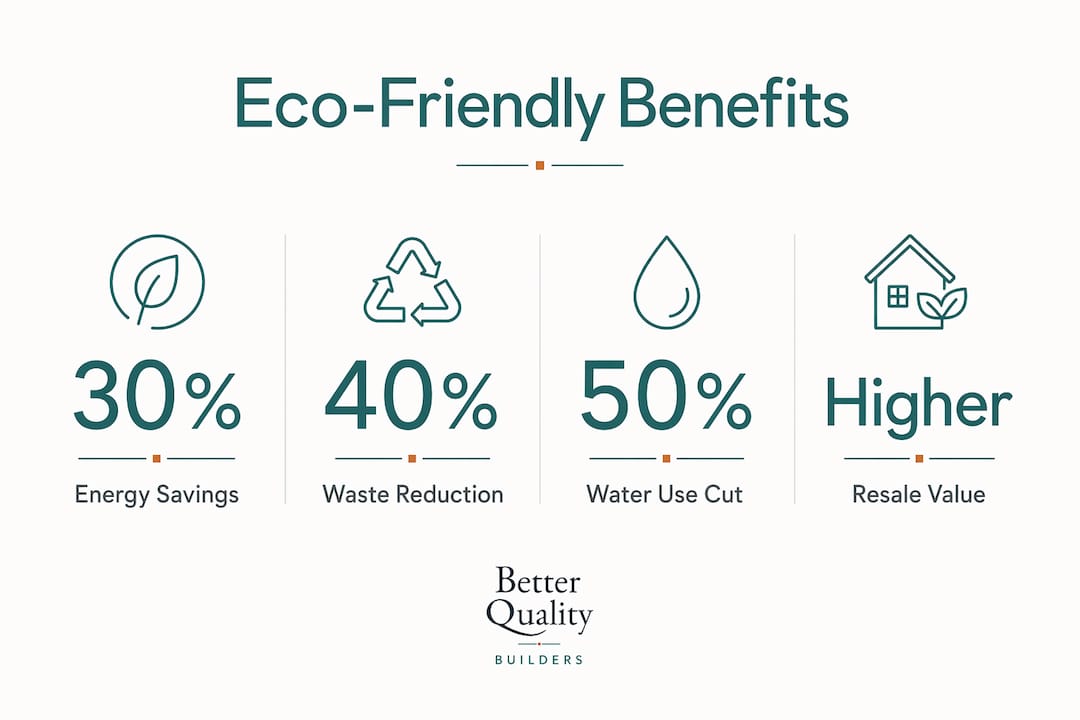
Construction waste is a real problem. Construction and demolition debris accounts for roughly 40% of total solid waste in the U.S. Prefabricated components, careful material ordering, and on-site recycling programs cut that figure substantially.
Pro Tip: Bring your contractor into the design process early. Integrated design from project inception can reduce first costs, not just lifecycle costs, by identifying smarter material and system combinations before plans are finalized.
How does eco-friendly construction benefit you and the environment?
The financial case for sustainable home building is straightforward. Eco-friendly homes typically recoup their investment through energy savings within 7–12 years and command higher resale values as buyer demand for sustainability grows. Lower utility bills, reduced maintenance costs, and better durability all contribute to a lower total cost of ownership over time.
Health benefits are equally concrete. People spend roughly 90% of their time indoors, making indoor air quality a direct health variable. Homes built without toxic adhesives, formaldehyde-based finishes, or high-VOC materials produce measurably better air, which translates to fewer respiratory issues and better sleep quality.
Key benefits for homeowners and the environment:
- Lower utility bills: High-performance envelopes and efficient systems reduce monthly energy costs
- Better indoor air quality: VOC-free materials and proper ventilation protect occupant health
- Reduced maintenance: Durable materials and thoughtful design lower long-term upkeep
- Higher resale value: Energy-efficient homes appraise higher in today’s market
- Lower carbon footprint: Green buildings reduce CO2 emissions, water use, and construction waste
- Water conservation: Efficient fixtures and rainwater systems cut household water consumption
- Federal and state incentives: Tax credits for solar installations, geothermal systems, and energy-efficient upgrades are available through programs like the federal Inflation Reduction Act
Buildings account for 12% of total water consumed in the U.S., and the average person uses 80–100 gallons per day. Water-efficient design in green homes addresses that consumption directly through fixture selection, landscaping choices, and rainwater capture systems.
For a deeper look at eco-friendly renovation materials and how they apply to both new builds and retrofits, that resource covers practical options across material categories.
Better Quality Builders builds homes that last and perform
If you want a home that delivers on the promise of eco-friendly construction, the materials and methods your builder uses determine everything. Better Quality Builders constructs homes with AirLight steel panels, the same structural system trusted in hurricane and earthquake zones worldwide. The result is a home built to last centuries, not decades, with up to 60% lower energy bills and a healthier indoor environment from day one.
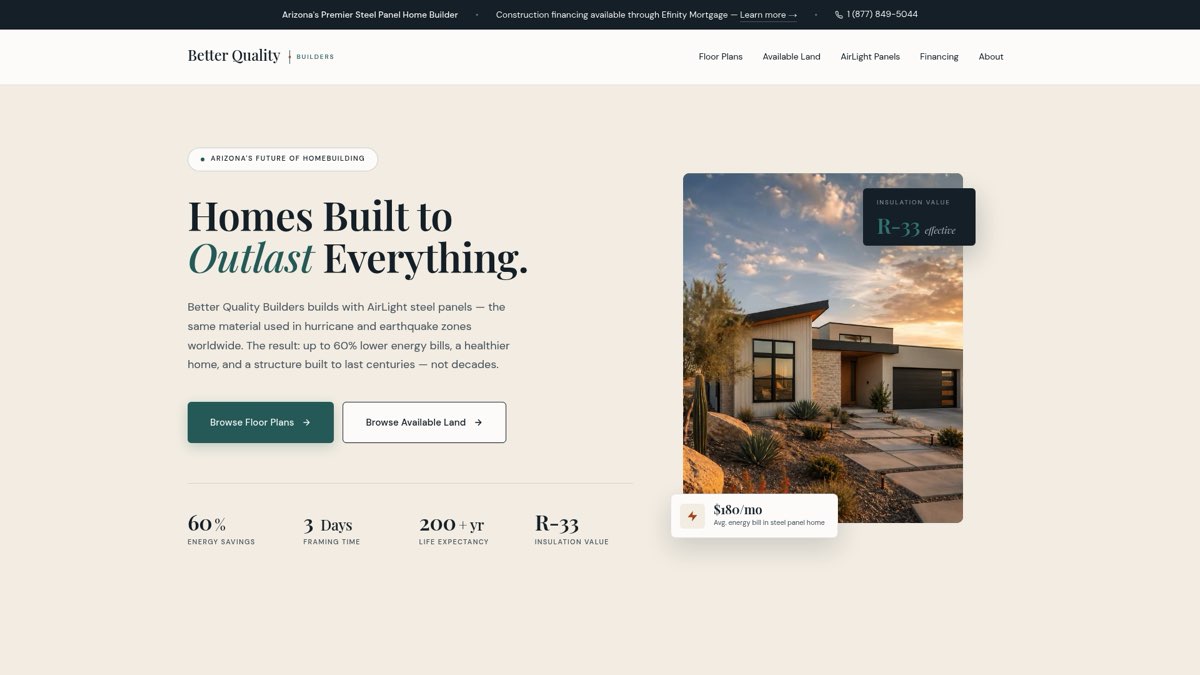
Better Quality Builders combines advanced materials with certified green building practices to give you a home that performs as well as it looks. Whether you are exploring custom home plans or ready to start your build, their team brings the expertise to make eco-friendly construction practical, not theoretical. Visit Better Quality Builders to see what building smarter actually looks like.
Key Takeaways
Eco-friendly home construction delivers lower energy costs, better health outcomes, and higher resale value when the building envelope, materials, and certifications are treated as a unified system rather than separate checkboxes.
| Point | Details |
|---|---|
| Lifecycle approach | Green building covers siting, design, construction, operation, and deconstruction as one connected system. |
| Envelope first | Prioritizing insulation and airtightness is the most cost-effective path to long-term energy efficiency. |
| Certifications verify performance | LEED, the ICC 700-2025 NGBS, and ENERGY STAR replace vague claims with measurable, third-party-verified results. |
| ROI timeline | Eco-friendly homes typically recoup investment through energy savings within 7–12 years and command higher resale values. |
| Better Quality Builders | Builds with AirLight steel panels for up to 60% lower energy bills and a structure designed to outlast conventional construction. |