
Energy efficient homes appraise higher because appraisers can now assign measurable dollar values to verified energy savings, certifications, and lower operating costs. Standards like HERS ratings, Energy Star certifications, and Fannie Mae’s UAD 3.6 update give appraisers the data they need to justify price premiums. The result is a direct link between energy performance and appraised value. Buyers want lower utility bills, and lenders are paying attention. Understanding this connection helps you make smarter decisions whether you are buying, building, or investing.
Why energy efficient homes appraise higher: the appraisal mechanics
Appraisers use three main tools to assign value to energy efficient features: certifications, energy savings calculations, and market comparables. Each one adds a layer of financial justification to the final number.
The Residential Green and Energy Efficient Addendum is the most direct tool available. Without it, appraisers often skip energy features entirely because standard appraisal forms have no field for them. The addendum creates a dedicated space to document HERS scores, Energy Star ratings, solar panels, insulation levels, and other performance data. Industry analysts confirm that including this addendum is the single most effective way to capture value that would otherwise be invisible on a report.
Fannie Mae’s UAD 3.6 formally incorporates HERS scores and performance measures into the standard appraisal dataset. This matters because it bridges the gap between technical energy performance and traditional valuation language. Appraisers working within the Fannie Mae system now have a standardized format to record and compare green features across properties.
A trained appraiser can also apply a present value formula for energy savings. This calculation converts annual utility savings into a lump sum that justifies a line-item price adjustment of up to 15%. That is a significant premium, and it is grounded in math rather than opinion.
Pro Tip: Ask your appraiser directly whether they use the Residential Green and Energy Efficient Addendum. If they are unfamiliar with it, request one who is trained in green valuation before the appraisal is scheduled.
Key appraisal tools for energy efficient homes include:
- HERS Index score: A lower score means better efficiency and supports a higher appraisal.
- Energy Star certification: Recognized by appraisers and lenders as a credible performance benchmark.
- Residential Green and Energy Efficient Addendum: Documents features that standard forms miss.
- UAD 3.6 dataset fields: Standardizes green data for Fannie Mae loan appraisals.
- Present value of energy savings: Converts utility savings into a justifiable dollar adjustment.
How does buyer demand affect appraisals of energy efficient homes?
Buyer demand is one of the strongest forces behind higher appraisals. Appraisers use market data to set values, and when buyers consistently pay more for energy efficient homes, that premium shows up in the comps.
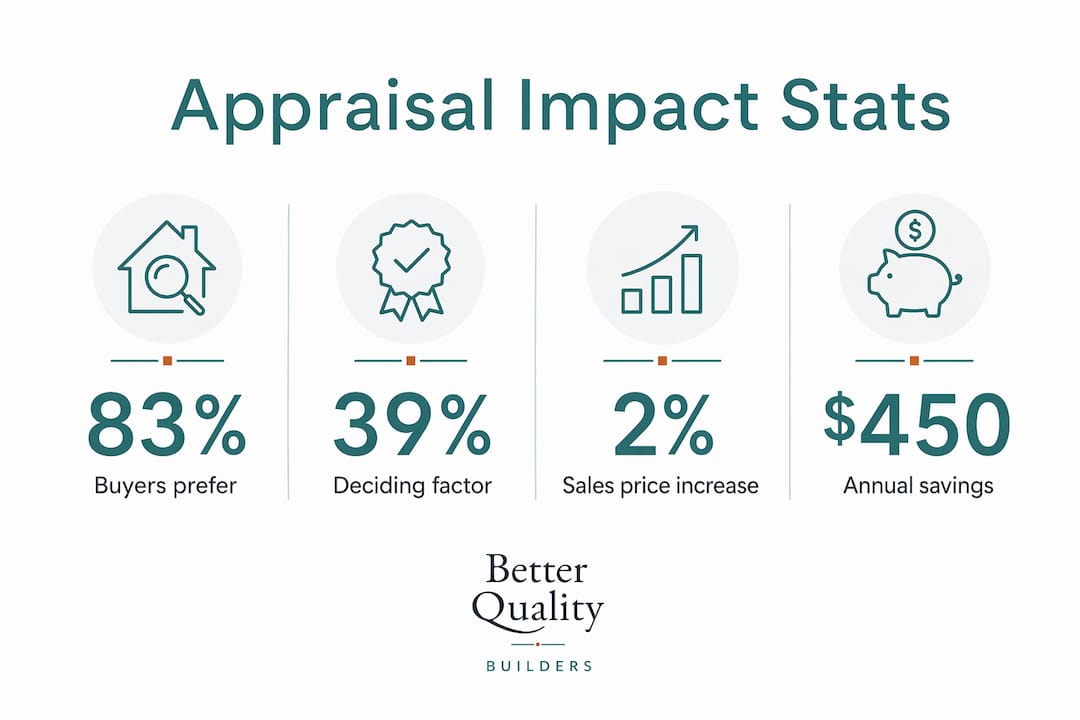
83% of homebuyers want Energy Star-rated windows, and 39% call it a deciding factor in their purchase. That level of demand creates a competitive market for certified homes. When multiple buyers compete for a property with documented energy features, sale prices rise, and those higher prices become the comparable sales that appraisers use for the next valuation.
Energy Star-certified homes have seen sales price increases of approximately 2% in US markets. Local green certifications in cities with active programs have produced premiums ranging from 3% to 8%. These are not theoretical numbers. They reflect what buyers actually paid in real transactions.
Energy Star appliances save homeowners about $450 annually. That annual saving compounds over time and signals to buyers that the home costs less to operate year after year. Lower operating costs translate directly into willingness to pay more upfront.
Certifications also serve as credible signals to lenders. A home with a verified HERS score or Energy Star label carries less financial risk because its operating costs are predictable. Lenders favor lower-risk collateral, which supports stronger appraisal outcomes.
The demand side of the equation matters most in markets where green certifications are common and buyers are educated about their value. In those markets, an uncertified home can actually face a discount compared to certified neighbors.
What challenges limit accurate appraisals for energy efficient homes?
The biggest barrier to accurate appraisals is missing data. MLS systems fail to capture energy efficient attributes consistently, so appraisers searching for comparable sales often find no green comps at all. When there are no comps, appraisers default to standard market data, and the energy premium disappears from the report.
Custom homes and high-performance builds face this problem most often. A net zero home built with advanced insulation systems may have no direct comparable within miles. Without documented evidence of energy performance, the appraiser cannot justify a premium, even if the market would support one.
The solution is proactive documentation. Sellers and buyers who provide complete energy records give appraisers the evidence they need to apply green adjustments. Here is what to prepare:
- HERS report: Commission a certified HERS rater to score the home before listing or purchasing.
- Utility bills: Provide 12 months of actual utility data to demonstrate real-world savings.
- Certification documents: Gather Energy Star, LEED, or other third-party certificates with issue dates.
- Builder specifications: Include insulation R-values, window U-factors, and HVAC efficiency ratings.
- Residential Green and Energy Efficient Addendum: Complete this form and submit it with the appraisal package.
The market’s reliance on comparable sales means green premiums are frequently ignored when documentation is absent. Skilled appraisal training helps, but homeowner advocacy closes the gap faster than waiting for the industry to catch up.
Pro Tip: Request an appraiser who holds a green valuation credential such as the NAR Green designation or the Appraisal Institute’s Residential Green and Energy Efficient Addendum training. This single step can recover thousands of dollars in missed appraisal value.
Homes built with Insulated Concrete Forms and passive-house standards present a strong case for higher valuations because their resilience reduces insurance risk and long-term maintenance costs. As energy codes tighten and insurance underwriters scrutinize construction quality more closely, these features will carry more weight in appraisals.
What steps help buyers and investors secure higher appraisals?
You have more control over the appraisal outcome than most buyers realize. The key is treating energy documentation the same way you treat a title search: non-negotiable and done before closing.
Start by understanding how new build appraisals work and what documentation appraisers expect. New construction with verified energy performance has a clear advantage because the builder can provide complete specifications from day one.
Practical steps for buyers and investors include:
- Verify certifications before making an offer. Ask the seller for Energy Star, LEED, or HERS documentation. If none exists, factor the cost of a HERS rating into your negotiation.
- Work with a realtor who understands green valuation. An agent unfamiliar with energy features will not know to request the right addendum or push for a qualified appraiser.
- Request the Residential Green and Energy Efficient Addendum explicitly. Do not assume the appraiser will include it. Put the request in writing before the appraisal is ordered.
- Document everything in writing. Verbal claims about energy savings carry no weight in an appraisal. Written reports, certificates, and utility records do.
- Choose homes with recognized certifications over uncertified claims. A seller saying the home is “energy efficient” without documentation gives an appraiser nothing to work with.
For investors, the financial case is clear. A home with documented energy savings and a recognized certification commands a higher appraised value, qualifies for better financing terms, and attracts buyers willing to pay a premium. The custom home energy efficiency benefits extend beyond the sale price to lower vacancy risk and stronger resale performance over time.
Key Takeaways
Energy efficient homes appraise higher when certifications, documentation, and trained appraisers work together to translate real energy savings into verified dollar value.
| Point | Details |
|---|---|
| Use the green addendum | The Residential Green and Energy Efficient Addendum captures features that standard appraisal forms miss entirely. |
| Certifications drive premiums | Energy Star-certified homes have achieved sales price increases of approximately 2%, with local certifications reaching 3–8%. |
| Documentation is your leverage | HERS reports, utility bills, and builder specs give appraisers the evidence needed to justify a price adjustment. |
| Buyer demand supports value | 83% of buyers want Energy Star windows, creating competitive demand that pushes comparable sale prices higher. |
| Request a qualified appraiser | A green-credentialed appraiser can apply a present value formula for savings, supporting adjustments of up to 15%. |
The appraisal gap is closing, but you still have to push
I have watched the appraisal industry slowly catch up to what buyers already know: a home that costs $150 a month to heat and cool is worth more than one that costs $400. The math is obvious. The appraisal system has been slow to reflect it.
UAD 3.6 is a genuine step forward. For the first time, appraisers working on Fannie Mae loans have a standardized place to record HERS scores and energy performance data. That matters because consistency is what creates reliable comps. Once enough green homes are documented in the dataset, the premium becomes self-reinforcing.
What I find most underappreciated is the insurance angle. As climate risk grows and insurers tighten underwriting standards, homes built to advanced energy and resilience standards will face lower premiums and fewer coverage gaps. That financial advantage will show up in appraisals because it reduces the total cost of ownership. Appraisers are starting to factor this in, and the trend will accelerate as energy codes tighten across more states.
My honest advice: do not wait for the market to recognize your home’s energy value automatically. Advocate for it. Bring the documentation. Request the right appraiser. The buyers who do this consistently walk away with appraisals that reflect what their homes are actually worth.
— David Kobierski
How Better Quality Builders delivers homes that appraise for what they are worth
Better Quality Builders constructs homes with AirLight steel panels, the same structural material used in hurricane and earthquake zones worldwide. These panels deliver up to 60% lower energy bills and provide the kind of documented, measurable performance that appraisers can work with directly. Every home comes with builder specifications, insulation data, and energy performance records that support a complete appraisal package from day one.
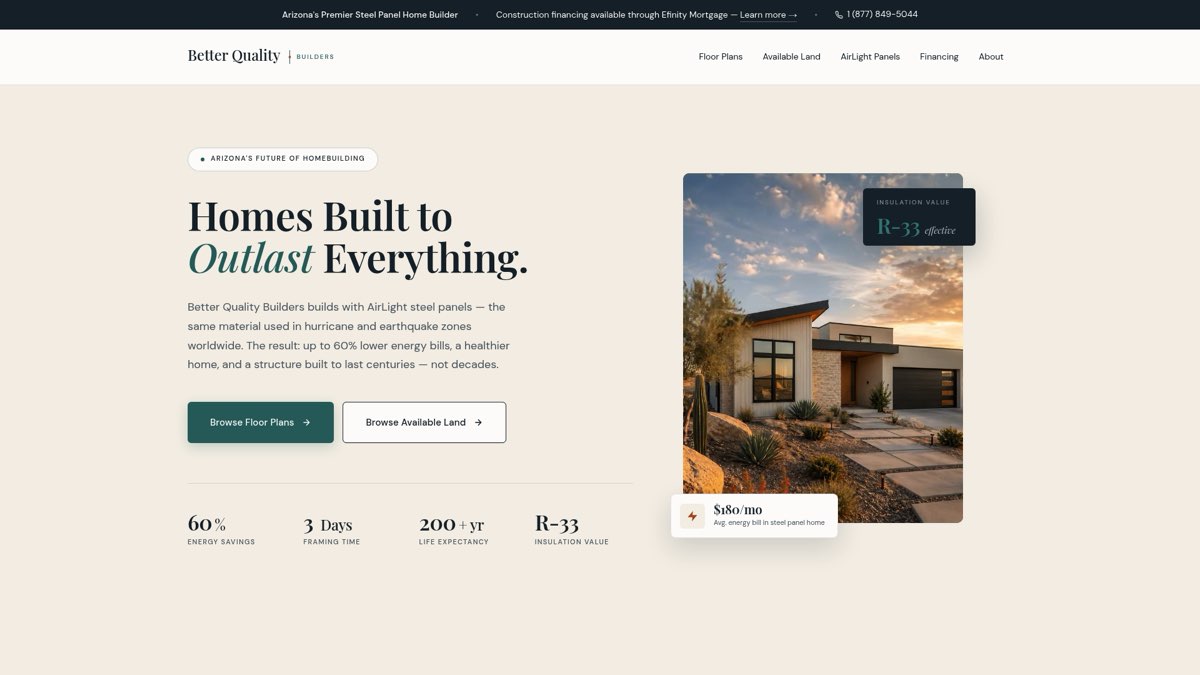
Better Quality Builders integrates recognized certifications and third-party verification into every build, so your appraiser has everything needed to apply green adjustments with confidence. If you are ready to build a home that holds its value and costs less to own, explore custom home plans designed around energy performance and long-term financial strength.
FAQ
What makes energy efficient homes appraise higher?
Appraisers assign higher values when energy features are documented through certifications like Energy Star or HERS ratings and reported on the Residential Green and Energy Efficient Addendum. Verified energy savings translate directly into a justifiable price adjustment.
How much of a premium can an energy efficient home receive?
Local green certifications have produced premiums ranging from 3% to 8% in active markets, and a trained appraiser can apply a present value formula that supports a line-item adjustment of up to 15%.
What is a HERS score and why does it matter for appraisals?
A HERS score measures a home’s energy efficiency on a numbered index, with lower scores indicating better performance. Fannie Mae’s UAD 3.6 now includes HERS data fields, making it a recognized metric in standard appraisal reports.
Why do appraisers sometimes miss energy efficient features?
MLS databases rarely capture energy attributes, and standard appraisal forms have no dedicated fields for them. Without the Residential Green and Energy Efficient Addendum and supporting documentation, appraisers default to conventional comparable sales data.
What documents should I provide to get a higher appraisal?
Provide a HERS report, 12 months of utility bills, Energy Star or other certification documents, and complete builder specifications including insulation R-values and HVAC efficiency ratings. Submit these with the Residential Green and Energy Efficient Addendum before the appraisal is completed.