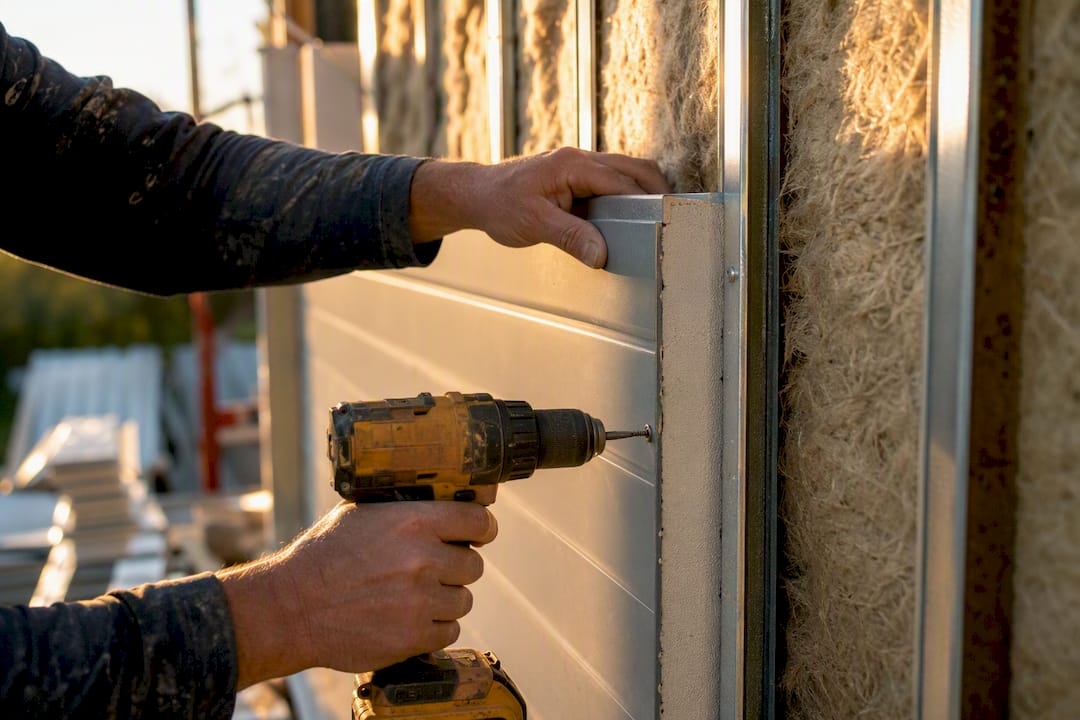
Higher-quality materials are the single most effective lever you control for protecting a building’s safety, durability, and long-term operating costs. The evidence lines up: better materials fail less often, cost less to run, and hold their value longer than budget substitutes.
Premium materials reduce risk in a way you can actually measure. Verified performance data shrinks the design uncertainty that drives up contingency budgets and insurance exposure, according to a 2026 construction-industry risk analysis.
- Standards bodies like ASTM, ASHRAE, and the ICC publish the performance benchmarks that separate a durable material from a gamble.
- Better Quality Builders uses AirLight steel panels, engineered for hurricane and earthquake zones, as a working proof point for what quality construction delivers.
- Practical takeaway: spend where it protects life safety, weatherproofing, and system longevity first. Everything else is negotiable.
Key Takeaways
Quality materials reduce lifetime risk and cost more upfront but less over time, because durability, energy performance, and code compliance compound into savings that budget materials cannot match.
| Point | Details |
|---|---|
| Prioritize structure and envelope | Spend premium dollars on foundation, framing, roofing, and wall assemblies first. |
| Calculate annualized cost | Divide purchase price by service life, then add maintenance and energy costs. |
| Verify certifications before buying | Ask for ASTM, ICC-ES, and UL documentation plus real warranty terms. |
| Installation quality protects material quality | Confirm flashing sequence and fastener specs at rough-in inspection. |
| AirLight panels deliver measured results | Better Quality Builders’ AirLight steel panels report up to 60% lower energy bills and reduced maintenance. |
Table of Contents
- Why Quality Materials Matter for Construction Value and Safety
- Which Building Assemblies Need Quality Materials Most?
- How Do You Calculate Lifecycle Cost for Building Materials?
- What Happens When Builders Use Low-Quality Materials?
- How Do You Choose High-Quality Construction Materials?
- Why Does Installation Quality Matter as Much as Material Quality?
- How Do Sustainable Materials Affect Long-Term Environmental Impact?
- What Does Quality Look Like in a Real AirLight Panel Build?
- How Better Quality Builders Guides Material Decisions
- Build Your Home With Materials Engineered to Outlast the Standard
- Sources
Why Quality Materials Matter for Construction Value and Safety
The payoff from better materials shows up in four places you’ll actually feel: fewer repairs, safer performance, lower utility bills, and a home that holds its resale value.
Durability is the most direct benefit. Materials built to tighter manufacturing tolerances and third-party test standards simply wear slower, which means fewer service calls and a longer stretch before major systems need replacing, as A4 Architecture’s analysis of premium building materials points out. Safety follows closely behind. Materials that pass ASTM and ICC testing perform predictably under load, fire, and weather stress, which also makes code approval faster and less contentious with inspectors.
Statistic callout: Architects and builders surveyed by A4 Architecture report that premium materials often deliver a lower cost per year of service than budget alternatives, once energy savings and reduced maintenance are factored in.
- Lower maintenance frequency reduces the total number of contractor visits over a home’s life.
- Code compliance gets easier when materials already carry ASTM or ICC test data.
- Better envelopes and windows cut utility bills year over year.
- Quality finishes hold curb appeal and resale value longer than budget-grade substitutes.
Which Building Assemblies Need Quality Materials Most?
Not every material decision carries equal weight. Some choices only affect appearance; others determine whether the structure survives its first decade.
Foundation and structural framing sit at the top of the list, since a failure here threatens collapse risk, not just cosmetics. The building envelope, meaning roof, wall assemblies, windows, and flashing, comes next: these components manage moisture, air, and heat flow, and the Whole Building Design Guide is blunt about this. Assemblies must be matched to climate and use, or they fail. MEP systems, your plumbing, HVAC, and electrical, need durable components because they’re expensive and disruptive to access once walls close up.
- Foundation and framing: get this wrong and everything above it is at risk.
- Envelope (roof, walls, windows, flashing): controls moisture and energy performance for decades.
- MEP systems: harder to service later, so durability up front saves labor later.
- Wet-area finishes and cabinetry: high-traffic zones where cheap materials show wear fastest.
If you’re planning exterior choices for an Arizona build, our guide to choosing exterior materials walks through climate-specific tradeoffs in more depth.
How Do You Calculate Lifecycle Cost for Building Materials?
Purchase price is only one line in the real cost equation. The full picture includes installation, maintenance, energy use, replacement timing, and the cost of failure risk, all stacked over the material’s service life.
A simple way to compare two options: divide the purchase price by expected years of service to get an annualized cost, then add estimated yearly maintenance and energy costs, according to lifecycle cost guidance from Build Construct. A $12,000 roofing system with a 40-year life often beats an $8,000 system rated for 15 years once you run that math, especially once you add labor for the second and third replacement.
Verified manufacturer data and real warranties do more than protect you if something breaks. They shrink the uncertainty that pushes engineers toward conservative design margins and higher insurance premiums.
- Lower replacement frequency over the ownership period.
- Lower energy bills from better-performing envelopes and systems.
- Fewer warranty callbacks and emergency repairs.
- More predictable budgeting since manufacturer data replaces guesswork.
Our breakdown of how durable homes reduce repair costs over time covers this math with real repair-frequency examples.
What Happens When Builders Use Low-Quality Materials?
Failure rarely announces itself. It starts small, usually with moisture, and grows into something expensive.
Common failure modes include moisture intrusion behind poorly matched wall assemblies, corrosion in cheap fasteners or flashing, premature wear in high-traffic finishes, thermal bridging that spikes energy bills, and off-gassing that degrades indoor air. A cracked flashing detail that goes unnoticed for two years can mean torn-out drywall, mold remediation, and a tenant relocation, all triggered by a component that cost a fraction of the repair bill.
A single undersized or mismatched material in the moisture-control sequence, air barrier, water-resistive barrier, flashing, drainage plane, can cause the entire assembly to fail, per the Whole Building Design Guide.
- Moisture intrusion and corrosion are the most common triggers for cascading repairs.
- Hidden costs include demolition, tenant downtime, mold remediation, and lost resale value.
- One failed flashing detail can cascade into six figures of repair once mold and structural rot set in.
How Do You Choose High-Quality Construction Materials?
Selecting materials well means asking the right questions before the bid is signed, not after the drywall goes up.
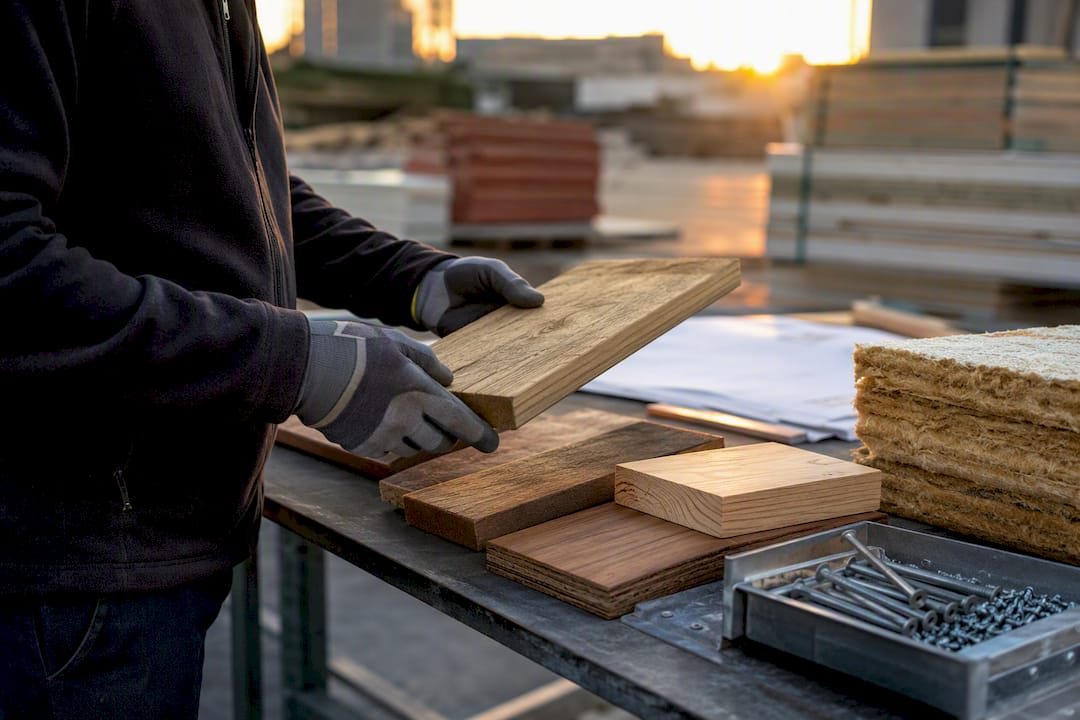
Start with performance metrics and certifications: does the product carry third-party test reports, ICC-ES evaluation reports, or UL listings? Warranty terms matter too, since a longer warranty usually signals the manufacturer trusts its own tolerances. On the procurement side, check distributor inventory depth and approved alternates so a supply hiccup doesn’t force a last-minute downgrade. Ask suppliers for field references and how they’ve handled past warranty claims. Our material quality tiers guide breaks down where each tier makes financial sense.
- Confirm required performance metrics and third-party certifications (ASTM, ICC, UL).
- Review warranty terms and traceability documentation.
- Check distributor inventory depth and approved alternates before committing.
- Ask for test reports, field references, and claims-handling history.
Pro Tip: Spend your premium budget on the assemblies that protect structure and envelope first. Wet-area finishes and cabinetry are the safest place to accept a mid-tier option if the budget runs tight.
For a broader look at where quality grading applies across a renovation, Spudmetrix’s guide to material quality grades offers useful verification steps.
Why Does Installation Quality Matter as Much as Material Quality?
Even the best material fails if it’s installed wrong. This is where a lot of owners get surprised.
The most common install-related failures include improper flashing sequencing, wrong fastener types, and enclosure steps done out of order, all of which can undo a premium material’s performance rating, echoing the Autodesk construction blog’s material selection guidance. Tighter manufacturing tolerances actually cut labor time on the job site, but only when the crew is trained to work at that precision, a point MetalFabGroup’s tolerance guide makes clear.
- Confirm flashing and water-resistive barrier sequencing before drywall closes the wall.
- Ask which fastener types were specified and verify they match the manufacturer’s rating.
- Request photos of enclosure steps at rough-in, before insulation and finishes cover them.
How Do Sustainable Materials Affect Long-Term Environmental Impact?
Durability and environmental performance aren’t opposing goals. They’re usually the same decision viewed from two angles.
Embodied carbon accounts for everything from production and transport to installation, maintenance, and eventual disposal, per the general framing on building materials from Wikipedia. Indoor-air quality depends heavily on which materials go into occupied spaces, since VOCs and off-gassing directly affect the people living there. A material that lasts 60 years instead of 15 spreads its embodied carbon across four times the useful life; this lowers its environmental footprint per year of service even before you count the energy it saves.
- Longevity spreads embodied carbon across more years of use, lowering the annual footprint.
- Low-VOC materials reduce off-gassing and improve indoor air for occupants.
- Recyclable and reusable materials cut end-of-life waste.
Statistic callout: Because premium products typically last longer per the lifecycle logic above, extending service life from 15 to 60 years effectively quarters the embodied-carbon cost attributable to each year of occupancy.
For deeper detail on indoor air, see our custom home air quality guide.
What Does Quality Look Like in a Real AirLight Panel Build?
Owners who’ve built with AirLight steel panels report noticeably tighter, quieter homes with fewer drafts and lower monthly utility bills than comparable stick-built construction, according to Better Quality Builders’ project data.
- Reported energy savings on utility bills across completed AirLight builds are significant.
- Panelized precision reduces air leakage and long-term maintenance calls.
How Better Quality Builders Guides Material Decisions
Every material decision balances design intent, budget, and supply risk. We often phase upgrades, specifying a premium envelope now with alternates identified for finishes later, so clients protect the assemblies that matter most without overspending upfront. Lifecycle math, not gut feel, decides where the premium dollar goes.
Build Your Home With Materials Engineered to Outlast the Standard
Better Quality Builders gives Arizona homebuyers a shortcut past the guesswork this article just walked through. Instead of weighing ASTM reports and lifecycle math on your own, you get AirLight steel panels already engineered for hurricane and earthquake zones, backed by real project data on energy savings and durability.
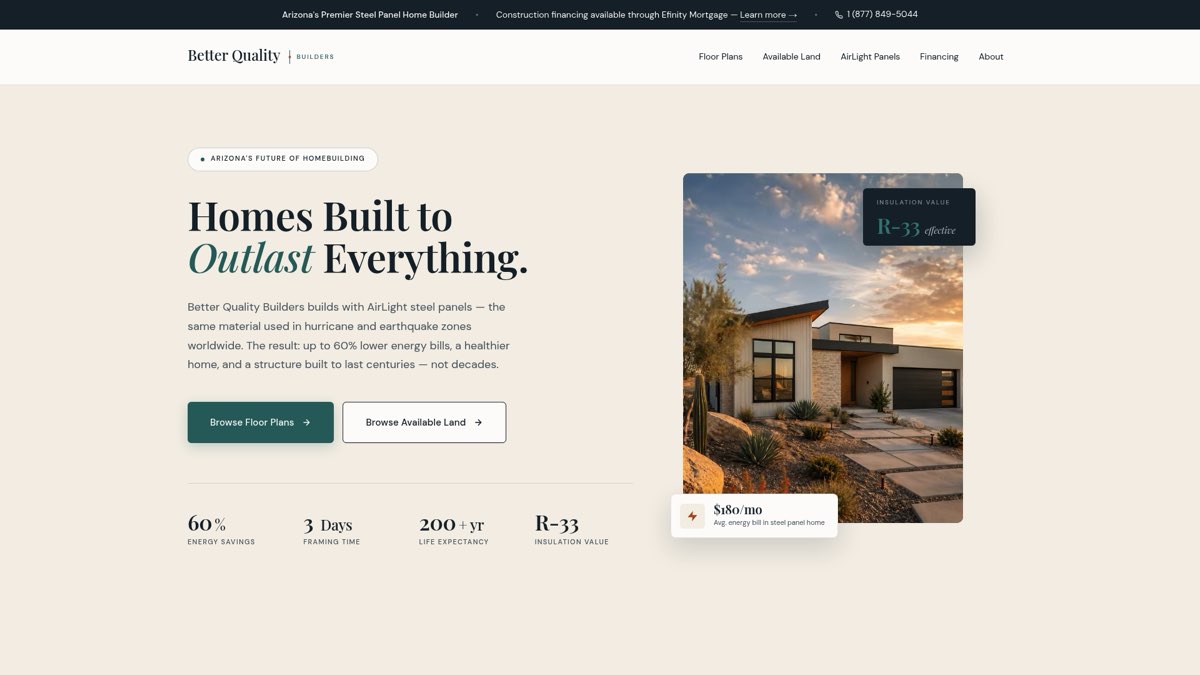
That means lower monthly utility bills, fewer callbacks, and a structure designed to outlast the multi-decade replacement cycle typical of standard framing. If you’re ready to see what that looks like on land you’re considering, explore AirLight panel homes in Arizona and request a consultation to review floor plans, lot inventory, and financing options with a 10% down payment.
Sources
- Hub International: Construction outlook 2026 — costs, labor and risk (analysis)
- Materials | Whole Building Design Guide (WBDG)
- The value of quality: why superior materials make the difference in construction — A4 Architecture
- Common construction materials and why selection matters — Autodesk construction blog
- Premium vs budget construction materials: making informed choices for building projects