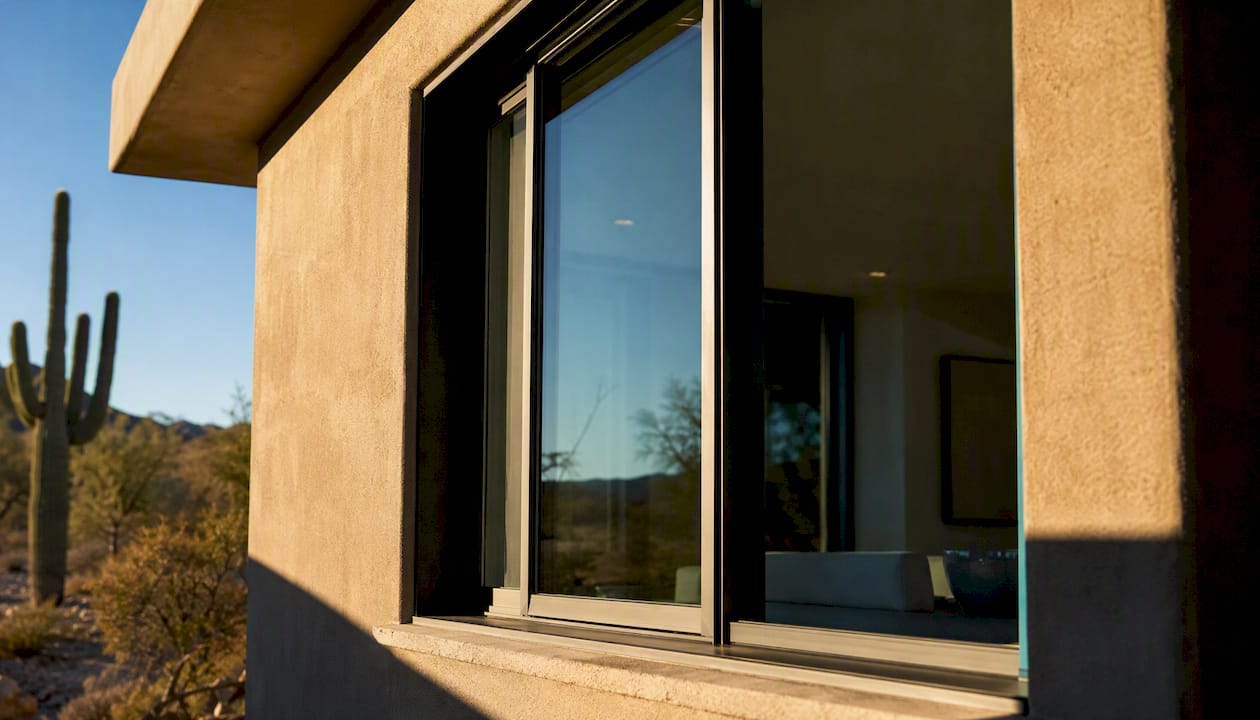
For Arizona heat, prioritize low SHGC dual-pane Low-E windows (around 0.25 or lower) in fiberglass or heat-stabilized vinyl frames, installed with proper flashing and sealing. Confirm the NFRC label before you buy, check that your installer carries verifiable credentials, and ask about the federal tax credit before you sign a contract. These four moves determine whether your new windows actually cut your cooling bill or just look good on paper.
TL;DR:
- Low SHGC dual-pane Low-E windows with a rating of 0.25 or lower are essential, especially on south and west exposures where the sun hits hardest.
- Dual-pane Low-E with argon gas fill offers the best value for cooling control, while triple-pane is generally unnecessary in Arizona’s hot climate.
- Fiberglass frames provide superior long-term durability against UV and thermal cycling compared to vinyl and aluminum, crucial for desert conditions.
- Proper installation with continuous flashing and sealed drainage is critical, as poor setup can negate the window’s energy-saving capabilities.
- Window costs vary by quality and frame material, with federal tax credits and utility rebates helping offset higher-quality, desert-rated options.
Table of Contents
- What Window Specs Matter Most for Arizona Heat?
- Which Glass Package Actually Blocks Desert Heat?
- Which Frame Material Survives Arizona’s UV and Heat Cycling?
- Where Should You Spend on High-Performance Glazing?
- How Does Installation Quality Affect Window Performance?
- What Do Arizona Windows Cost, and What’s the Payback?
- What Builders Should Verify Before and After Installation
- Why Desert-First Window Choices Protect Your Investment
- Build the Whole Envelope Right, Not Just the Windows
- Sources
- FAQ
What Window Specs Matter Most for Arizona Heat?
Every window sold in the U.S. carries an NFRC label listing four numbers, and in Arizona, one of them outranks the rest. The Solar Heat Gain Coefficient, or SHGC, measures how much solar heat passes through the glass. In a cooling-dominated climate like Phoenix or Tucson, SHGC is the metric that determines your summer energy bill more than any other single spec.
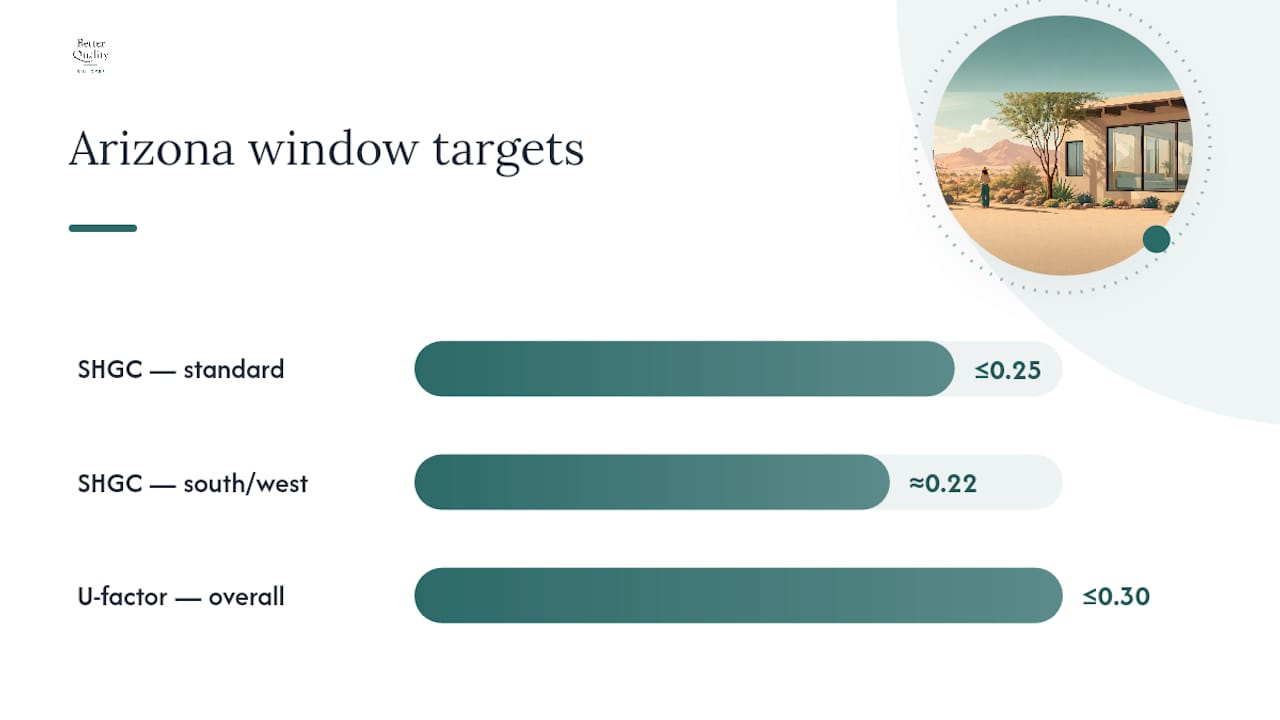
Target an SHGC of 0.25 or lower for standard installations, and push toward 0.22 on south and west exposures where the sun hits hardest. Pair that with a U-factor of 0.30 or lower, which measures how well the frame and glass resist heat transfer regardless of direction.
Visible Transmittance (VT) is the tradeoff to watch. Lower SHGC glass sometimes darkens a room more than homeowners expect, so look for spectrally selective coatings that block heat without tanking natural light.
Two more numbers matter for desert durability:
- Air infiltration rating: lower numbers mean tighter seals against dust and heat leakage.
- Design Pressure (DP) rating: higher DP numbers indicate better resistance to monsoon wind gusts and pressure changes.
Quick spec check: Federal guidance sets the bar at SHGC 0.25 or lower, with premium desert-rated windows reaching 0.22 or below. Anything above 0.30 is not built for Arizona sun, regardless of what the salesperson claims. Verify every number against ENERGY STAR’s climate-zone maps before you commit, since Arizona falls mostly in Climate Zone 2, which has its own performance criteria.
Which Glass Package Actually Blocks Desert Heat?
Not all Low-E coatings work the same way, and the difference shows up on your energy bill within the first summer.
Soft-coat, sputtered Low-E coatings sealed inside an insulated glass unit (IGU) outperform hard-coat versions for solar control. The Department of Energy notes that glass packages and coatings are among the primary drivers of real-world window performance, ahead of frame material in most cases.
For pane count and gas fill, the math is straightforward:
- Dual-pane Low-E with argon gas fill delivers the best cost-to-performance ratio for Arizona homes.
- Triple-pane glass rarely earns its added cost here, since dual-pane Low-E already handles cooling loads effectively in hot climates without the extra weight and expense triple-pane adds.
- Spectrally selective coatings cut SHGC further while preserving more visible light than standard tinted glass.
If you’re not ready to replace windows this year, exterior solar screens or quality window film can knock down heat gain as an interim step, though neither matches a true low SHGC IGU.
Pro Tip: Ask your glass supplier for the SHGC and VT numbers on the specific IGU going into your home, not just the manufacturer’s catalog average. Custom tints and coatings can shift both numbers meaningfully from the base product line.
Which Frame Material Survives Arizona’s UV and Heat Cycling?
Frame material determines whether your windows still seal properly in ten years or start warping after five summers of 115-degree glass temperatures.
Fiberglass frames expand and contract far less than vinyl or aluminum under thermal stress, which keeps seals intact longer. Combined with strong UV resistance, fiberglass typically offers the best long-term value for homes facing intense, sustained solar exposure.
Heat-stabilized vinyl remains a solid budget option, but not every vinyl frame is built for desert duty. Verify these details before buying:
- Manufacturer-specified UV inhibitors rated for high-desert climates.
- Reinforced frame sections at wider spans to resist sagging.
- A warranty that explicitly covers discoloration and warping, not just seal failure.
Aluminum frames with a thermal break can work, particularly for large commercial-style openings, but they conduct heat more readily than fiberglass or vinyl even with the break installed. Composite and wood-clad frames offer strong aesthetics; choose lighter exterior finishes where possible, since dark colors absorb more heat and accelerate material fatigue over the years.
For more on matching exterior finishes to Arizona’s climate, see this guide to choosing exterior materials for a custom home.
Where Should You Spend on High-Performance Glazing?
Not every window in your home needs the same spec. Budget by exposure, and you’ll get the most comfort per dollar spent.
- South and west-facing windows first. These take the harshest afternoon sun. Put your lowest SHGC glass and best frame material here, especially in living areas and west-facing bedrooms.
- North-facing windows can run more economical specs. They receive far less direct solar gain, so a slightly higher SHGC here won’t hurt comfort much.
- Layer in shading. Overhangs, exterior solar screens, and strategic landscaping reduce load on even your highest-spec windows.
A tiered plan might look like SHGC 0.22 on west walls, 0.25 on south walls, and 0.28 to 0.30 on north walls, adjusting your budget where the sun actually works hardest. For a deeper look at exposure planning, this piece on choosing north or south exposure is worth a read before you finalize a floor plan.
How Does Installation Quality Affect Window Performance?
A great window installed poorly performs like a mediocre one. Flashing, drainage, and sealing determine whether your SHGC rating means anything in practice.
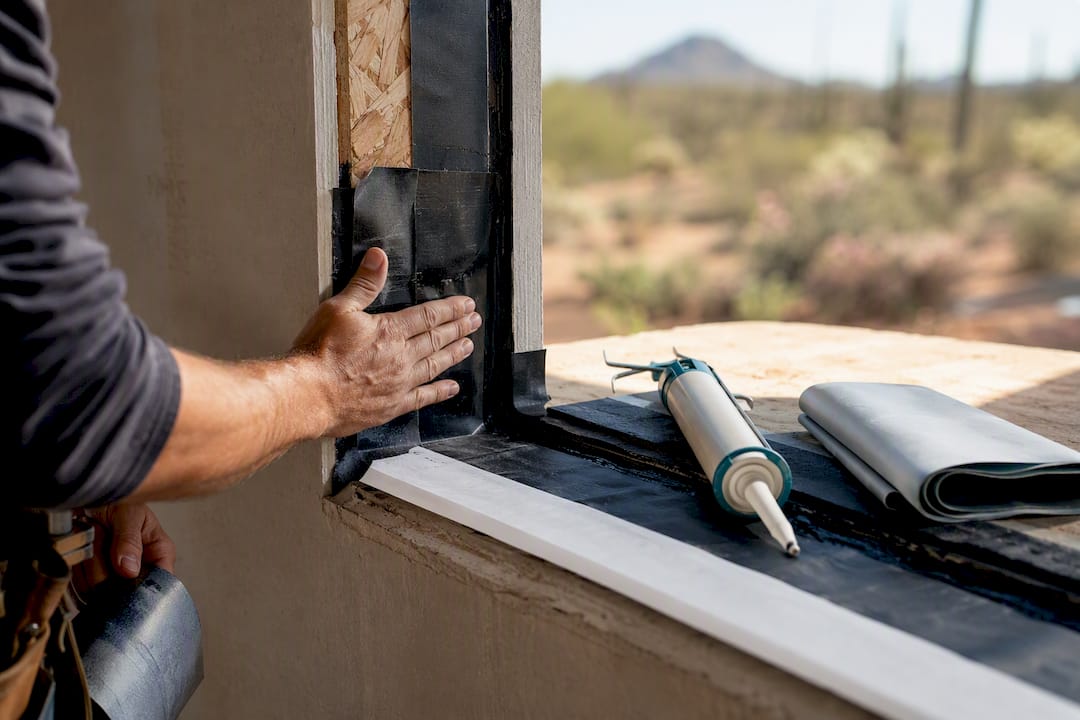
Insist on continuous flashing, correct backer rod placement, proper shim spacing, and functioning weep holes for drainage. Industry guidance treats flashing, drainage, and air-sealing as critical to long-term performance in monsoon-prone regions, not optional extras.
Confirm your contractor understands DP ratings and has experience with Arizona’s monsoon wind loads. Watch for these common failure points during inspection:
- Seal failure showing as fogging between panes.
- Thermal break separation on aluminum frames.
- Poor drainage causing water pooling at the sill.
Pro Tip: Get the glass seal warranty and frame finish warranty in writing, and confirm whether either is transferable to a future homeowner. Non-transferable warranties can quietly reduce resale value.
What Do Arizona Windows Cost, and What’s the Payback?
Quality dual-pane Low-E windows typically run in the moderate-to-premium range installed, with fiberglass frames costing more upfront than vinyl but lasting considerably longer under desert sun.
The math on incentives helps offset that gap. Federal tax credits currently cover 30% of the cost of qualifying energy-efficient windows, capped at $600 per project. Confirm eligibility on ENERGY STAR’s site before purchasing, since qualifying products must meet specific performance thresholds.
Utility rebates vary by provider and change year to year, so call your local utility directly rather than trusting a contractor’s outdated rebate claim.
- Installed cost: moderate for standard dual-pane Low-E, higher for premium fiberglass with 0.22 SHGC glass.
- Federal credit: up to $600 back on qualifying purchases.
- Payback: homeowners typically see reduced AC runtime translate into noticeable summer bill savings within a few cooling seasons, depending on home size and prior window condition.
What Builders Should Verify Before and After Installation
Better Quality Builders treats window specification as a structural decision, not a cosmetic one, because a mismatched window undermines everything else in a tight building envelope.
Before ordering, verify the NFRC data sheet matches the quoted spec, request a physical IGU sample, and test color and finish samples against your actual exterior palette in direct sun, not showroom lighting. On site, coordinate flashing and waterproofing sequencing before window set, and isolate HVAC ductwork runs from window openings to avoid thermal bridging, working closely with One Day Doors & Closets of Arizona for smooth installation and trade coordination.
At final inspection, confirm weep holes are clear, seals show no fogging, hardware operates smoothly, and DP compliance documentation matches your wind zone. For dust intrusion prevention during framing, this guide on designing a dust-proof home in Arizona covers sequencing details worth reviewing with your trade crew.
Why Desert-First Window Choices Protect Your Investment
Windows are the weakest point in most building envelopes, and in Arizona, a poor SHGC choice compounds every cooling season for decades. Better Quality Builders pairs correct glazing specs with AirLight steel-panel construction because a high-performance window in a leaky envelope still underperforms. If you remember one thing from this guide, make it this: check the SHGC number before anything else.
— David Kobierski
Build the Whole Envelope Right, Not Just the Windows
One option for Arizona homeowners is choosing builders who integrate window performance into the structure from day one, rather than adding it afterward. The AIRLIGHT BUILD approach pairs steel-insulated panel construction with a climate-adapted design process, so your glazing choices work alongside a wall system already engineered to cut cooling loads. That combination matters more in Maricopa County than almost anywhere else in the country.
If you’re weighing a full envelope upgrade against a window-only replacement, start by reviewing Better Quality Builders’ custom home building services and see how a desert-first build compares on comfort and long-term cost.
Sources
FAQ
What type of windows are best for Arizona heat?
Dual-pane Low-E windows with argon gas fill and an SHGC of 0.25 or lower are best for Arizona heat, paired with fiberglass or heat-stabilized vinyl frames for UV durability.
What are the best window treatments for Arizona heat?
Exterior solar screens and light-colored, UV-stabilized window film reduce heat gain most effectively, and they work well as a complement to low SHGC glass rather than a replacement for it.
Can you use vinyl windows in Arizona?
Yes, heat-stabilized vinyl with manufacturer-specified UV inhibitors and reinforced frame sections holds up well in Arizona, though fiberglass generally offers better long-term resistance to thermal cycling.
What are the best windows in Arizona?
The best windows for Arizona combine an SHGC around 0.25 or lower, a U-factor of 0.30 or below, and a durable frame material like fiberglass, verified against the NFRC label rather than marketing claims. Builders working on full custom homes, like those using Better Quality Builders’ AirLight panel system, often specify these windows as part of a broader envelope-first strategy.