Steel and high-density foam, engineered into a single load-bearing panel. Quieter than lumber. Stronger than lumber. Cooler in July, warmer in January — and built to outlive the mortgage by 170 years.
Stick-built homes have framed America for a century. They also burn, rot, settle, and feed termites. In Maricopa County, where every one of those threats is sharper than average, the case for moving past lumber is hard to argue with.
Arizona has some of the most aggressive subterranean termite activity in the country. Lumber is their food source. Steel and EPS aren't.
Wood is the fuel that turns a small ignition into a total loss. Steel-and-foam construction is non-combustible — it starves a fire instead of feeding one.
Every wood stud is a thermal bridge — a line of conductivity straight through your insulation. By the time July hits 115°, your AC is fighting that bridge in every wall.
Wood expands, contracts, and settles. That's what cracked drywall and sticking doors are made of. Steel doesn't move with seasons.
Buyers ask if steel panels cost more. The honest answer: no — they come in slightly under lumber once labor is in the math. Lumber takes 3× longer to frame, and those labor hours wipe out AirLight's slightly higher materials cost and then keep going. Here's the breakdown.
Per square foot of exterior wall, materials + labor, single-story build. Actual quote varies by lot, plan, and finishes.
AirLight finishes about $0.30/sq ft under lumber once you factor in the 3× framing hours stick-built homes require. So the next question isn't "what does it cost?" — it's "what are you getting?" The answer is the column to the right.
None of these are upgrades you can bolt onto a stick-built home. They're properties of the wall material itself. Try to add them to a lumber build and the cost gap reverses fast.
The continuous EPS core breaks every cold spot a stud wall would create. Your AC stops fighting your walls.
The wall doesn't burn. In a wildfire ember-strike or interior fire, the structural envelope stays intact.
EPS is microbial-resistant. Galvanized steel doesn't rot. Arizona monsoon humidity stays a weather event, not a structural problem.
Maricopa County's most aggressive home pest finds nothing to eat. No bait stations, no annual treatment, no chewed framing in year 15.
The structural envelope outlives your mortgage, your ownership, and probably your grandchildren's ownership.
A wall that turns highway noise into background and stops next-room conversations cold.
For less money than you'd spend framing a stick-built home, you can have a wall that doesn't burn, doesn't rot, doesn't feed termites, and quiets your house by 58 STC. The cost argument for lumber was never real. It was just habit.
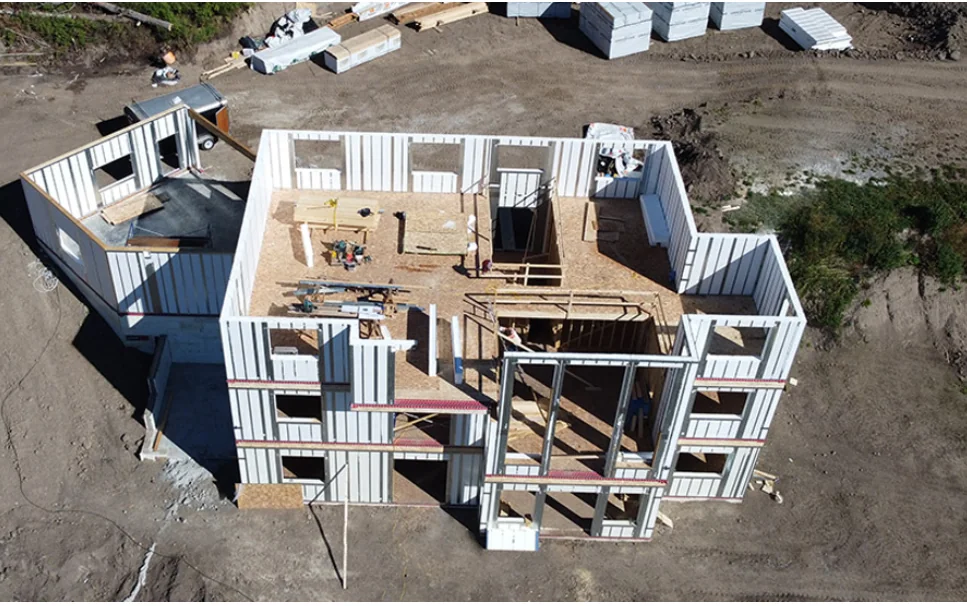
Pre-cut at the Kingman plant, delivered labeled and ready to assemble, stood up in a fraction of the time it takes to frame in wood. This is the panel system Better Quality builds every home with.
Each panel is engineered and pre-cut at the MDK plant in Kingman — under 200 miles from your build site. No overseas shipping, no quality compromise.
Panels arrive labeled, diagrammed, and matched to your plan. The crew on site assembles — they don't fabricate.
What takes a stick-framing crew three weeks goes up in a long weekend. The faster a house is dried in, the less weather risk, the lower the labor cost.
The single biggest fear in any home is fire. Wood-framed homes feed fire — every stud, every joist, every sheet of OSB is fuel. Once a house fire reaches the framing, the structure becomes the accelerant.
AirLight is built from galvanized steel and Expanded Polystyrene foam. Both are non-combustible. The panels don't feed flames, don't collapse when temperatures spike, and don't release toxic smoke from burning wood. In a fire, an AirLight home gives your family the one thing wood framing can't: time.
A traditional stud wall in Arizona is eight separate layers, each one a place where something can go wrong. AirLight collapses the same assembly into four — and the wall it builds is quieter, stronger, and more efficient.
| Lumber | AirLight | |
|---|---|---|
| Effective R-Value | R-13 to R-21 | R-33 |
| Build Speed | Baseline | 3× faster |
| Sound Reduction | ~35 STC | 58 STC |
| Termite Risk | High | None |
| Fire Behavior | Combustible | Non-combustible |
| Mold Susceptibility | Yes | No |
| Material Cost | Baseline | 10–20% lower |
| Structural Lifespan | 50–100 yrs | 200+ yrs |
Independent third-party testing, real-world energy data, and verified material specs. Nothing here is marketing math.
Effective wall insulation value, measured continuously across the entire panel — no studs cutting through the thermal envelope.
Sound Transmission Class rating. Loud conversation in the next room becomes a faint murmur. Highway noise becomes background.
Faster than equivalent stick framing. Panels arrive pre-cut, pre-engineered, and labeled — ready to stand up the day they hit the site.
Projected summer cooling savings for a 3,000 sq ft AirLight home in Mesa, AZ — scaled from documented commercial-case energy data. Your build, your bill.
Typical material cost reduction versus equivalent stick framing — and that's before factoring in labor savings from the 3× faster build.
EPS foam is resistant to microbial breakdown. Galvanized steel doesn't rot or warp. The panel outlives every other component of the house.
AirLight is not a prototype. It is certified, code-compliant, third-party tested, and manufactured in Arizona — the same state where every Better Quality home is built.
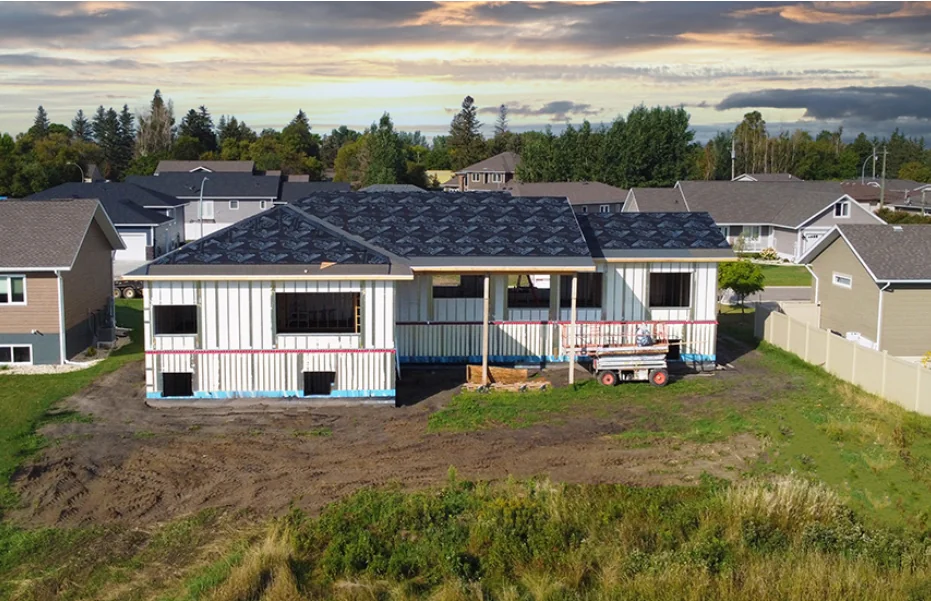
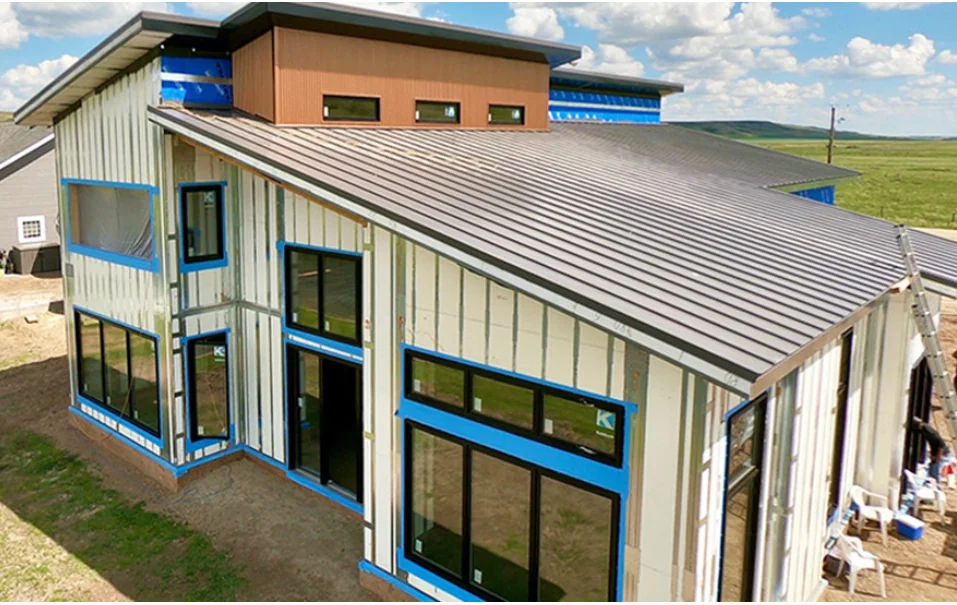
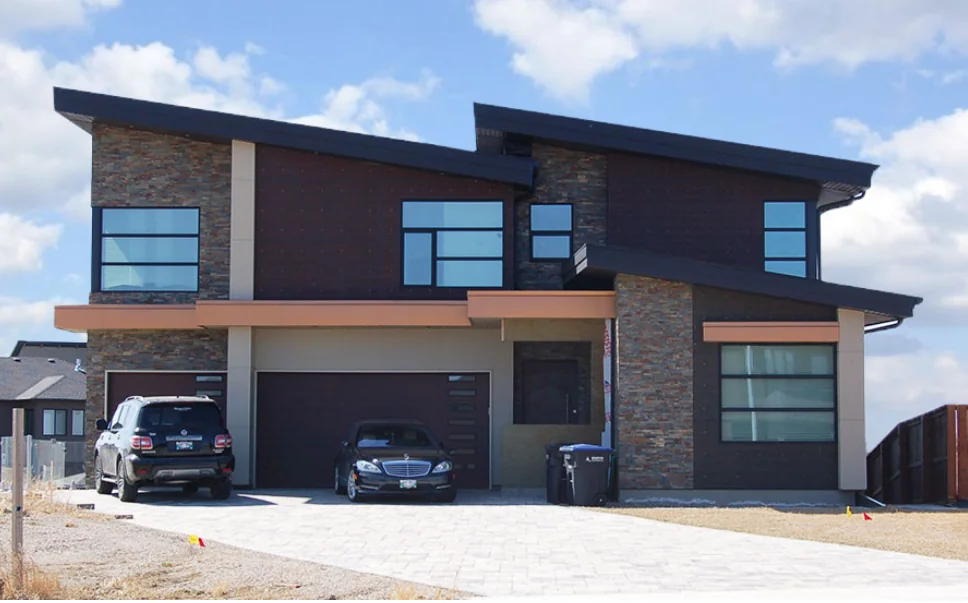
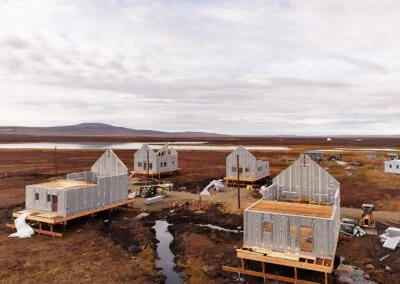
Steel structural insulated panels are framing custom homes from the coast to the desert. Different climates, different architectural styles — the panel adapts to all of them. The wall stays the same.
These are the questions we get at the kitchen table. If you have one we haven't answered, just ask.
No. The steel is the structural skeleton — the same role wood studs play in a traditional home. What you see and touch inside the house is exactly what you'd see in any custom build: drywall, trim, paint, tile, hardwood, cabinetry. The wall behind it is just better.
From the curb, an AirLight home looks like any other custom home. Stucco, stone, siding, brick — the panel accepts any exterior finish.
Yes, exactly like a normal wall. The steel studs hold screws and anchors as well as — actually, more securely than — wood. For heavier loads like a wall-mounted TV or floating shelves, we'll show you stud locations during the walkthrough, same as any other home.
Favorably. Non-combustible construction is in a different risk category than wood framing for most carriers, especially in Arizona's wildfire and termite exposure zones. We'll connect you with carriers who actively underwrite steel-framed homes, and the conversation usually trends toward lower premiums, not higher.
The wall itself doesn't burn. EPS and galvanized steel are both non-combustible. That doesn't mean the house is fireproof — furnishings, finishes, and contents are still flammable — but the structural envelope won't fuel the fire the way a wood-framed wall does. In a wildfire ember-strike, that's the difference between a contained event and a total loss.
Steel SIP homes appraise as comparable or better than equivalent stick-built homes in Maricopa County. The market values the lower utility costs, the lifespan, and the insurance treatment. Buyers also tend to value the quieter interior once they've experienced it.
The longer story: the home will likely outlive your ownership of it by a wide margin, and the next owner inherits the same R-value, the same termite resistance, and the same low maintenance.
Material costs are typically 10–20% lower than equivalent lumber framing. Labor costs are lower because the panels go up roughly three times faster. Total construction cost is competitive with — and often lower than — a comparably specified stick-built home. The lifetime cost is dramatically lower once you factor in energy bills.
Not new. Structural insulated panels have been a recognized construction method for decades. AirLight is IAPMO UES 2023 certified, USGBC LEED qualified, and compliant with both US and Canadian building codes (IBC / ICC). The panels have framed multi-story hotels, senior living facilities, and commercial buildings — the construction categories with the strictest code scrutiny.
Kingman, Arizona — manufactured by MDK Manufacture, a subsidiary of Wanessa Sue, Inc. Every panel that goes into a Better Quality home travels less than 200 miles from the plant to the build site. No overseas shipping, no months-long supply chain.
If steel panels are the answer for hotels and senior living facilities, they're the answer for the home you plan to leave to your kids. Let's show you what your build looks like — pricing, timeline, and the floor plan options that fit your land.